Jinju Hoegwan
Seosomun, Jung-gu, Seoul (City Hall)
서울특별시 중구 세종대로11길 26 (서소문동)Location sources checked 2026.08.09
Public-record location check, not a live opening-hours guarantee. Confirm with the restaurant before visiting.
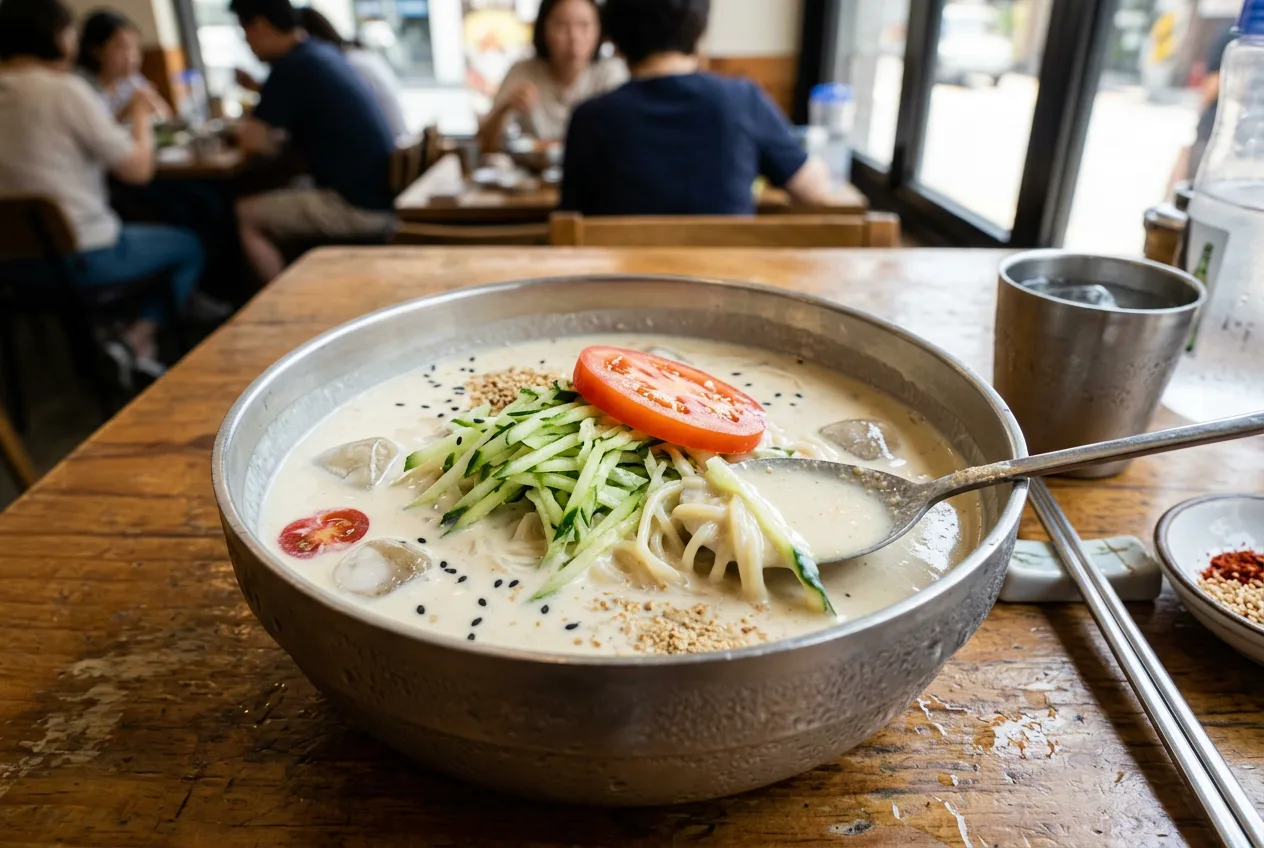
Noodles · 7 of Ladles · Seven of Ladles
Kongguksu (Chilled Soy Milk Noodles) · 콩국수
Decision notes · editorial comparison of references and preparation plans
Consider kongguksu for ground-soybean texture instead of meat broth. Serving temperature does not make the two broths interchangeable.
Check before ordering or preparing: Check nuts or sesame alongside soy, separate salt or sugar, and noodle ingredients.
KTO describes cooked noodles served in thick soybean liquid. KTO · Noodles in Cold Soybean Soup (콩국수 / Kongguksu) · 2026-09-13
Kongguksu serves noodles in a liquid made from cooked, ground soybeans. This recipe can include pine nuts or sesame, so the creamy appearance should not be read as proof that soy is its only ingredient.
Test salt or sugar on a small spoonful before seasoning the bowl. Compare its ground-bean texture with the meat-broth or radish-brine bases that can appear in cold naengmyeon.
Images are AI-generated illustrations, not records of a kitchen test. Follow the written ingredients and steps. Ingredients and substitutions guide
Times and yields are planning values for this editorial preparation, not measured kitchen results. Substitutions can change flavor, texture and cooking needs. Read product directions and our measurement and doneness guide together.
This is not a start-to-finish 60-minute recipe. Schedule soaking and chilling separately, and follow the beans’ cooking instructions.
| Ingredient | Amount | Substitute abroad |
|---|---|---|
| Dried soybeans | 1.5 cups (soaked overnight) | These steps start with dried beans. Prepared soy milk cannot follow the same soaking, boiling, peeling and blending route. |
| Somyeon noodles | 200 g | Kalguksu noodles work too |
| Pine nuts or sesame | 2 tbsp | Cashews; they amplify the nuttiness |
| Cucumber | 1/2 | Anywhere |
| Cherry tomato | 2 (optional) | Fine to omit |
| Salt (or sugar) | To taste | Salt for Seoul style, sugar for Jeolla style |
| Ice cubes | Plenty | Non-negotiable |
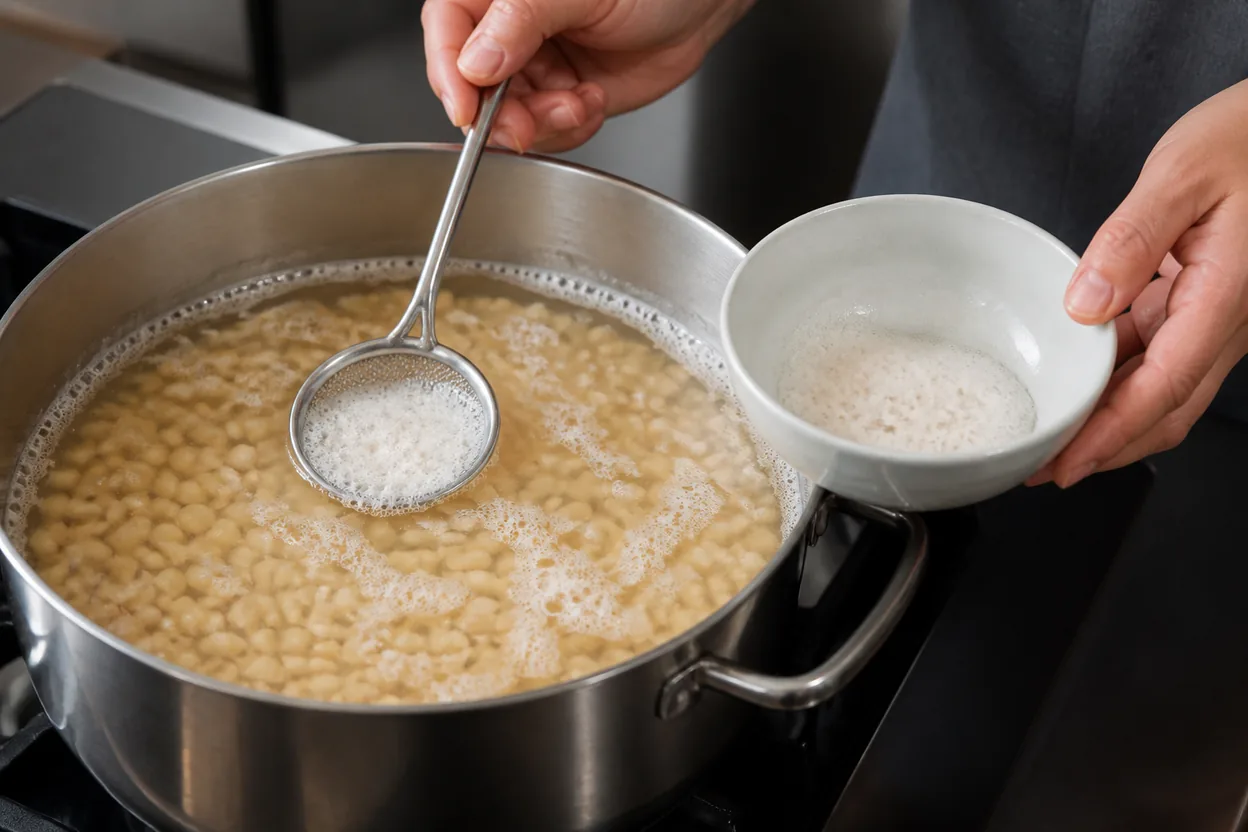
Cook the beans, soaked overnight under refrigeration, in fresh water until fully tender through the center. Follow the product’s cooking instructions; aroma alone is not a doneness test.

Rinse the beans cold, rub off most of the skins, then grind fine with the pine nuts, adding water little by little.
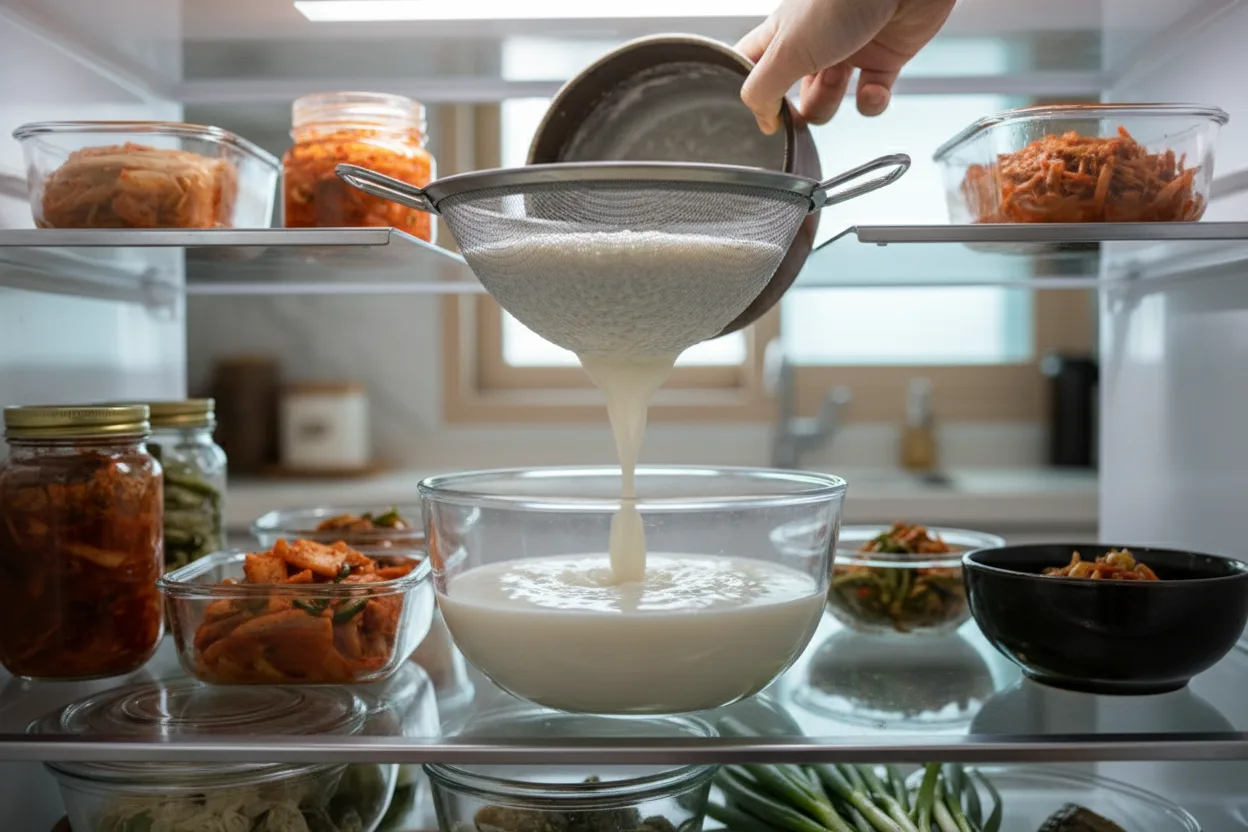
Strain the ground broth once and chill it thoroughly in the fridge.
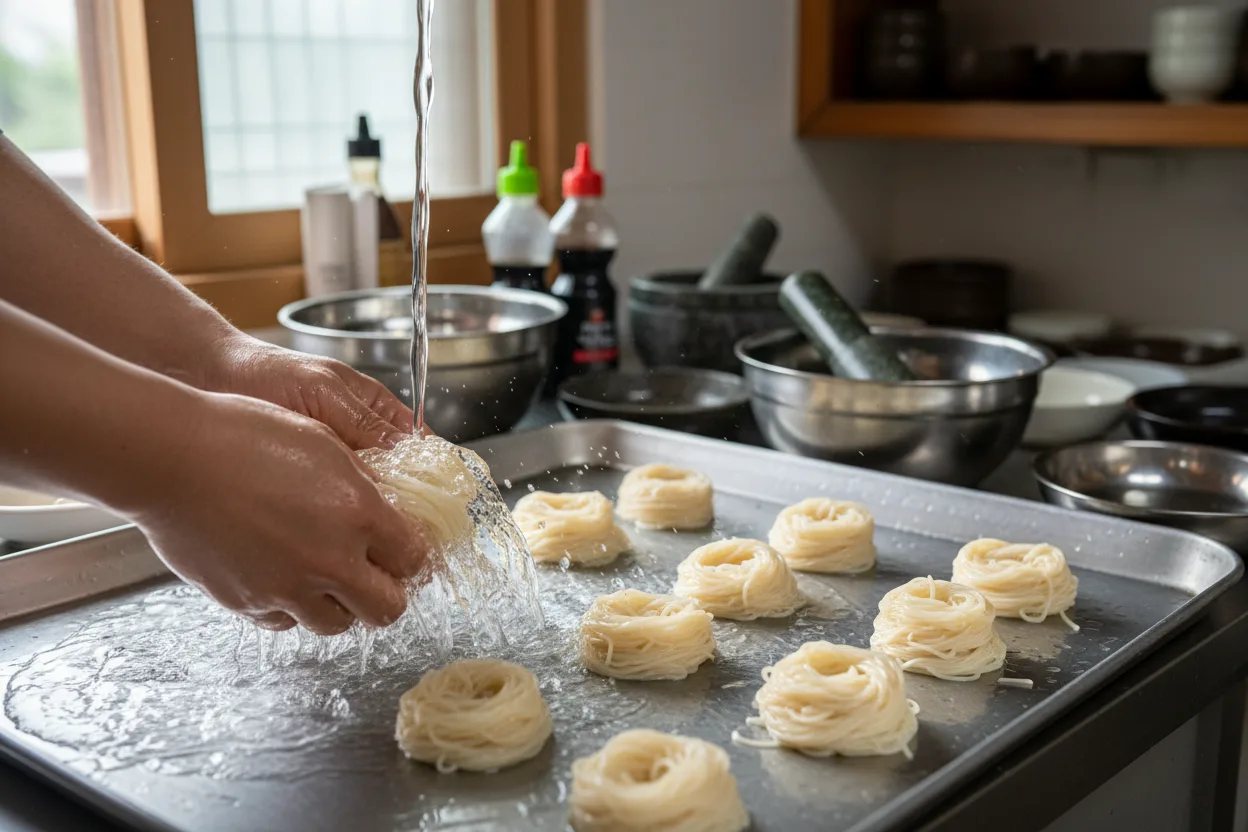
Boil the noodles, then scrub-rinse in cold water to strip the starch and coil into portions.
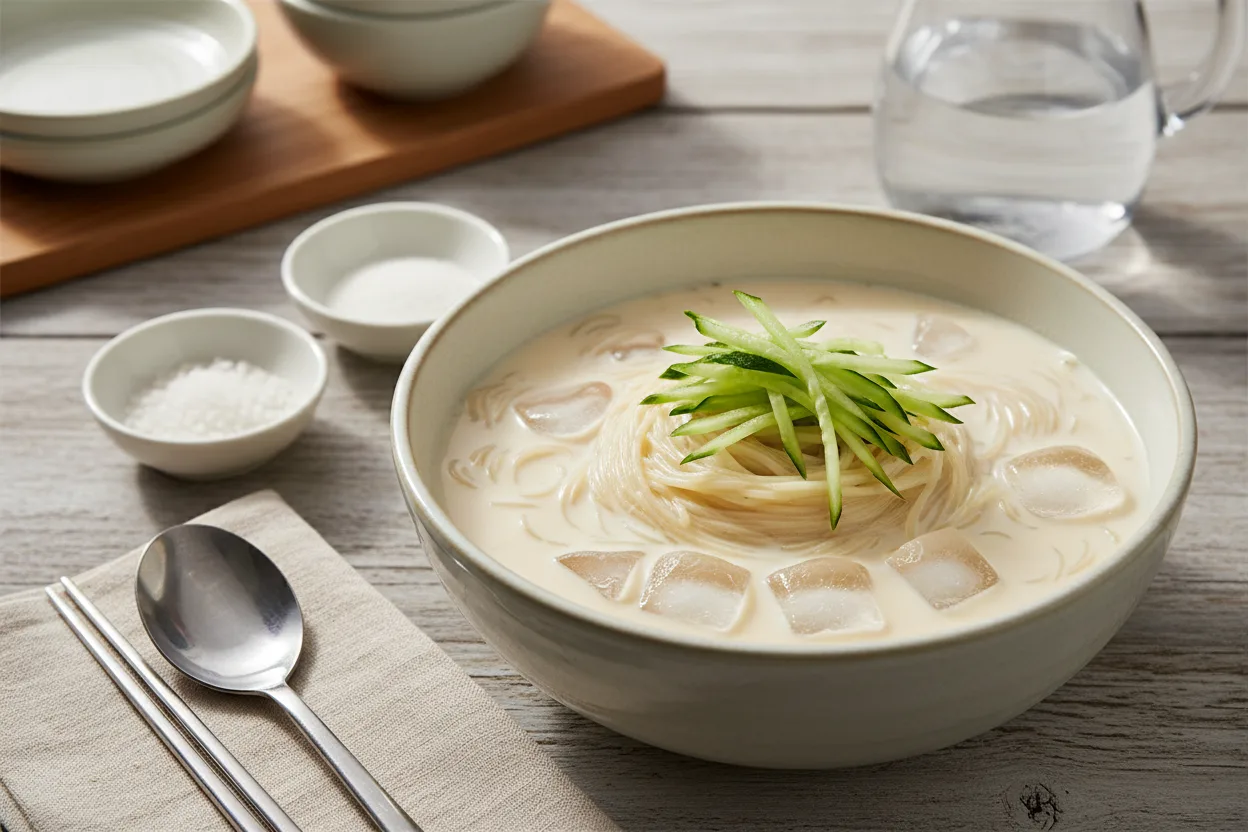
Set the noodles in bowls, pour over the cold broth, and top with cucumber, tomato, and ice. Salt and sugar go to the table.
Preparing the tool. If controls remain disabled, enable JavaScript or try another browser. The guidance below remains readable.
Ask for enough food for the number of people eating. Portion sizes and minimum orders vary by shop. This card does not send an order or payment.
Candidates to investigate for this food. Maps use sourced location records; confirm the current menu, opening and booking directly. This list is not a tasting review or an award certification.
Seosomun, Jung-gu, Seoul (City Hall)
Public-record location check, not a live opening-hours guarantee. Confirm with the restaurant before visiting.
Jeonju, North Jeolla
Public-record location check, not a live opening-hours guarantee. Confirm with the restaurant before visiting.
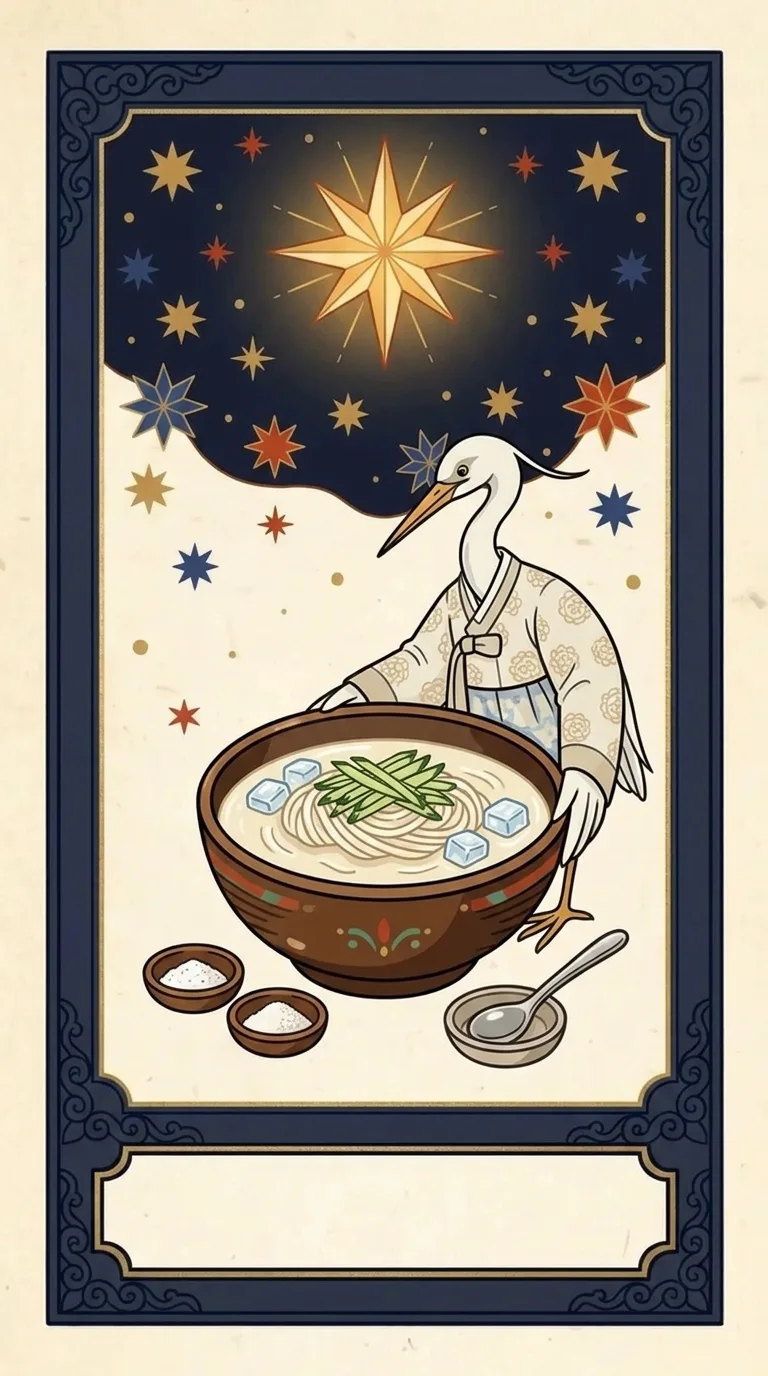
Metal element · an angular, solid face
You compete on the density of the broth, never the garnish. A deep, cool nuttiness known only to the ones who know.
Upright: A day you may compete on essence alone, no seasoning added. Like broth ground from beans and nothing else, your unadorned skill gets through today as it is.
Reversed: Mildness has slipped into blandness. Between subtle and watery stands a single pinch of salt, so today, season your argument.
Fictional food metaphors inspired by traditional face-reading, not measurements of your face or personality.
That mouth is folded firm. Why do the great kongguksu houses last sixty years on one summer season? Because they never breathe a word of their bean blend. Your mouth is that vault. The credit stacks up, but you open it so rarely that few ever learn your true heart. Once in a great while, show the recipe of your insides, not just the broth's.
Those brows are light: a clean face. Kongguksu is the same: the garnish is a few strands of cucumber and half a tomato, yet one sip of the broth and the table goes quiet. Your charm is density, not decoration. You lose the first-impression game, yes, but everyone who meets you twice joins your side.
Those eyes are narrow and long: a patient face. Kongguksu broth is half a day's labor, soaking, boiling, grinding, straining. Only the one who knows that labor gets that thickness. Your skill was ground out the same way. That is why the three-second blender crowd cannot imitate you.
A kongguksu house spends the whole year preparing for one summer. Your prime may look short, but nobody can match its density. Cool and thick, pass the summer your own way.
Grandma's blessing
Crisp, cool yeolmu kimchi is the nationally certified match of the summer kongguksu table. Boiling budae-jjigae is your opposite in temperature and worldview alike, so sharing the calendar, not the table, is the peace treaty.