Woo Lae Oak
Jugyo-dong, Euljiro, Jung-gu, Seoul
서울 중구 창경궁로 62-29Checked 2026.08.09
Public-record location check, not a live opening-hours guarantee. Confirm with the restaurant before visiting.
Noodles · XII · The Acquired Taste
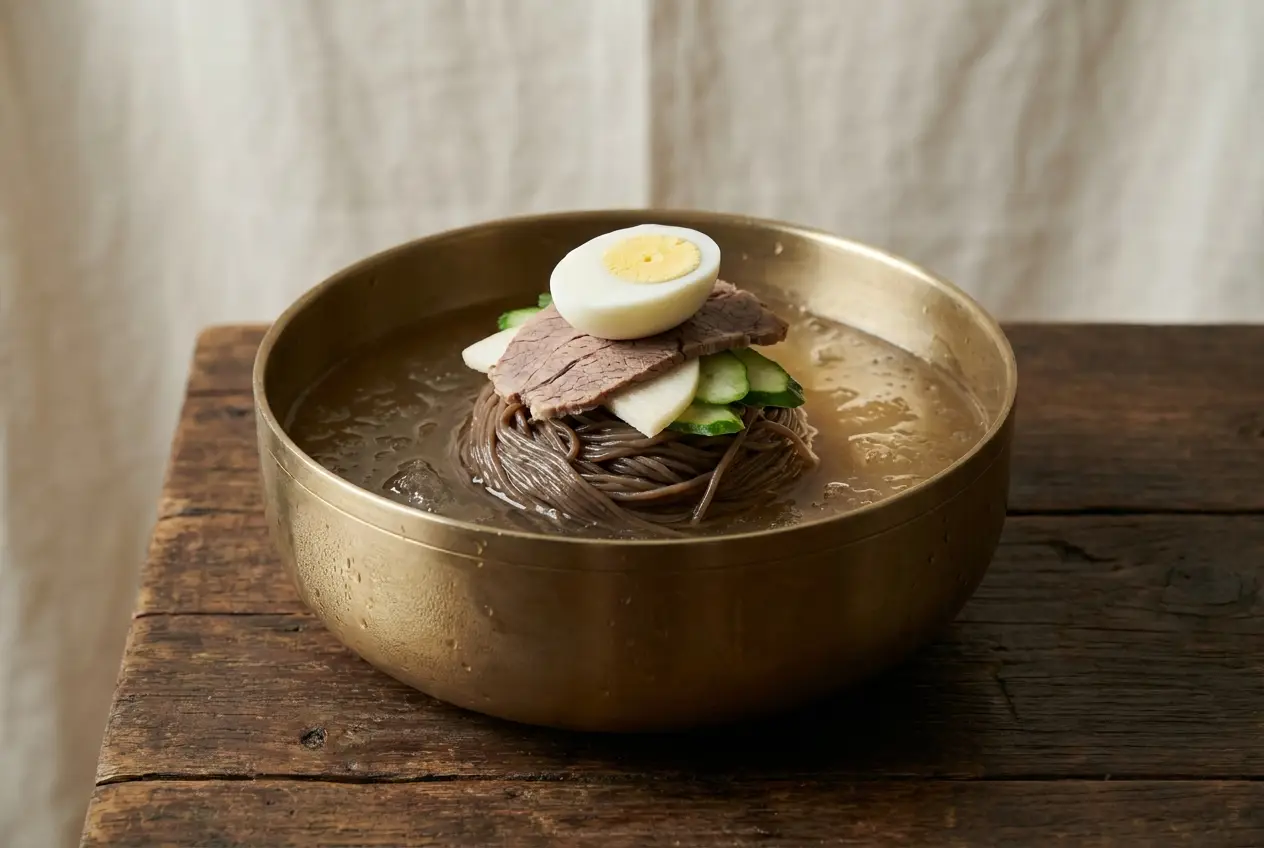
Pyongyang Naengmyeon (Cold Buckwheat Noodles) · 평양냉면
Cold noodle dish · this entry focuses on Pyongyang-style naengmyeon · broth and noodle blends vary · ask before adding condiments.
This page’s naengmyeon is a cold noodle bowl associated with Pyongyang style. The name of a noodle tradition does not mean every restaurant uses identical broth or a pure buckwheat noodle. Read the menu’s full description before comparing it with a sauce-mixed version elsewhere.
Cool broth and the noodle’s texture are the best starting points. Buckwheat and starch proportions vary by maker, so appearance alone is not an ingredient guarantee. Taste before using vinegar or mustard; this gives you a reference for deciding which change you actually prefer.
Take an initial sip of broth, then try the noodles before adjusting seasonings. If scissors or condiments are offered, ask how the restaurant suggests using them. Cutting and seasoning can be personal choices. Check the noodle and stock ingredients if those details affect your order.
Mul-naengmyeon describes noodles served in broth; bibim-naengmyeon describes noodles mixed with sauce. Pyongyang and Hamhung are regional style names, so they are a different kind of distinction: do not assume one regional name answers every broth-versus-sauce question. Compare the noodle blend, the serving format, the stock or sauce, and the toppings. Ask for the full menu description when the English name is simply “cold noodles.”
Pyongyang naengmyeon connects the dish to a northern regional tradition. Seoul Future Heritage records Woo Lae Oak’s 1946 opening and its place in Seoul’s restaurant history. That is evidence about a restaurant, not the invention of naengmyeon. We keep those two historical scales separate.
For some diners, a cold noodle bowl carries regional or family associations; for others, it is simply a preferred meal. Restaurant habits and personal tastes can differ. We avoid calling one style an acquired taste everyone must learn or presenting a single ritual as the only respectful way to eat it.
Images are AI-generated illustrations, not records of a kitchen test. Follow the written ingredients and steps. Ingredients and substitutions guide
Planning notes separate the waits and cooking stated in the steps below. These are not kitchen-tested total times; preparation, heating, cooling and overlapping tasks change the schedule.
| Ingredient | Amount | Substitute abroad |
|---|---|---|
| Dried buckwheat naengmyeon noodles | 300 g | High-buckwheat Japanese soba (juwari or hachiwari) |
| Beef brisket | 400 g | Any butcher's brisket |
| Water | 2.5 L | Tap or bottled, either way |
| Korean radish | 200 g | Daikon |
| Scallion | 1 stalk | Leek whites |
| Garlic | 5 cloves | Any garlic |
| Ginger | 1 thumb-size knob | Any ginger |
| Dongchimi (radish water kimchi) brine | 500 ml | No true substitute; Korean grocers online, or radish, brine, and pear cured two days in a pinch |
| Salt | A little | Kosher salt |
| Cucumber | 1/2 | Persian cucumber |
| Korean pear | 1/4 | Western pear or apple |
| Boiled egg | 1 | Any egg |
| Vinegar and Korean mustard | To taste | White vinegar plus a dab of Dijon |
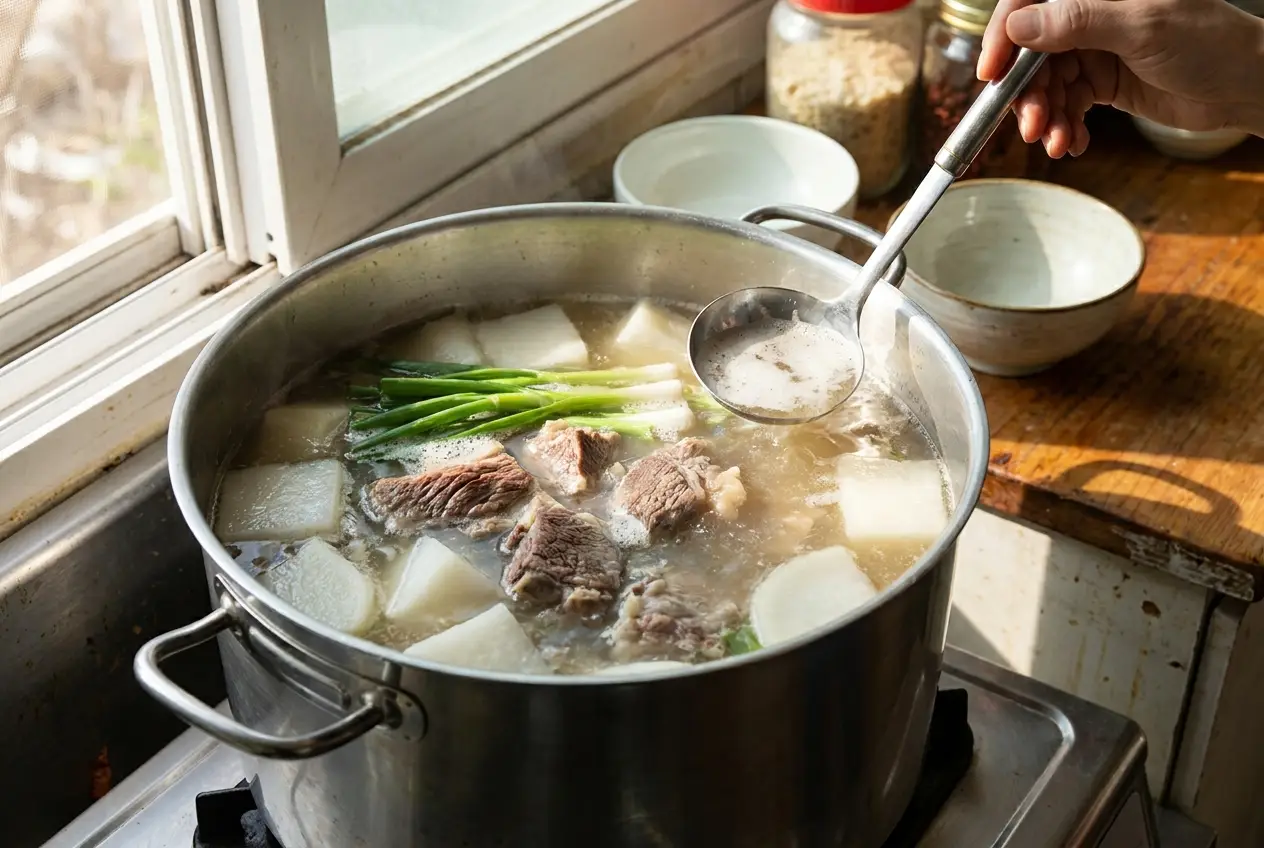
Soak the brisket thirty minutes in cold water. Simmer it with the radish, scallion, garlic, and ginger in 2.5 liters of water: after the first boil, ninety minutes over gentle heat, skimming foam and fat as you go.
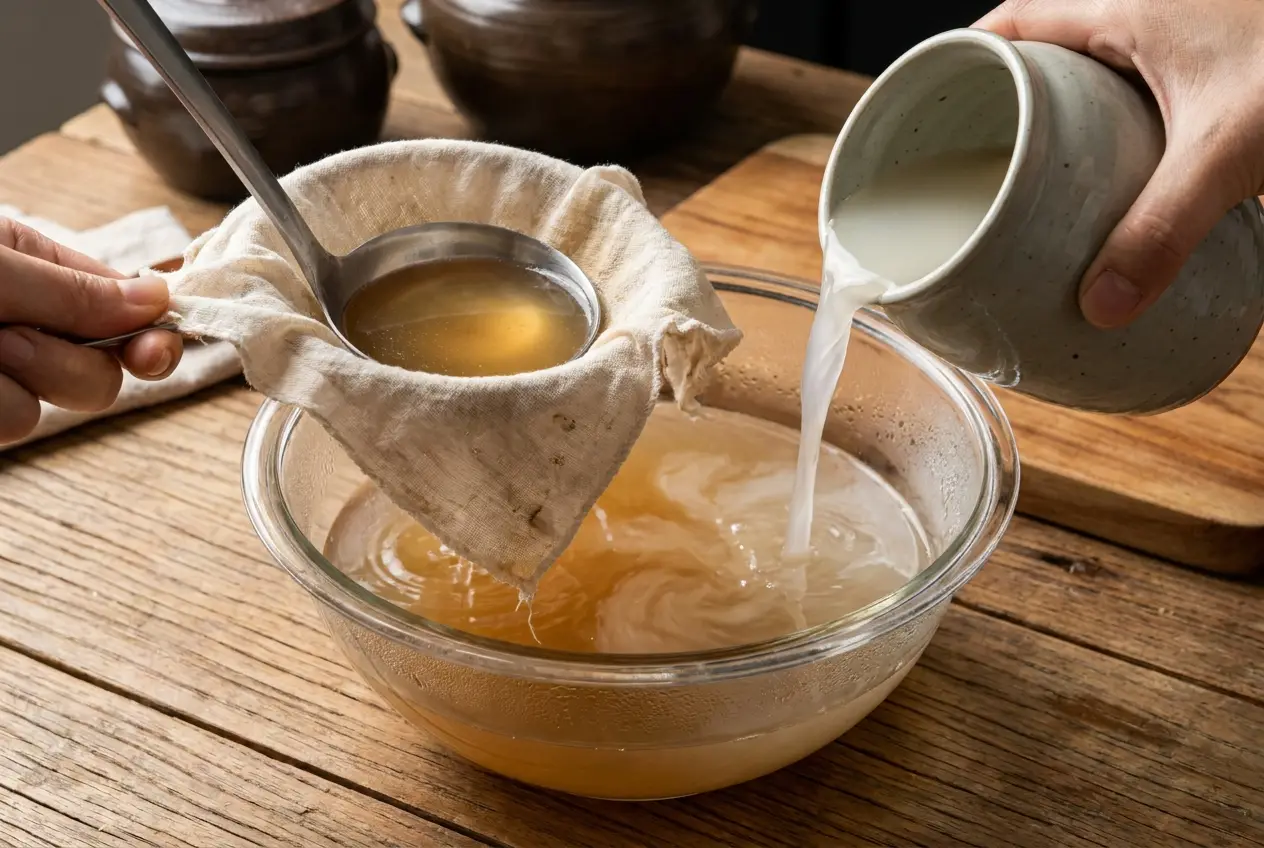
Lift out the meat and press it wrapped in cloth. Strain the broth through cloth, chill it fully, and lift off the hardened fat. Mix clear broth and dongchimi brine two to one, salt it shy, and chill three to four hours in the freezer until slush ice forms.
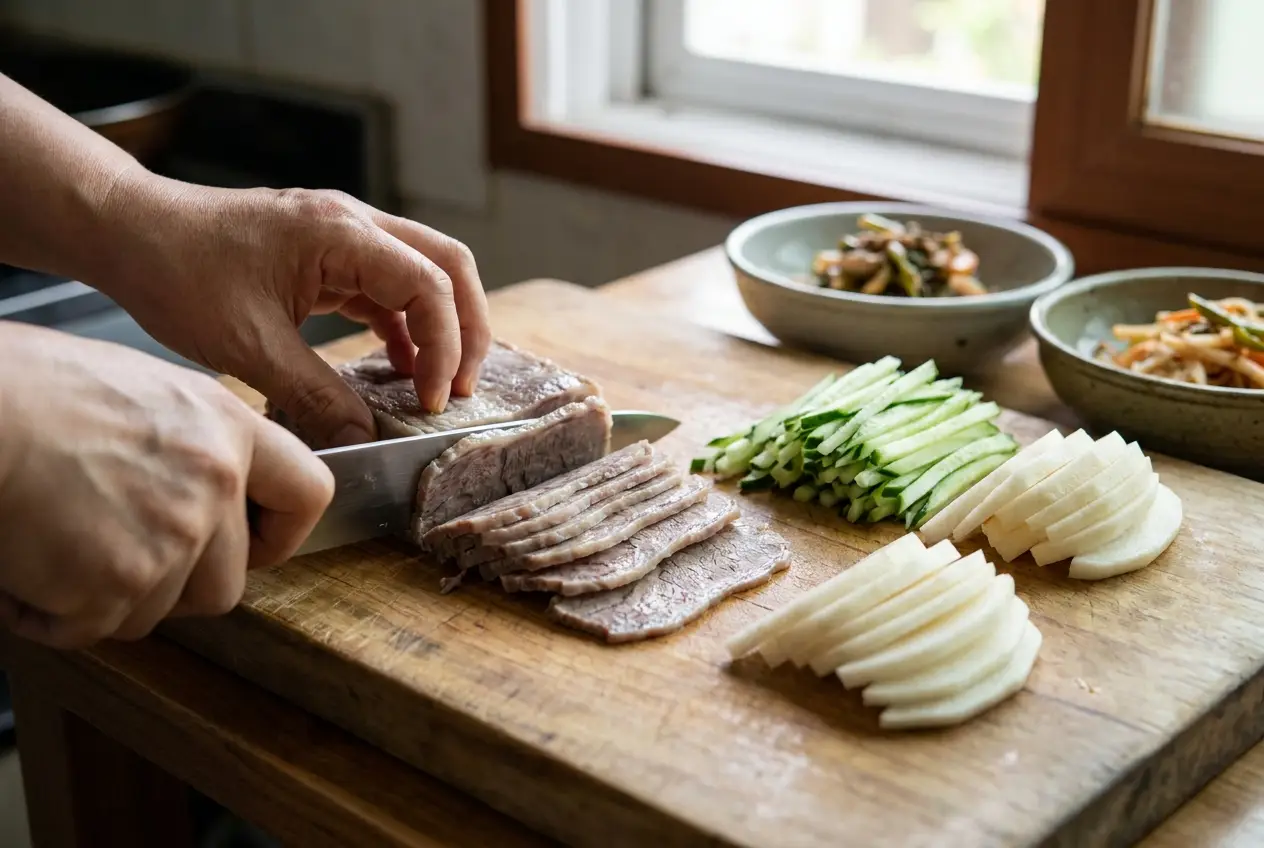
Shave the pressed beef paper-thin. Cut the cucumber on the bias and salt it lightly, slice the pear into thin pieces, and halve the boiled egg.
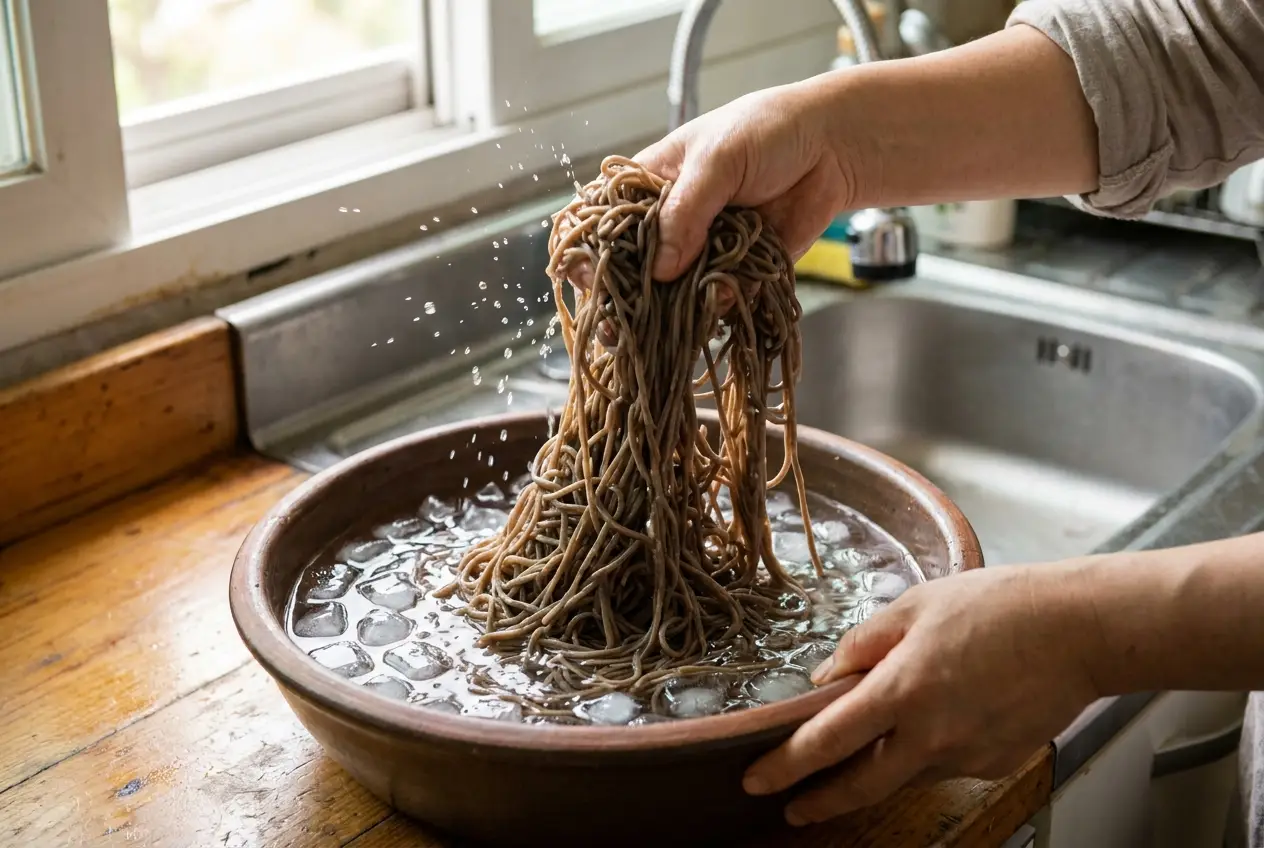
Boil the dried noodles in plenty of water, about thirty seconds short of the package time, around three minutes. Plunge into ice water and scrub-rinse three times or more until the starch is gone, then squeeze and coil into single portions.
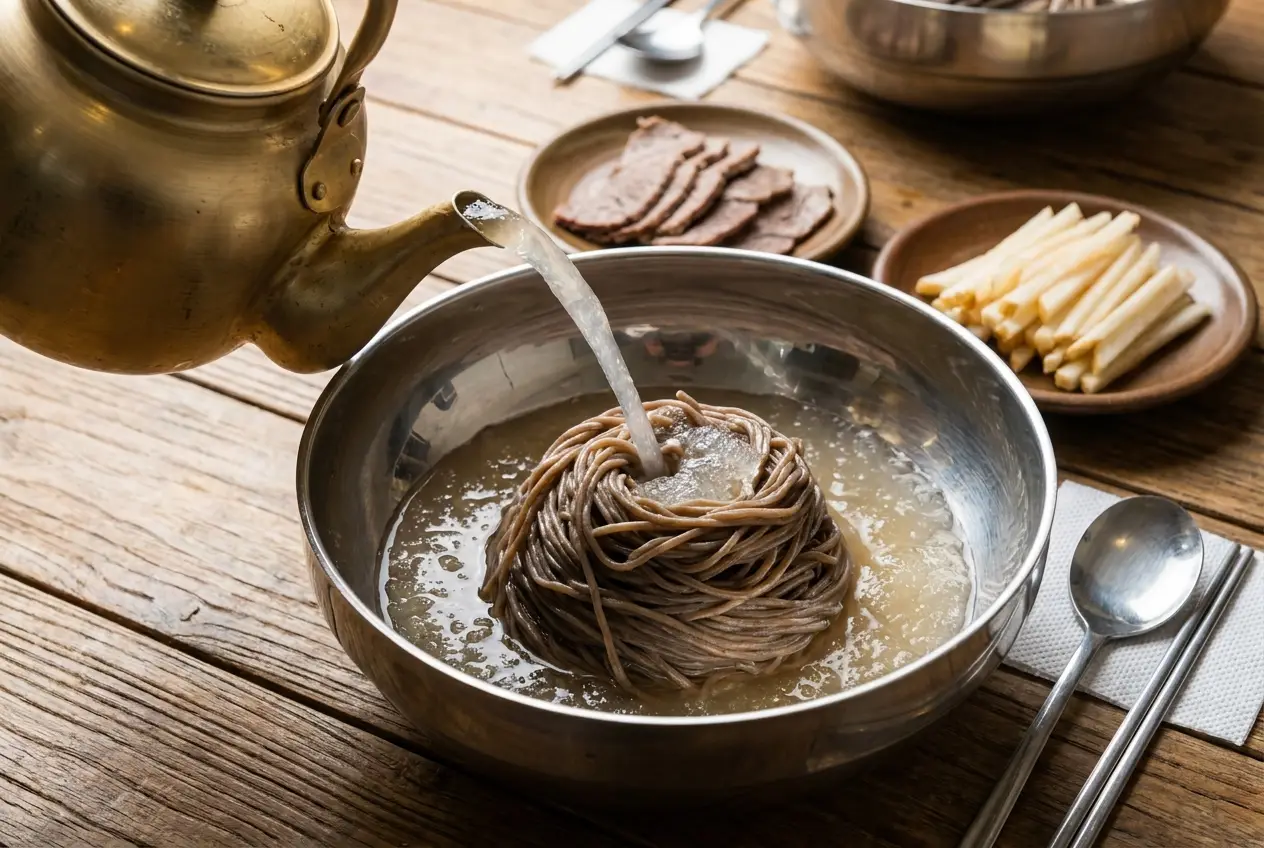
Coil the noodles into a chilled bowl and pour in slush-iced broth until they are just covered. Top with beef, cucumber, pear, and egg. Vinegar and mustard go to the table separately, to each their own.
Candidates to investigate for this food. Maps use sourced location records; confirm the current menu, opening and booking directly. This list is not a tasting review or an award certification.
Jugyo-dong, Euljiro, Jung-gu, Seoul
Public-record location check, not a live opening-hours guarantee. Confirm with the restaurant before visiting.
Yeomni-dong, Mapo-gu, Seoul
Public-record location check, not a live opening-hours guarantee. Confirm with the restaurant before visiting.
Pil-dong (Chungmuro), Jung-gu, Seoul
Public-record location check, not a live opening-hours guarantee. Confirm with the restaurant before visiting.
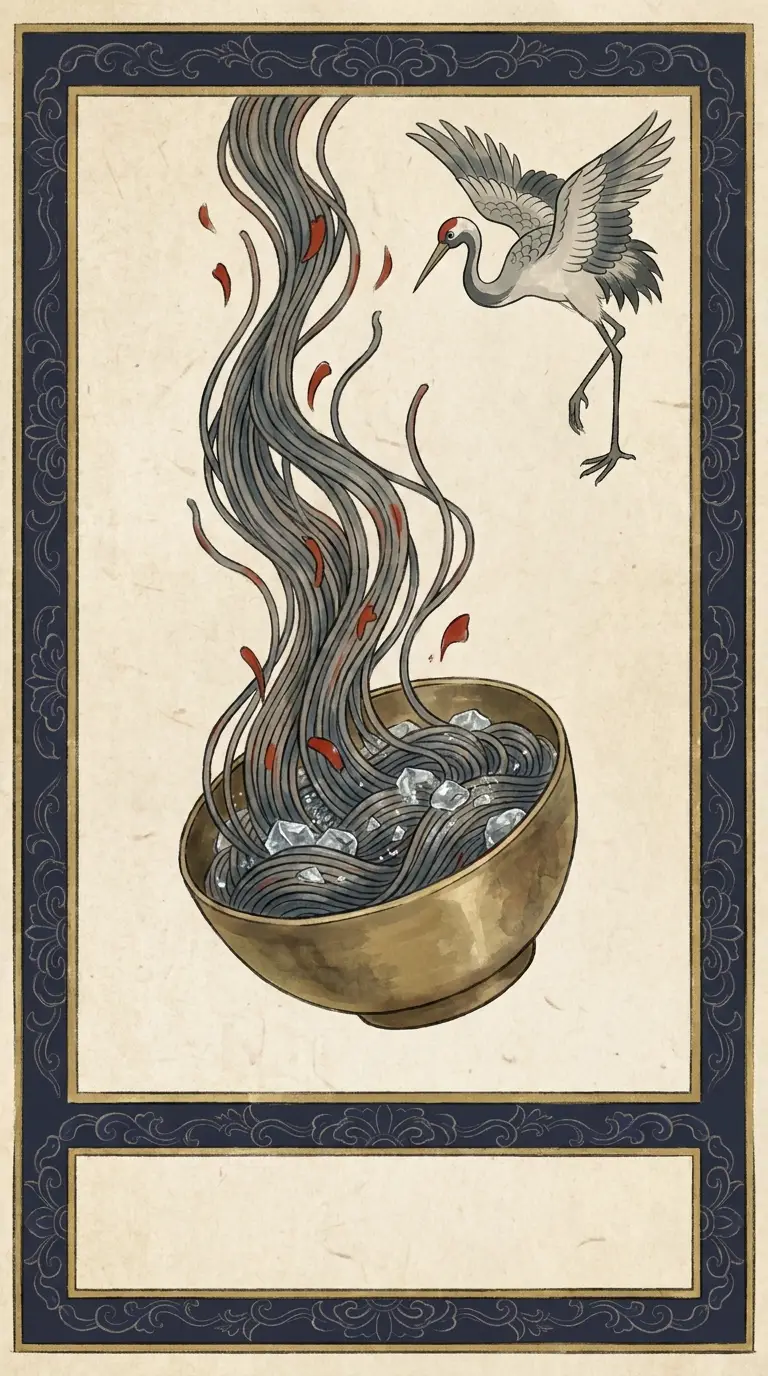
Water element · a face of soft curves
Bland at first glance, deeper with every meeting: the slow-addiction type. You never show your hand and never over-season, but once attached, a Water type whose bond runs long and cool.
Upright: What looks plain now reveals its worth the longer it is chewed. Show your quiet charm three times without rushing; even a connection that passed you by will one day recall your taste and return.
Reversed: You are pouring sugar into your own broth to suit someone else's tongue. Borrowed spice is found out fast, and forcing the seasoning may cloud the taste that was yours to begin with.
Fictional food metaphors inspired by traditional face-reading, not measurements of your face or personality.
Those brows are so faint they are barely there, like a brush dipped in plain water. A mild Palace of Siblings means a life unchained by clinging attachments, lived plain and clean. That is Pyongyang naengmyeon broth, child: barely salted, yet the more one drinks, the harder it pulls. Trouble is, strangers take you for plain water and walk past. Who these days waits three tastings to understand a flavor?
Eyes narrow and long, showing nothing of what moves behind them. Such eyes belong to the phoenix, deep watchers who judge late. Just like buckwheat noodles: boiled in a rolling pot, then rinsed three times in ice water and settled cold before the true taste shows. Prudence is fine, but you keep the broth so far inside that no one ever gets a bowl. However deep it runs, child, an unserved soup feeds nobody.
Look at that mouth, shut firm as a crock lid. A Palace of Speech sealed that well leaks neither words nor money. You are the dongchimi jar buried through winter: lips pressed tight while the cool brine ripens, true. But you never open the lid at all, and the person beside you cannot tell if you hold broth or sand. They are going mad waiting, child.
Still, it is the mild ones like you who last the longest. When the world tires of everything loud, people will come looking for your flavor at last. Do not sulk that no one falls for the first spoonful. You are the rare bowl whose worth rises from the third.
Grandma's blessing
Boiled beef comes from the same pot as your quiet broth, a true companion that deepens you both. Fiery stir-fried octopus burns so hot it smothers your subtle Water current whole, so keep to separate tables.