Yupori Makguksu
Sinbuk-eup, Chuncheon, Gangwon
강원특별자치도 춘천시 신북읍 맥국2길 123 (외2필지)Checked 2026.08.09
Public-record location check, not a live opening-hours guarantee. Confirm with the restaurant before visiting.
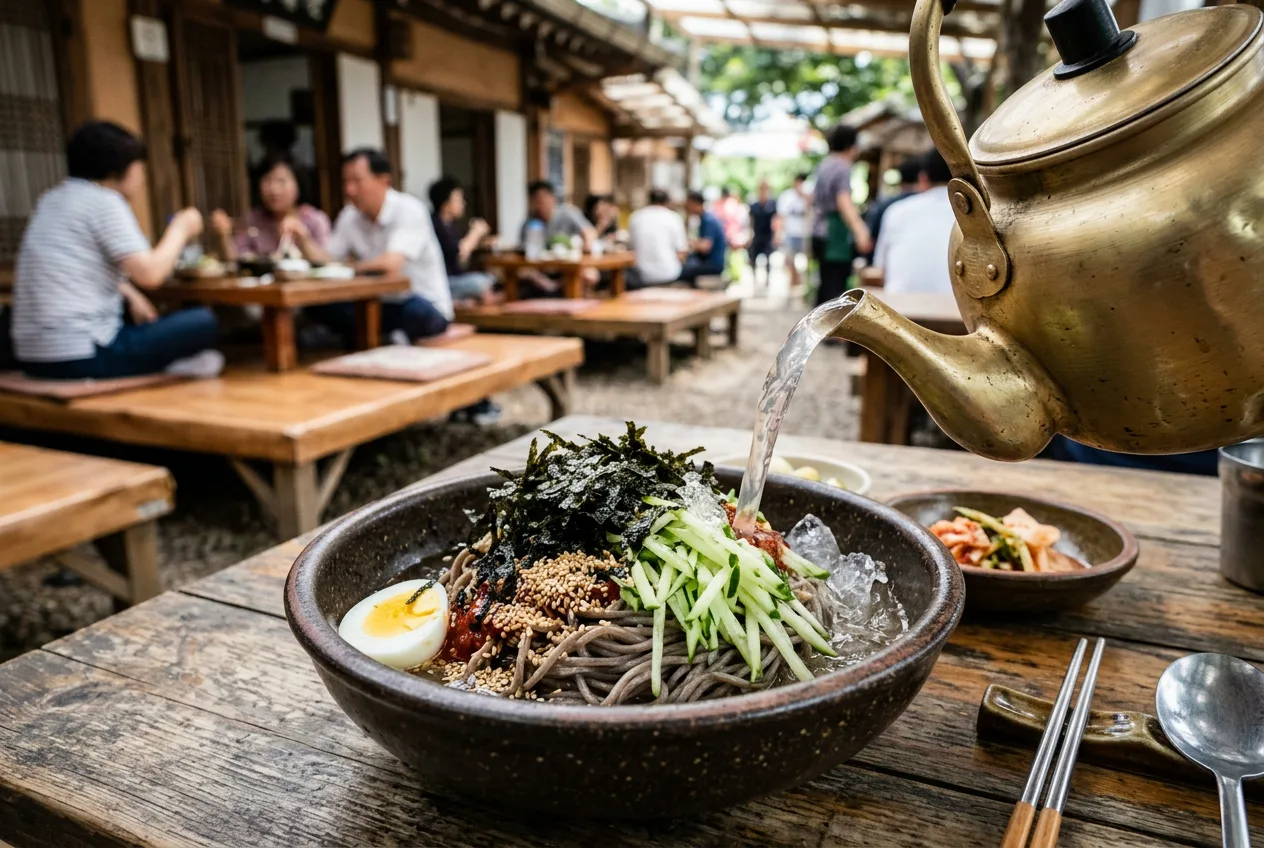
Noodles · 8 of Ladles · Eight of Ladles
Makguksu (Buckwheat Noodles in Chilled Broth) · 막국수
This makguksu uses buckwheat noodles, dongchimi brine, vegetable toppings and egg. Broth, spicy-mixed and perilla-oil menu labels describe serving choices separately from the noodle ingredient.
Buckwheat content varies by product; buckwheat noodles are not automatically wheat-free. Where broth or dressing comes separately, try it on part of the noodles first to compare texture and flavor.
Images are AI-generated illustrations, not records of a kitchen test. Follow the written ingredients and steps. Ingredients and substitutions guide
| Ingredient | Amount | Substitute abroad |
|---|---|---|
| Buckwheat noodles | 300 g | Japanese soba, the higher the buckwheat the better |
| Dongchimi (radish water kimchi) brine | 3 cups | Naengmyeon broth packs plus vinegar; Korean grocers |
| Cucumber and pickled radish | Garnish | Anywhere |
| Boiled egg | 1 | Half per bowl |
| Seaweed flakes and sesame | Generous | Crumbled roasted gim |
| Perilla oil | 1 tbsp | Sesame oil, but perilla is the orthodox aroma |
| Spicy sauce (for bibim style) | 2 tbsp gochujang plus vinegar, sugar, garlic | Omit for the broth style |
| Vinegar, mustard, sugar | Self-serve at the table | The essential trio |
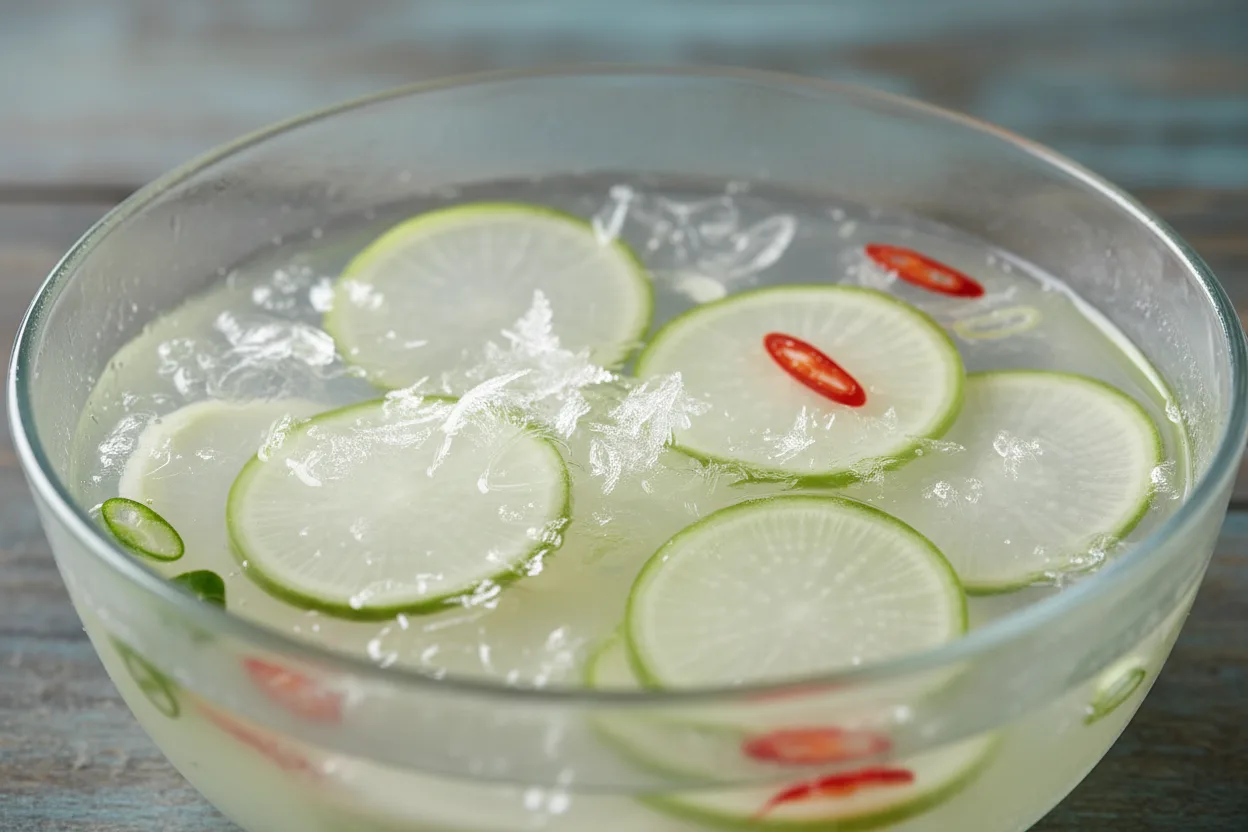
Chill the dongchimi brine, or give it thirty minutes in the freezer until slush ice forms.
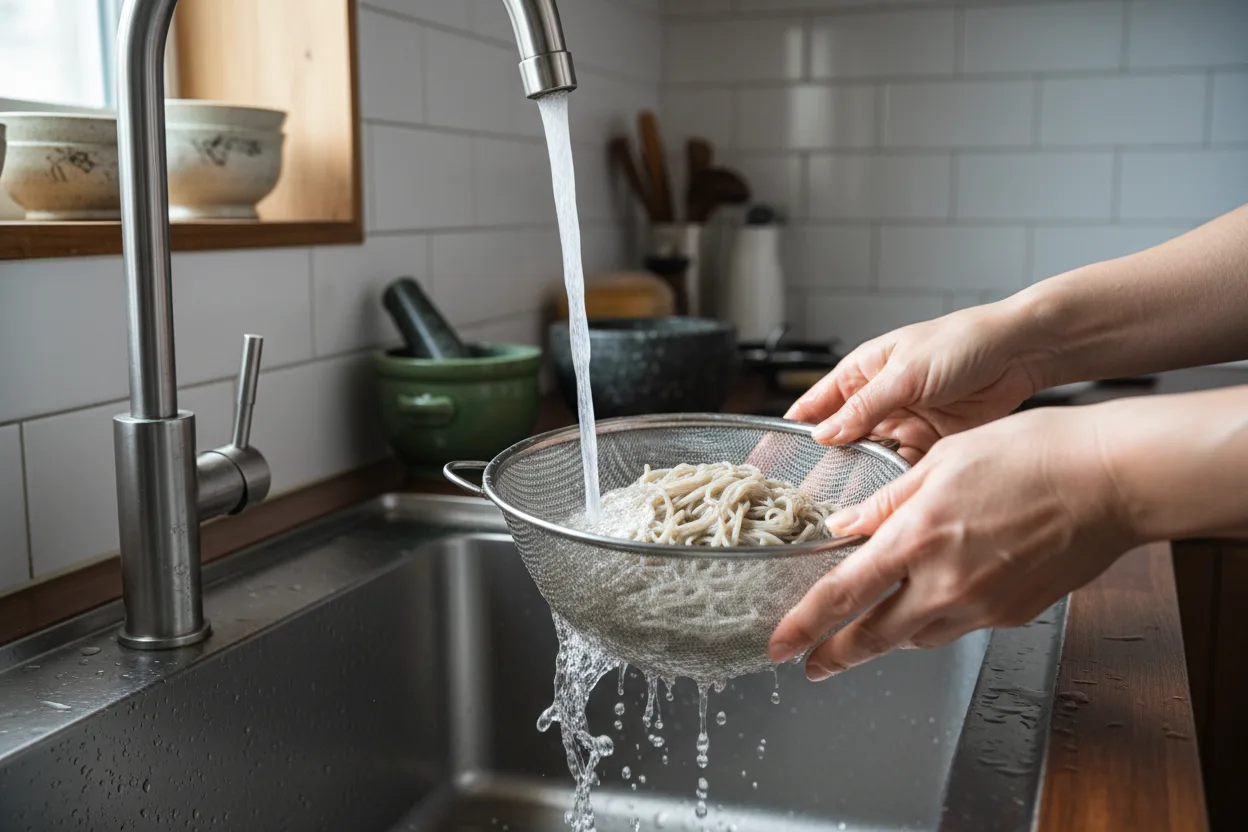
Boil the buckwheat noodles three to four minutes and rinse several times in cold water to shed the starch.
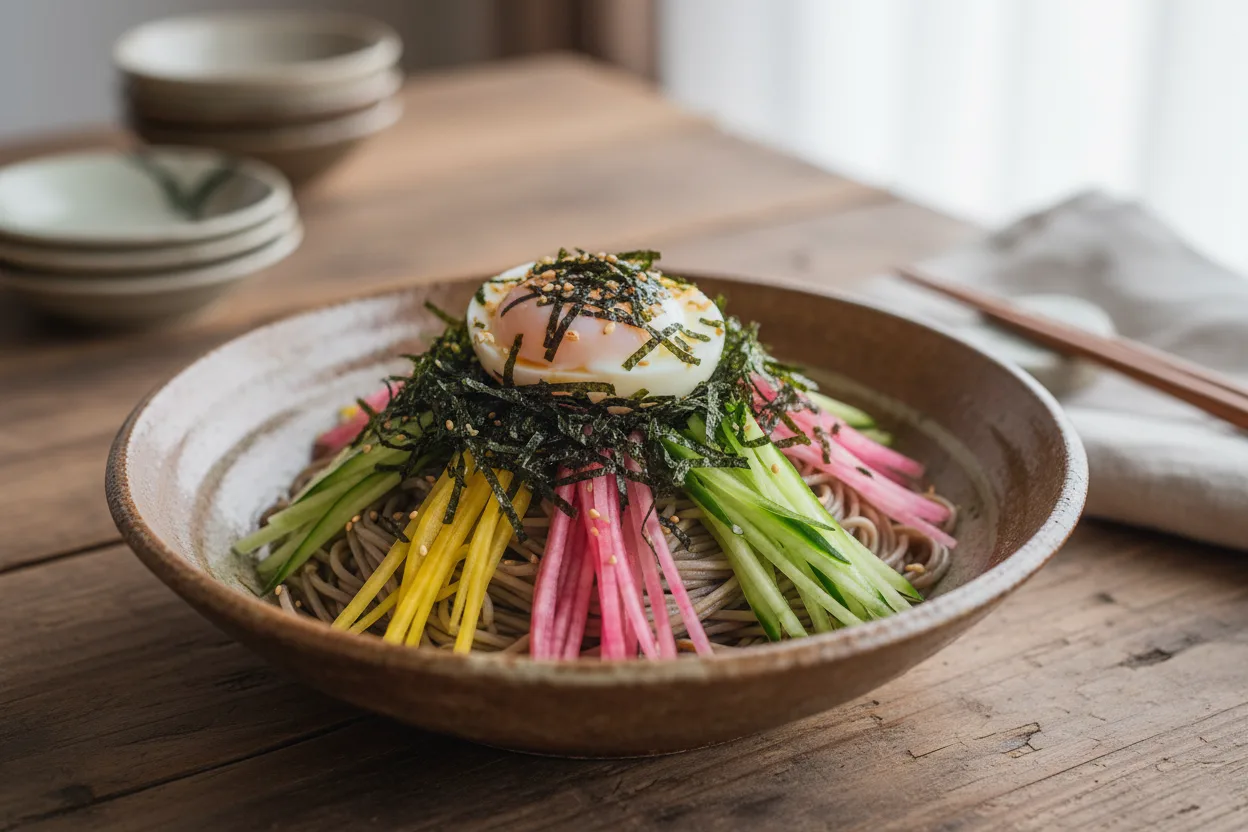
Coil the noodles into bowls and top with cucumber, pickled radish, boiled egg, seaweed flakes, and sesame.
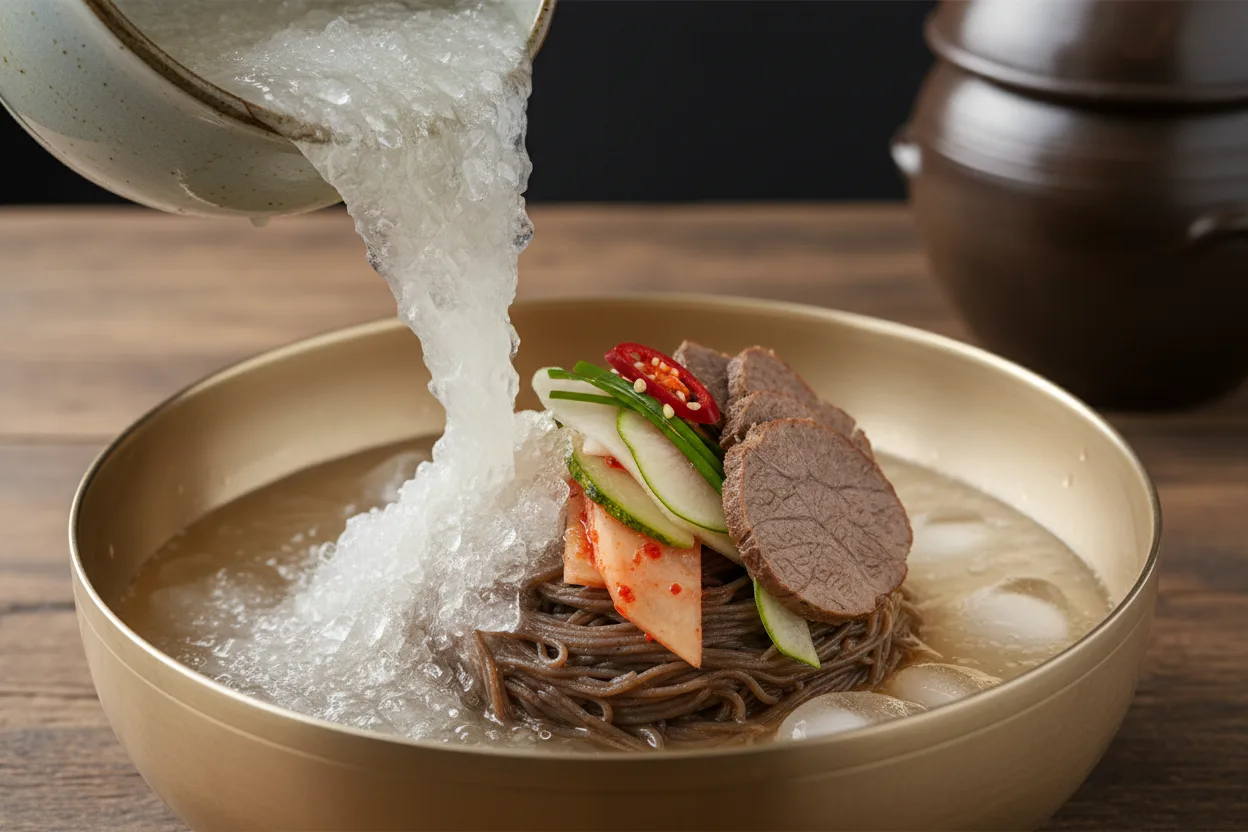
Pour over the slush-iced dongchimi for mul-makguksu, or toss with the spicy sauce and perilla oil for bibim style.
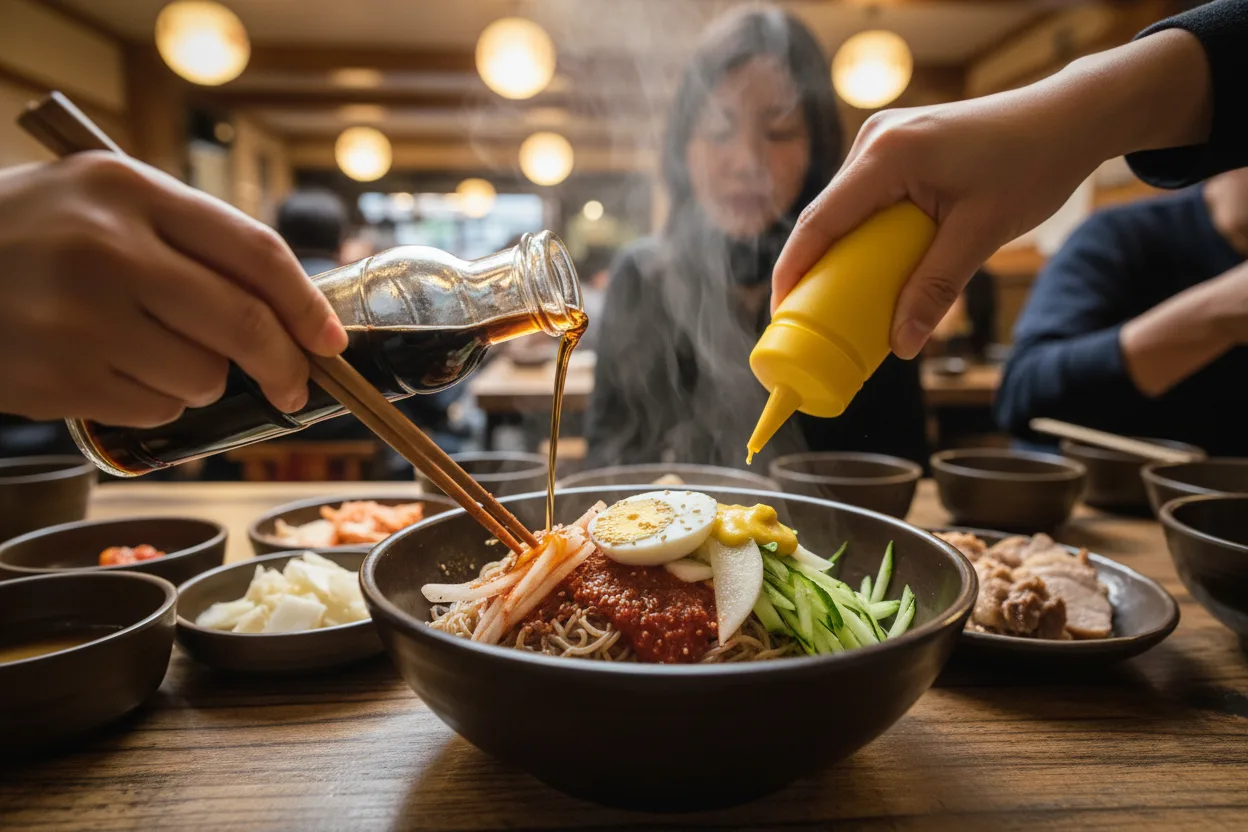
Add vinegar, mustard, and sugar to taste and finish it your own way.
Candidates to investigate for this food. Maps use sourced location records; confirm the current menu, opening and booking directly. This list is not a tasting review or an award certification.
Sinbuk-eup, Chuncheon, Gangwon
Public-record location check, not a live opening-hours guarantee. Confirm with the restaurant before visiting.
Chuncheon, Gangwon
Exact current location is not verified here. Confirm the venue through its official information before planning a visit.
Wood element · a slender, elongated face
Plain and unadorned, with roots that hold firm. The face of a Gangwon mountain breeze: like dongchimi brine, you clear whatever is stuffy inside.
Upright: A day to shed the formalities and just go. The 'mak' means fresh-pressed, not careless, so serve what is freshest right away. That is today's correct answer.
Reversed: Buckwheat noodles left sitting snap apart. So do your ideas. Stop measuring and pour the broth over them today, before the day is out.
Fictional food metaphors inspired by traditional face-reading, not measurements of your face or personality.
Those brows are light as buckwheat blossoms. Do you know what the 'mak' in makguksu means? Noodles pressed just now and eaten right away: honest immediacy. Your charm is that freshness of the moment. Like buckwheat, whose fragrance flies off while you fuss and measure, you are the sort who acts the moment the thought arrives. That freshness is your weapon.
That philtrum is straight: a face of credit. The great makguksu houses never lie about their buckwheat content. Pure buckwheat means pure; eighty percent means eighty. That honesty builds fifty-year regulars. Your credit is that label. The plainness that never inflates becomes your signboard in the end.
That jawline is slim: a face of instinct. Makguksu is a dish of adjustment: the dongchimi pour, the drop of mustard, the vinegar and sugar ratio, all tuned to your own tongue. Your sense excels at exactly that calibration. Has your own balance not always beaten the recipe someone else prescribed?
Buckwheat grows even in the stoniest mountain field. Making fragrance without good conditions, that is your root. Serving it cool and plain, your way, is the way Gangwon has kept for a hundred years.
Grandma's blessing
With dakgalbi you are the fire brigade, dousing the iron plate's heat in slush ice: a match Chuncheon itself arranged. With hot, solemn gomtang you are opposite in temperature and temperament, and one table cannot hold the two of you comfortably.