Gwanghwamun Jip
Jongno, Seoul (behind Sejong Center)
서울 종로구 새문안로5길 12Checked 2026.08.09Walk-in
Public-record location check, not a live opening-hours guarantee. Confirm with the restaurant before visiting.
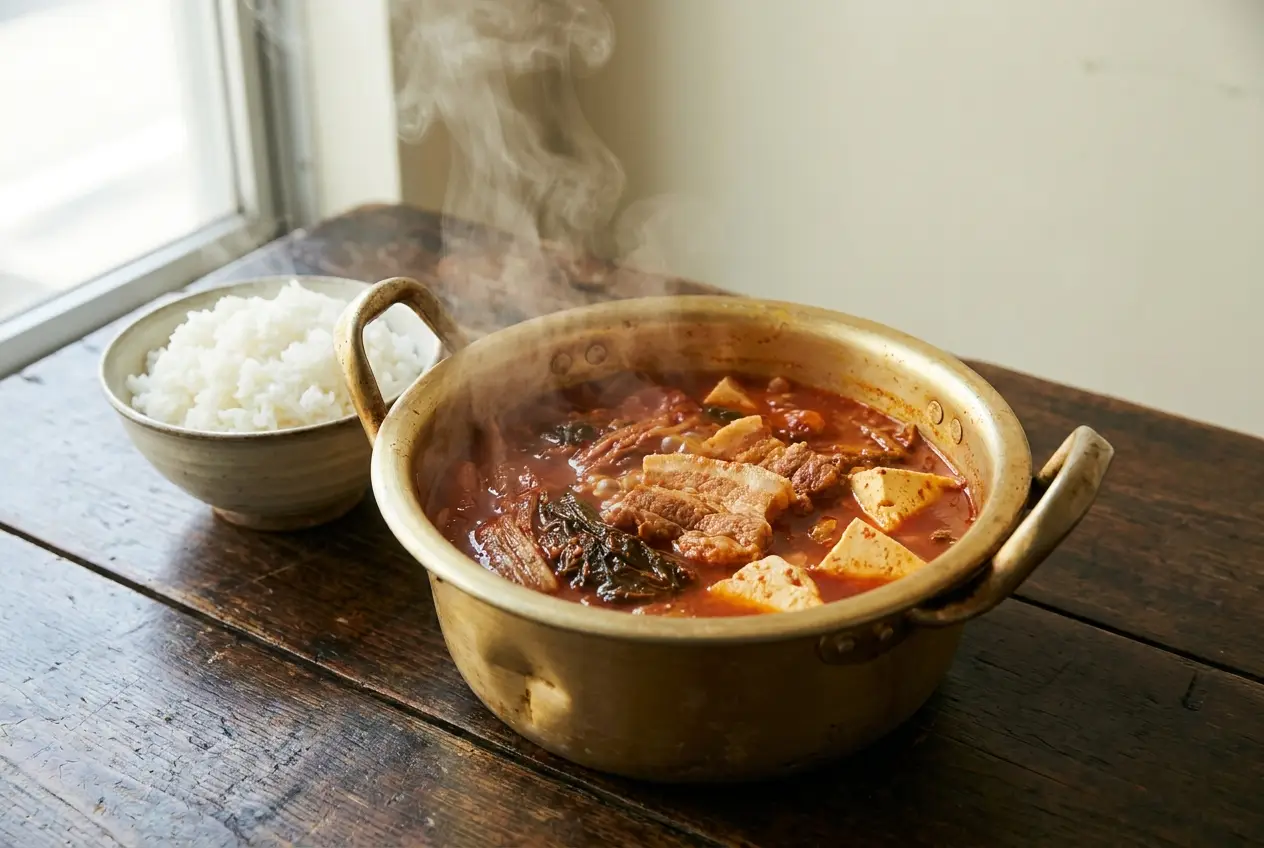
Soups & Stews · VIII · The Everyday Fire
Kimchi Jjigae (Kimchi Stew) · 김치찌개
Stew · served hot alongside rice · this recipe uses fermented kimchi, pork and tofu · flavor depends on the kimchi and stock.
Kimchi jjigae turns well-fermented kimchi into the center of a meal. Unlike kimchi served cold as a side, the stew combines it with broth and other ingredients. The recipe below is one home-style preparation, so use it as a defined version rather than a standard for every Korean kitchen.
Well-fermented kimchi gives the broth a noticeable sourness that fresh kimchi will not reproduce. Start with the kimchi and its juice, then taste the simmered broth before adding salt or more seasoning. Pork lends richness; tuna gives a different savory character; tofu absorbs the surrounding broth. Choose the kimchi first rather than expecting extra chili paste to create the flavor of fermentation.
Combine bites of stew with rice instead of treating a strongly seasoned pot as a drink. Ask whether a restaurant serves individual portions or a shared pot, and use the serving spoon offered. Rice may be included or ordered separately. These details matter more than the bowl’s traditional-looking appearance.
Pork, canned tuna and meat-free versions produce different pots. Removing pork alone does not establish a vegetarian stew: the kimchi and stock may still contain seafood. At home, compare the written ingredient list with what you have, and describe substitutions as your version rather than promising an identical result.
Well-fermented kimchi is the starting point of this stew. UNESCO’s account of kimjang explains the shared preparation and distribution of kimchi and its household variation. Its 2013 inscription recognizes that practice, not an invention date for kimchi jjigae or an endorsement of this recipe.
The stew makes it easy to see how a stored ingredient can become another meal. Different kimchi and household seasoning choices give the pot its character. Calling it home food is a useful setting, but a bowl cannot stand for every Korean person’s family memories. Our comfort-food essay explores that distinction.
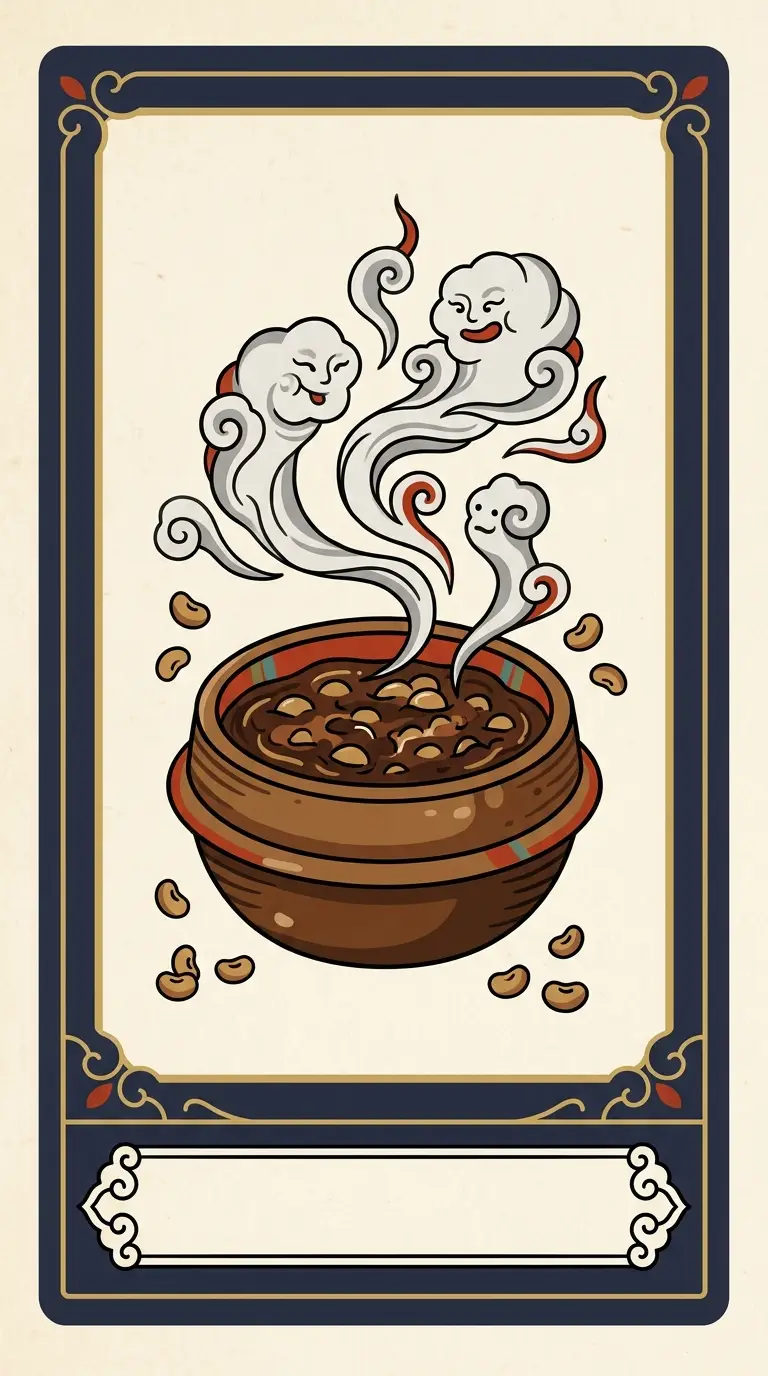
Images are AI-generated illustrations, not records of a kitchen test. Follow the written ingredients and steps. Ingredients and substitutions guide
| Ingredient | Amount | Substitute abroad |
|---|---|---|
| Well-fermented sour kimchi | 400 g (about 1/4 head) | Choose well-fermented store-bought kimchi. Refrigerate after opening and follow the product's storage and use-by instructions; do not leave it out for days to ripen. |
| Pork shoulder | 200 g | Pork butt or thick pork belly |
| Kimchi brine | 1/2 cup | The liquid at the bottom of the kimchi container |
| Firm tofu | 1/2 block | Any firm tofu |
| Korean scallion | 1 stalk | 2 to 3 thin scallions or leek whites |
| Onion | 1/2 | Any onion |
| Gochugaru (Korean chili flakes) | 1 tbsp | No substitute; Korean grocers online |
| Minced garlic | 1 tbsp | 3 cloves, freshly minced |
| Soup soy sauce or anchovy fish sauce | 1/2 tbsp | A little Vietnamese fish sauce |
| Sugar | 1/2 tsp (to soften sourness) | A little honey |
| Rice-rinsing water | 3 cups | 3 cups water with a spoonful of rice stirred in |
| Perilla oil | 1 tbsp | Cooking oil or sesame oil |
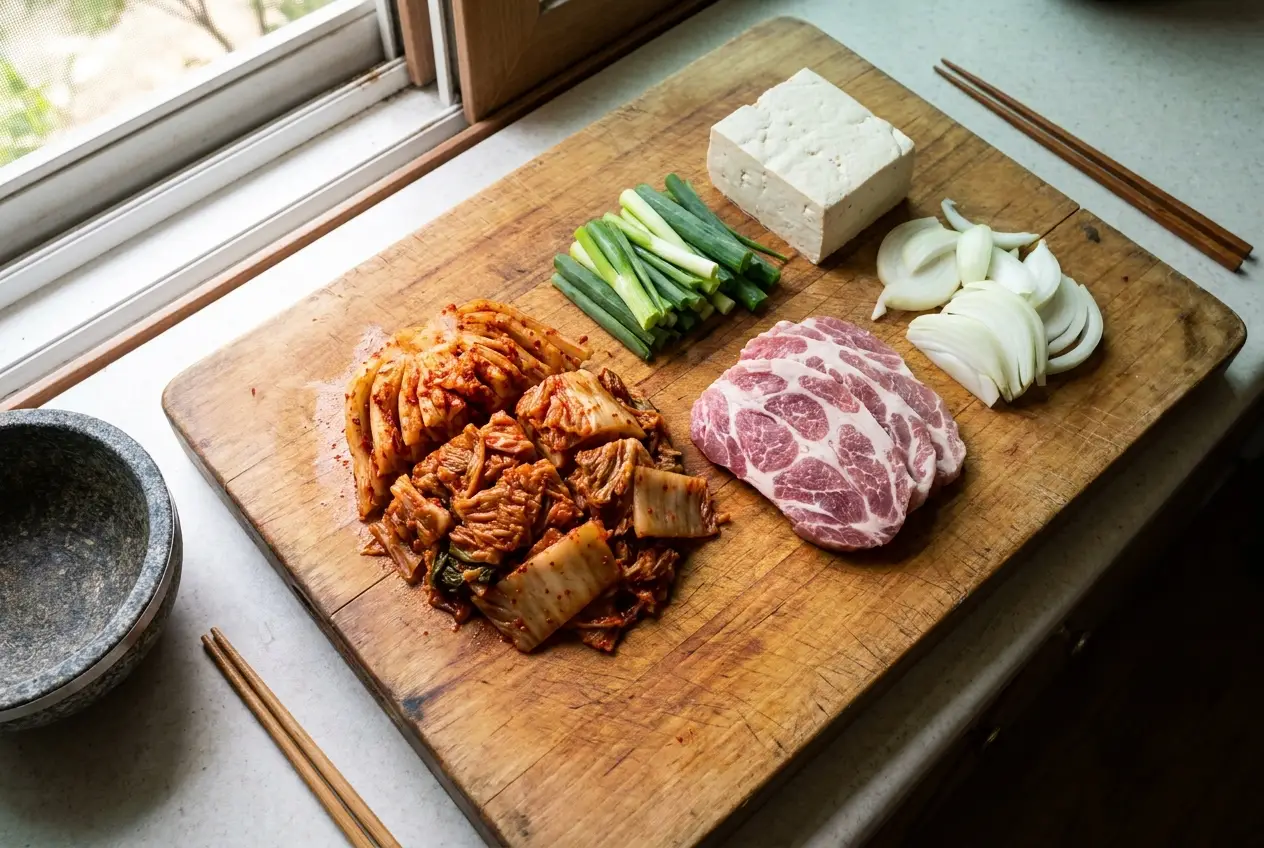
Cut the kimchi bite-size without shaking off the filling, and slice the pork thick. Cut tofu into 1 cm slices, the scallion on the bias, and the onion into thick strips.
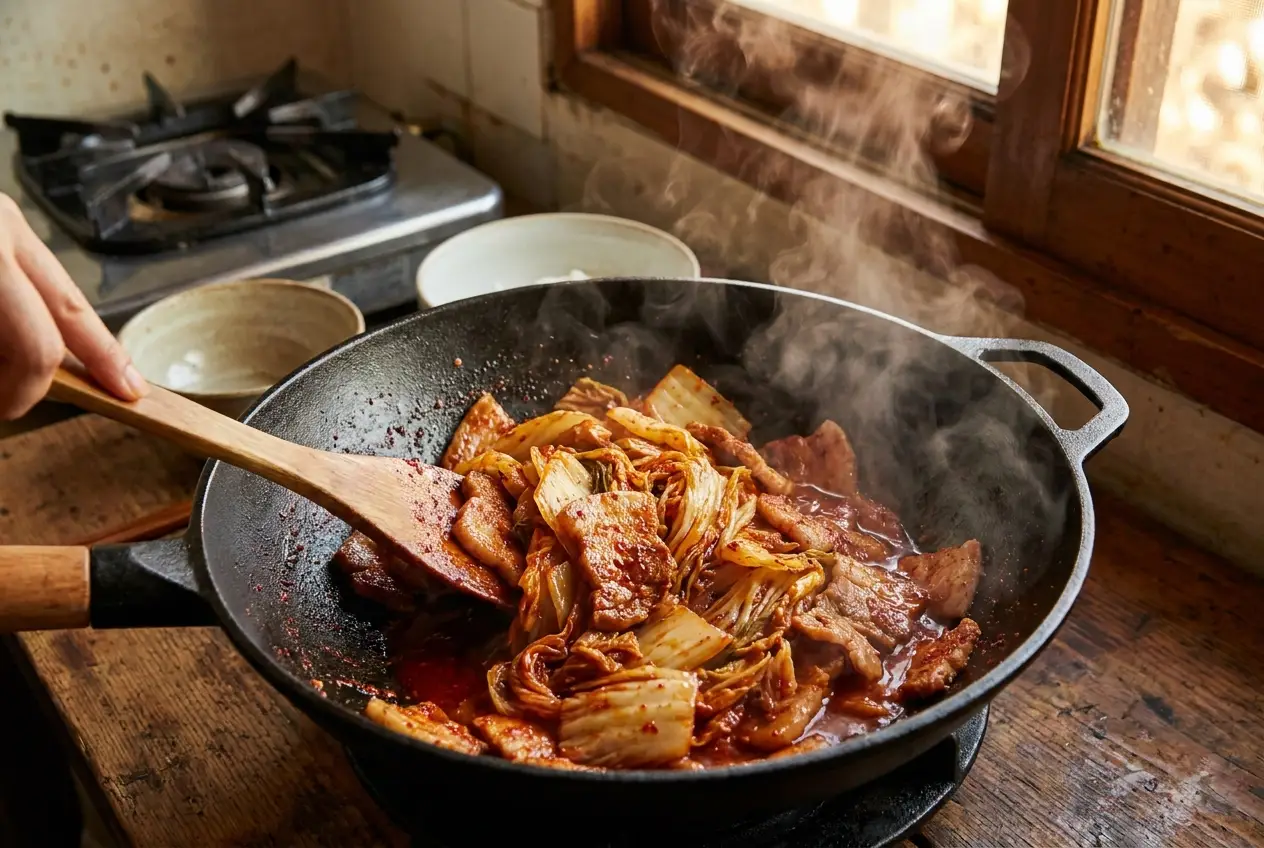
Heat perilla oil in a pot and fry the pork over medium heat until the surface cooks. Add the kimchi and fry three to four minutes more, then the chili flakes and garlic for thirty seconds to bloom the aroma.
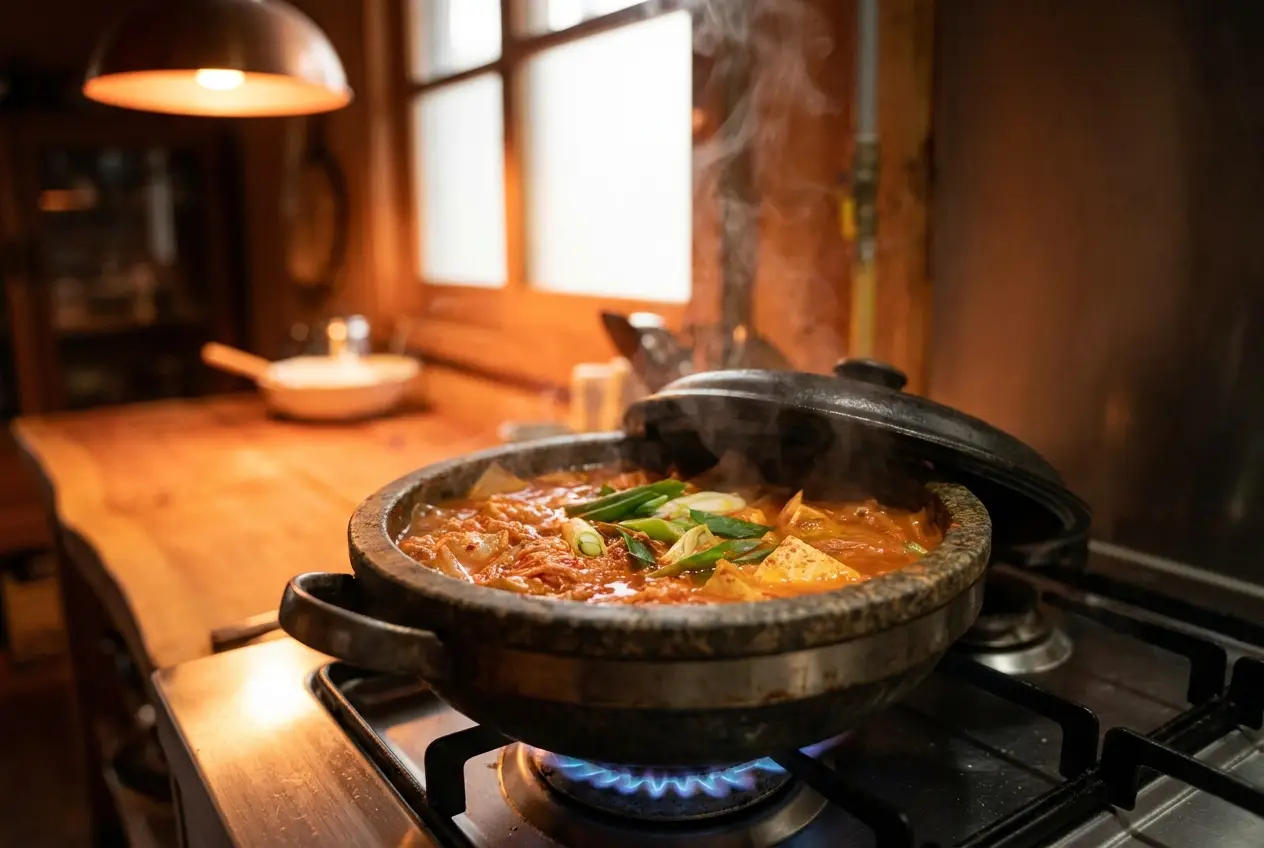
Add three cups of rice water and half a cup of kimchi brine, bring to a boil, then lower the heat. Cover and simmer twenty minutes until the kimchi turns tender.
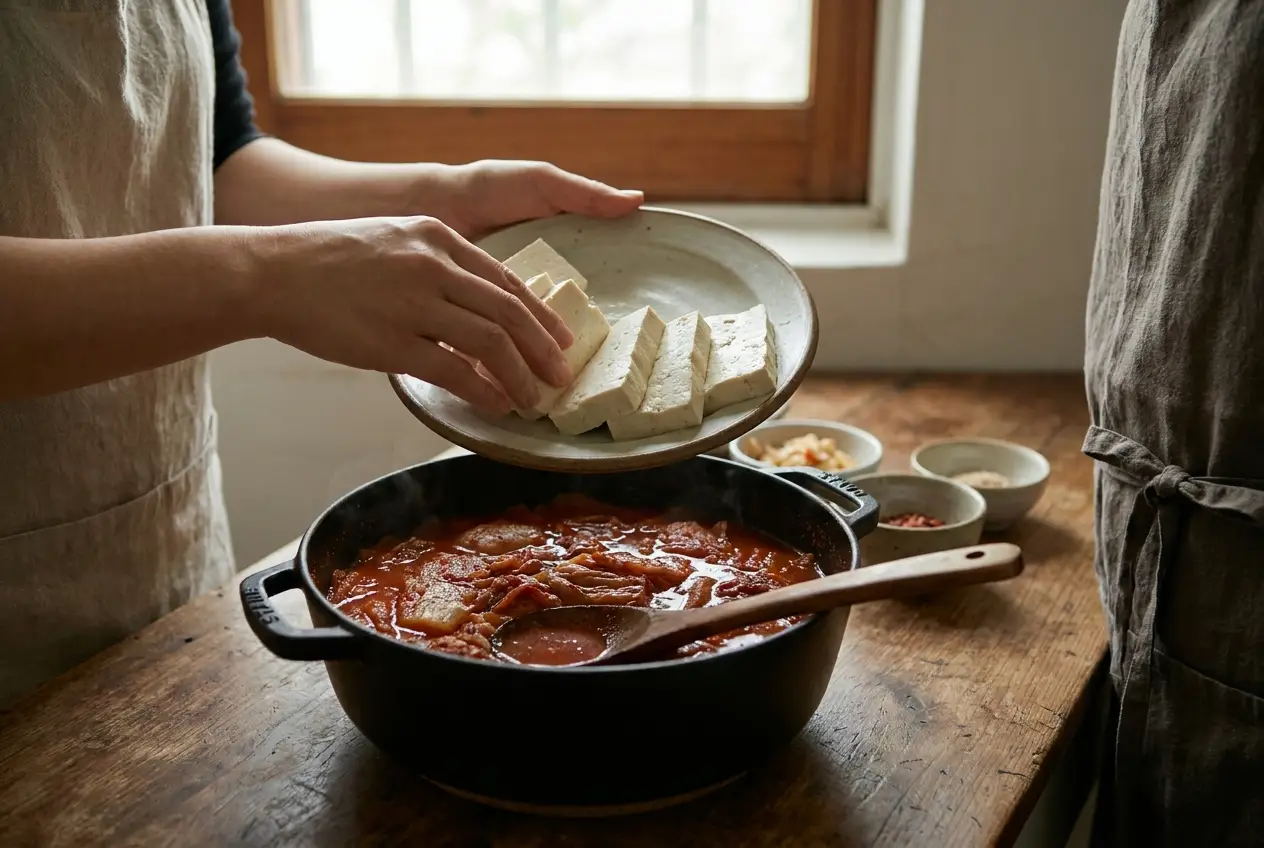
Season with soup soy sauce or fish sauce, and if the kimchi runs very sour, tame it with half a teaspoon of sugar. Add the tofu and onion and boil five minutes more.
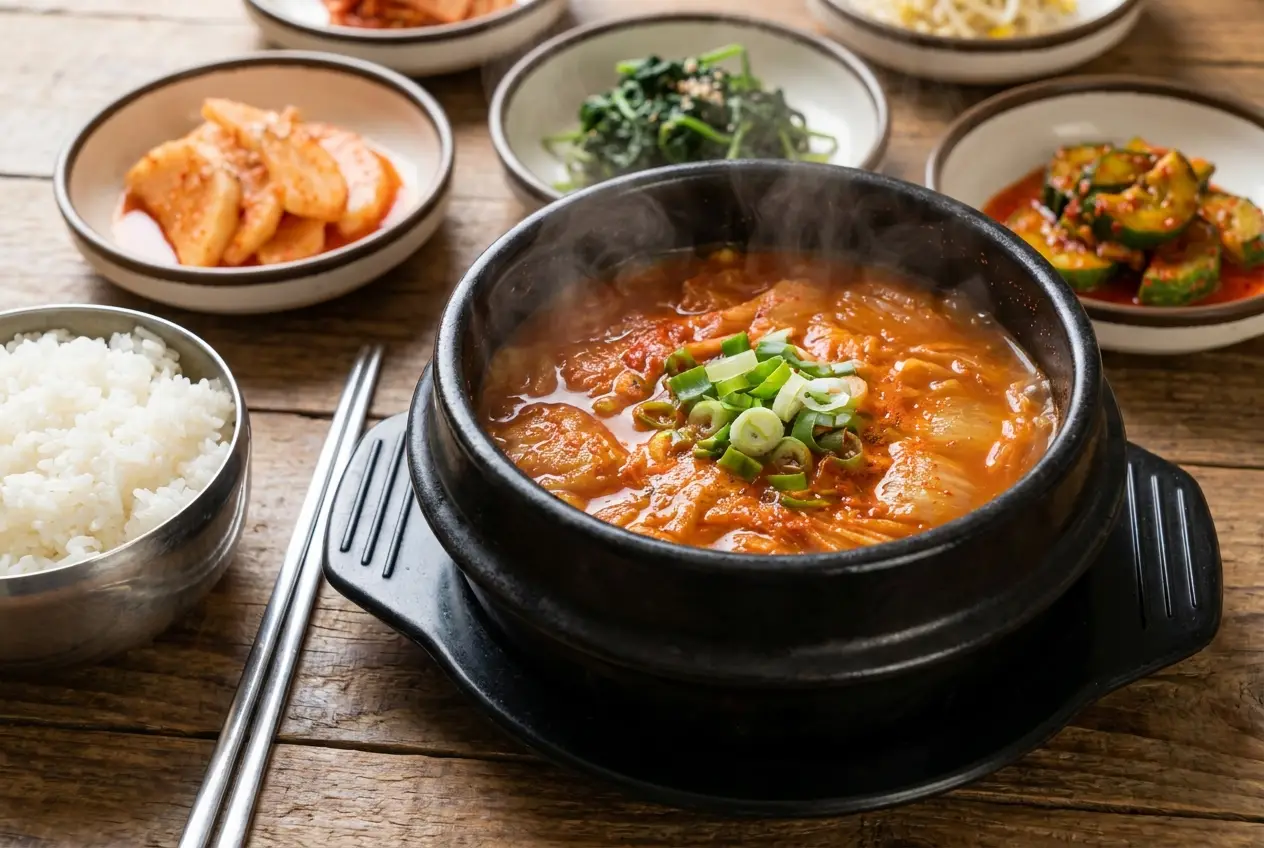
Add the scallion just before turning off the heat, boil once more, and bring the pot straight to the table with hot rice.
Candidates to investigate for this food. Maps use sourced location records; confirm the current menu, opening and booking directly. This list is not a tasting review or an award certification.
Jongno, Seoul (behind Sejong Center)
Public-record location check, not a live opening-hours guarantee. Confirm with the restaurant before visiting.
Gongdeok, Mapo, Seoul
Public-record location check, not a live opening-hours guarantee. Confirm with the restaurant before visiting.
Bangsan Market, Euljiro, Jung-gu, Seoul
Public-record location check, not a live opening-hours guarantee. Confirm with the restaurant before visiting.
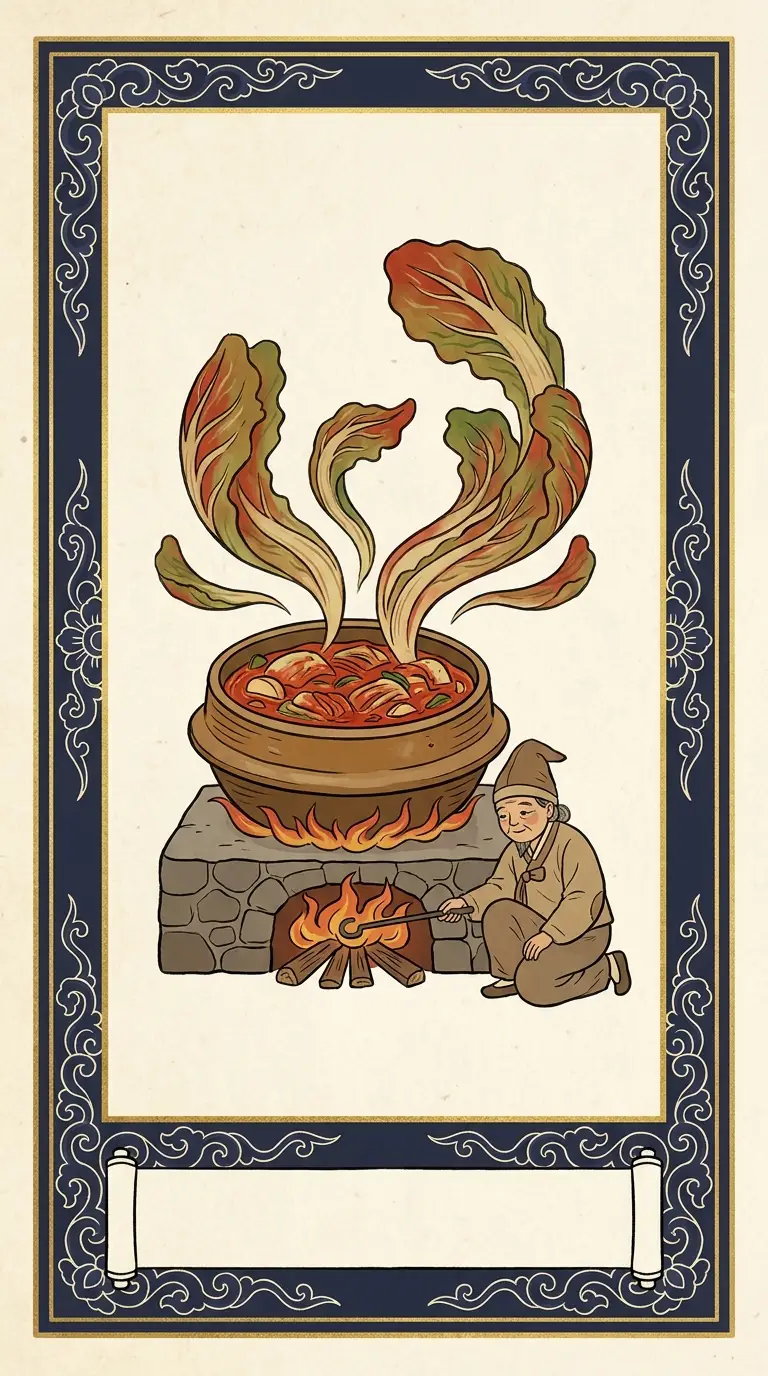
Fire element · a sharp, vivid face
A quick boil on the outside, but the affection underneath is fermented deep like year-old kimchi. The soul-food type of person: seen every day and never tiring.
Upright: The card of a fire that is not glamorous but lights again every single day. Strength builds through repetition now, so boil yesterday's work once more and the flavor comes out deeper than before.
Reversed: The flame is high but nothing is cooking through. Impatience is boiling your broth away, so lower the heat, cover the pot, and the touch you lost comes back.
Fictional food metaphors inspired by traditional face-reading, not measurements of your face or personality.
Did someone grind ink into those brows? A Palace of Siblings that dark and full means deep loyalty, though once crossed, the grudge simmers three years. That is kimchi-jjigae kimchi exactly, child: you cannot make the stew from a fresh batch, it takes half a year of souring before the broth comes alive. Your heart is the same, long-fermented and rich. So stop sulking when people flinch at the sour smell. Yours is a flavor only the knowing tongue knows.
Look at those eye corners climbing to heaven. Eyes that rise like that mean a sharp Palace of House and Land: quick judgment and no patience for losing. Exactly the order of a kimchi stew, no? The first five minutes need high heat, frying the kimchi hard in pork fat to wake the flavor. But child, if all you do is fry and never cover the pot to wait, the taste never settles. The seasoning your temper lacks most is those twenty minutes of low flame.
That nose bridge stands straight as a roof beam. The nose is the Palace of Wealth: a firm bridge means clear pride, clear opinions, and substance gathering in your middle years. But look into the stew pot. However rich the pork broth is, it has to give up its own color into the kimchi to become jjigae; hold out alone and pale, and it is just meat soup. Same for that pride of yours, child. Do not break it, but mix yourself into the broth. That is how people and money gather to your pot.
For all my scolding, a face with fire in the pot and affection fermented that deep is rare in all eight provinces. You are the one still bubbling when everyone else has gone cold, so use that warmth to feed the people beside you, rice and all.
Grandma's blessing
The rolled omelet has the round, gentle eyes of a born peacemaker, softly absorbing your fire, a true match. Ganjang-gejang is a famous rice thief in its own right, and with two leads at one table, no rice pot in the house survives.