Jinmi Sikdang
Samgakji, Yongsan-gu, Seoul
Exact current location is not verified here. Confirm the venue through its official information before planning a visit.
Ferments & Pastes · XV · The Fermented Soul
Cheonggukjang (Rich Soybean Stew) · 청국장
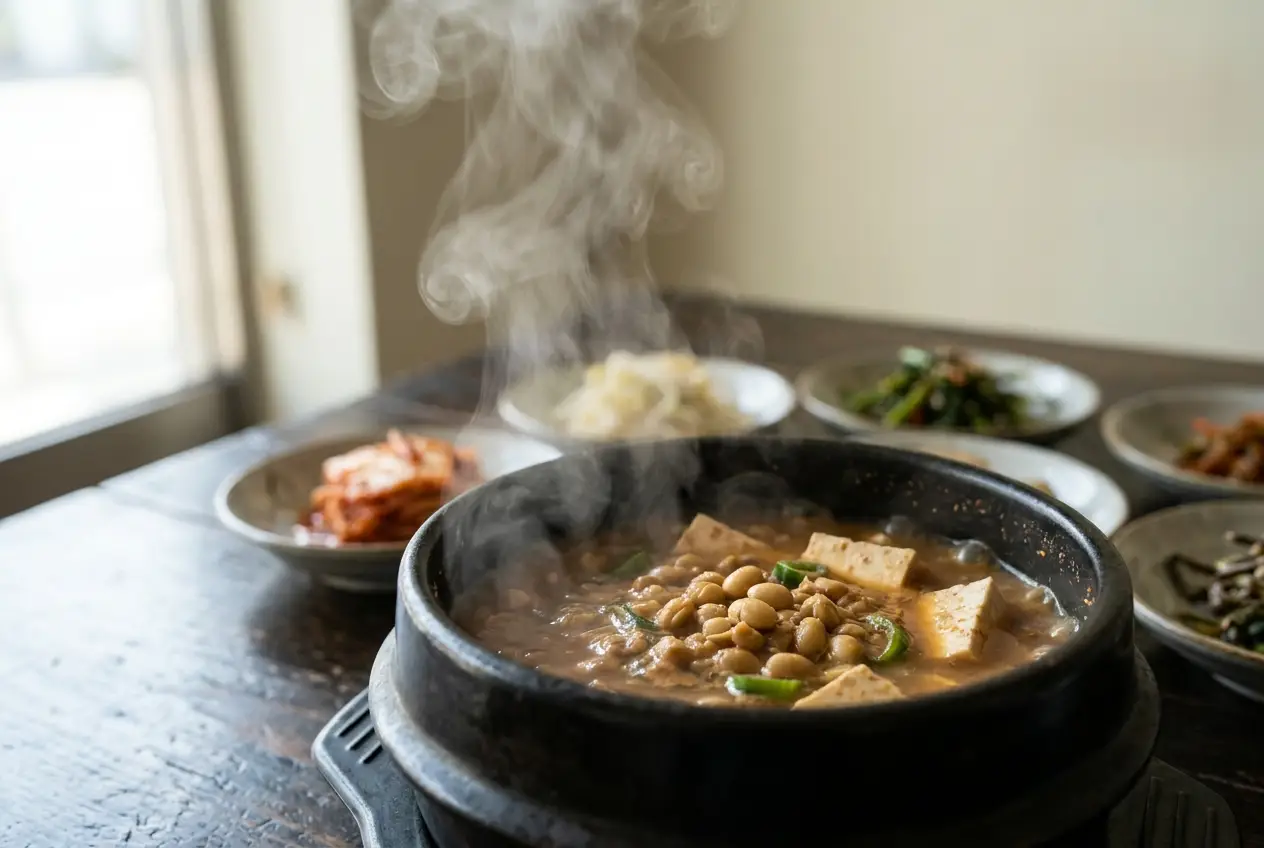
This cheonggukjang stew combines fermented soybean paste with pork, sour kimchi and tofu. Recognizable beans distinguish the paste from a smooth sauce; the kimchi also contributes acidity to this particular pot.
Compare its visible beans and aroma with doenjang jjigae. A version without kimchi will be a different comparison, so ask about the pot rather than assuming the dish name fixes its acidity. Pair small spoonfuls with rice.
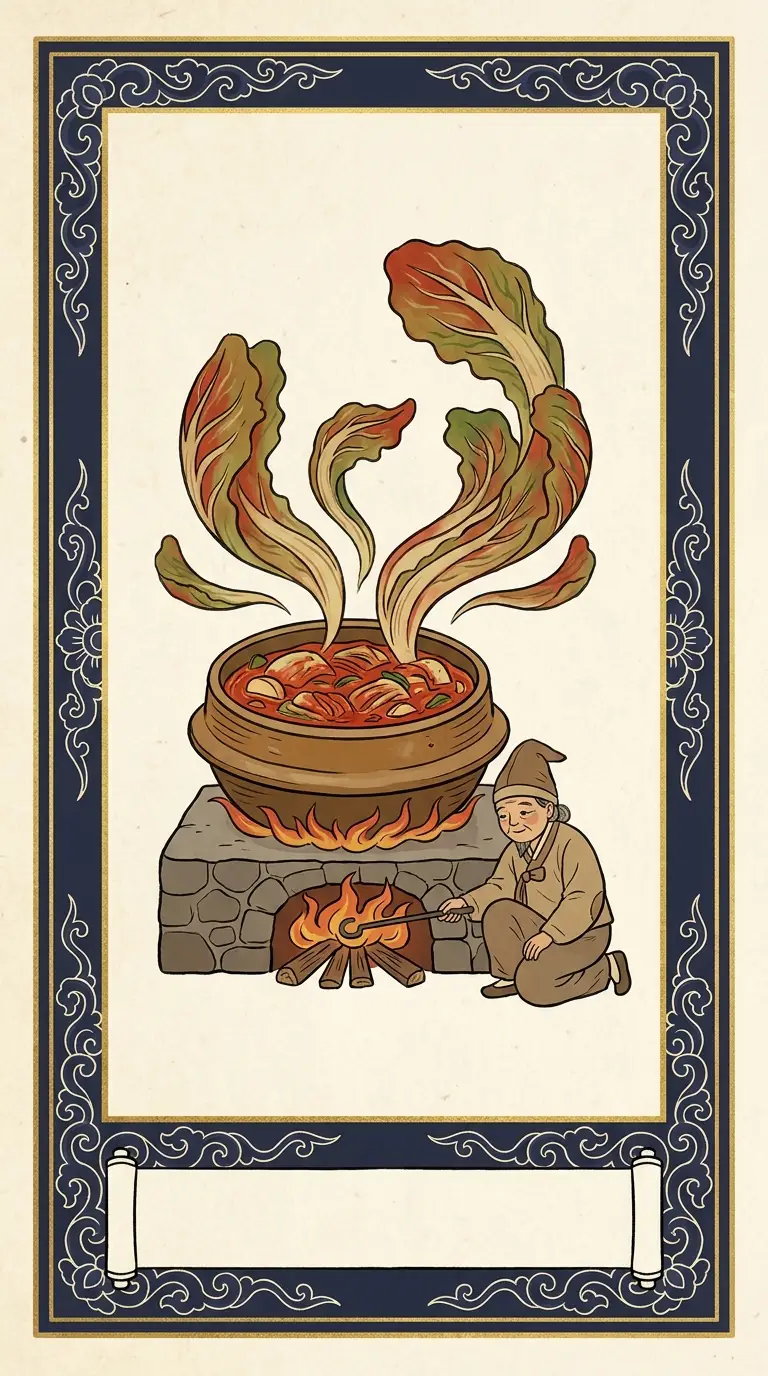
Images are AI-generated illustrations, not records of a kitchen test. Follow the written ingredients and steps. Ingredients and substitutions guide
| Ingredient | Amount | Substitute abroad |
|---|---|---|
| Cheonggukjang (fast-fermented soybean paste) | 200 g | 2 packs natto + 1 tbsp doenjang in a pinch; the real thing is at Korean grocers |
| Pork shoulder | 100 g | Brisket slices or a little bacon; shiitake for vegetarian |
| Well-fermented sour kimchi | 150 g (1 cup) | No true substitute; sauerkraut plus gochugaru in an emergency |
| Firm tofu | 1/2 block (150 g) | Any firm tofu |
| Korean zucchini | 1/3 | Zucchini |
| Onion | 1/4 | Anywhere |
| Scallion | 1 stalk | Thin leek whites |
| Korean green chili | 1 | Serrano or jalapeño |
| Minced garlic | 1 tbsp | Anywhere |
| Gochugaru (Korean chili flakes) | 1 tsp (optional) | Half as much crushed red pepper |
| Rice-rinsing water | 2 cups (500 ml) | 500 ml water + 1/2 tsp rice flour |
| Korean soup soy sauce | To taste | Salt or a few drops of fish sauce |
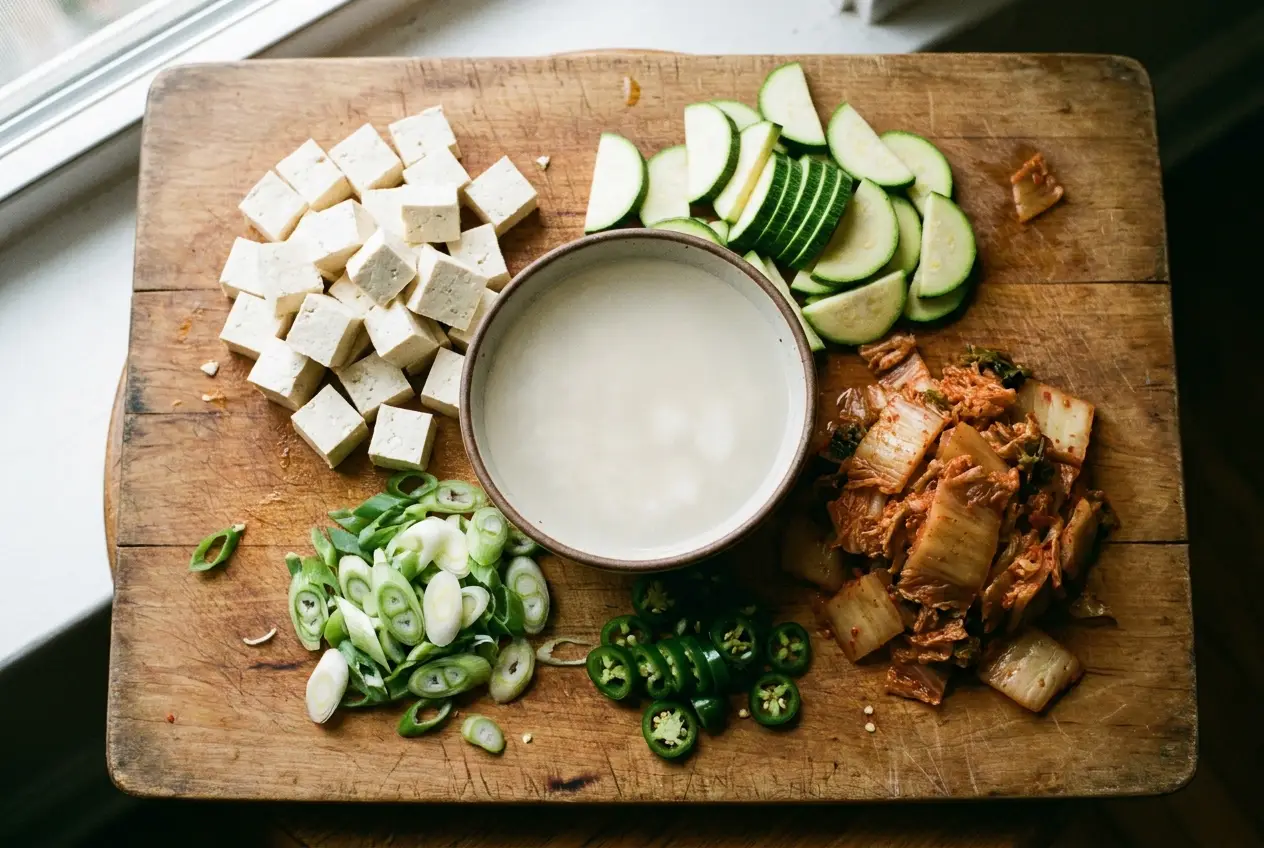
Cut zucchini and onion bite-size, dice the tofu, chop the kimchi, and slice scallion and chili on the bias. Rinse rice twice and keep the third rinse water: two cups.
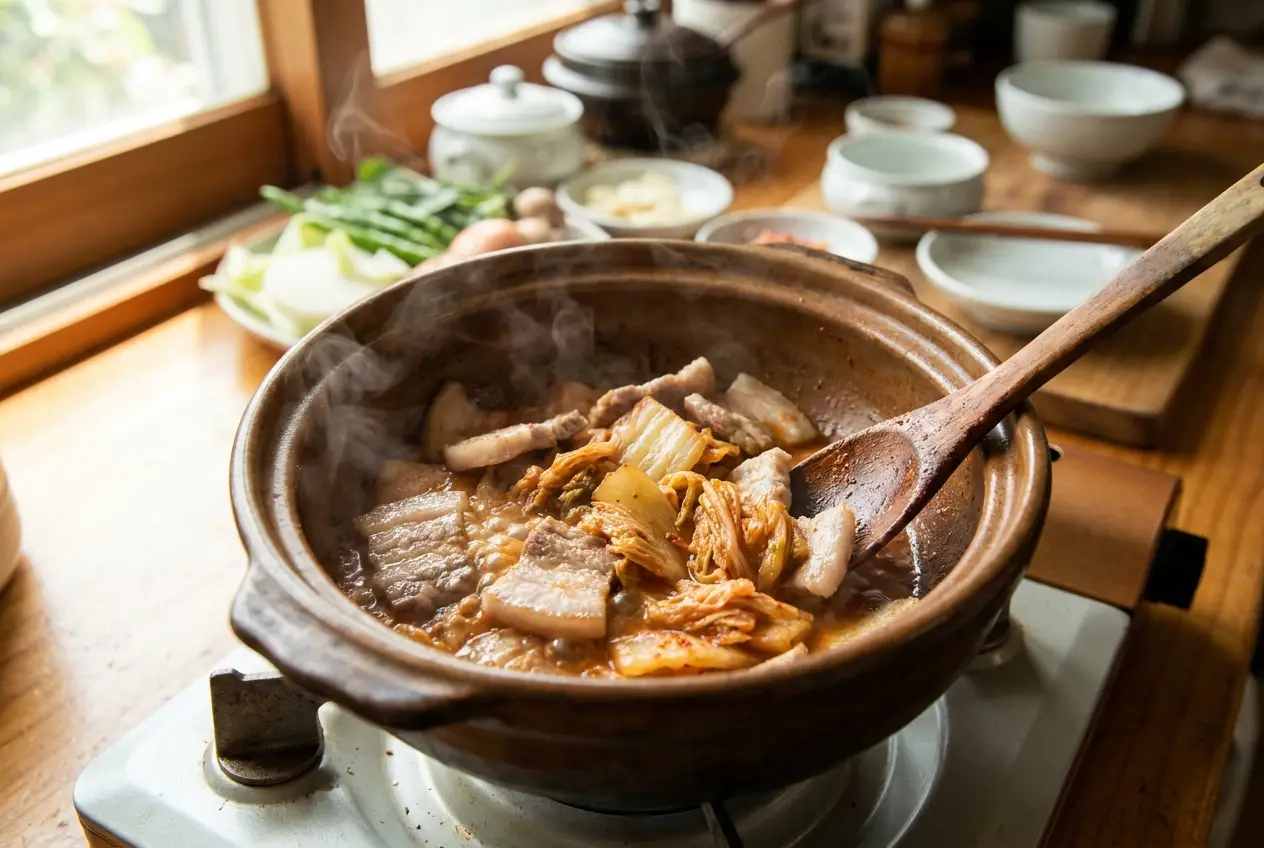
In an earthenware pot, cook the pork over medium heat, then add kimchi and garlic and fry two to three minutes until the kimchi softens and the oil turns red.
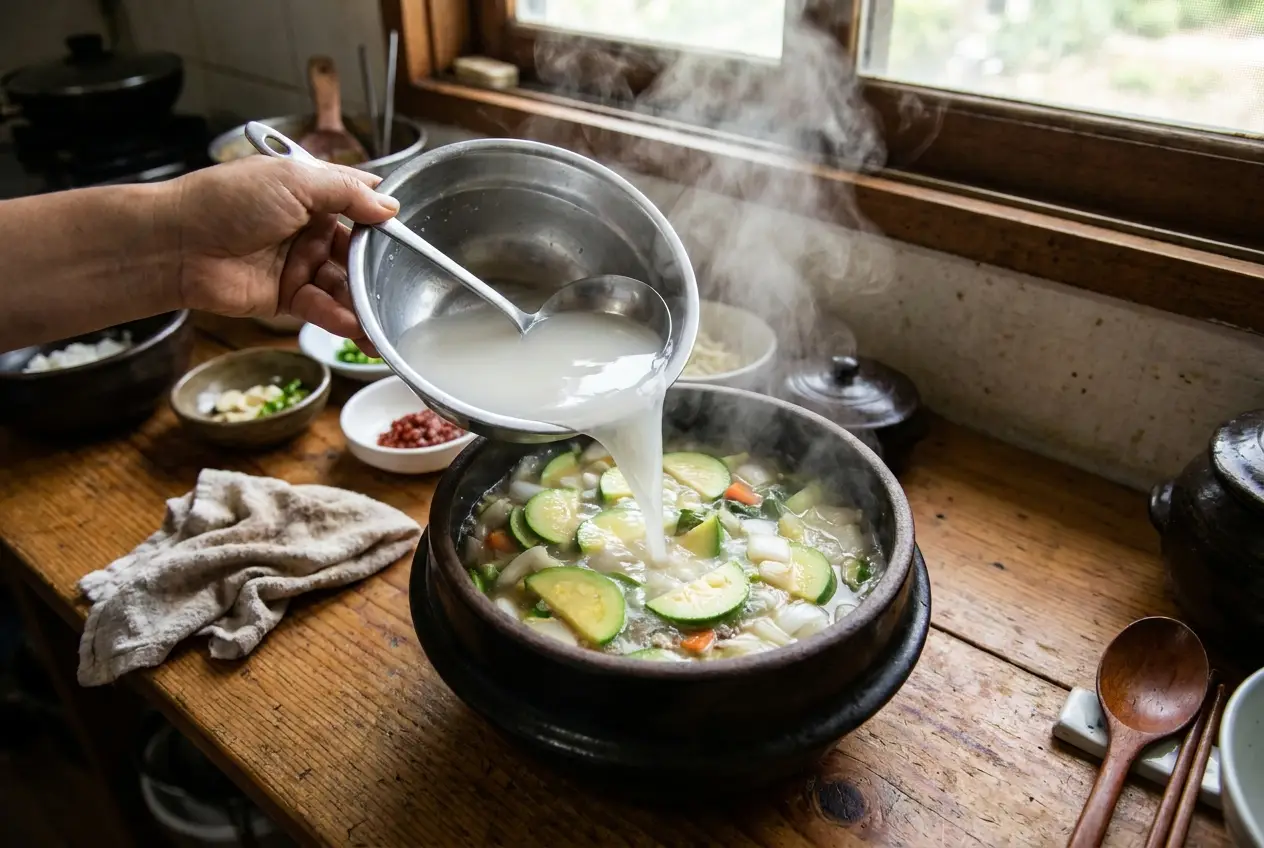
Add the rice water, bring to a boil, then add zucchini, onion, and gochugaru to taste. Simmer five minutes over medium heat, skimming any foam.
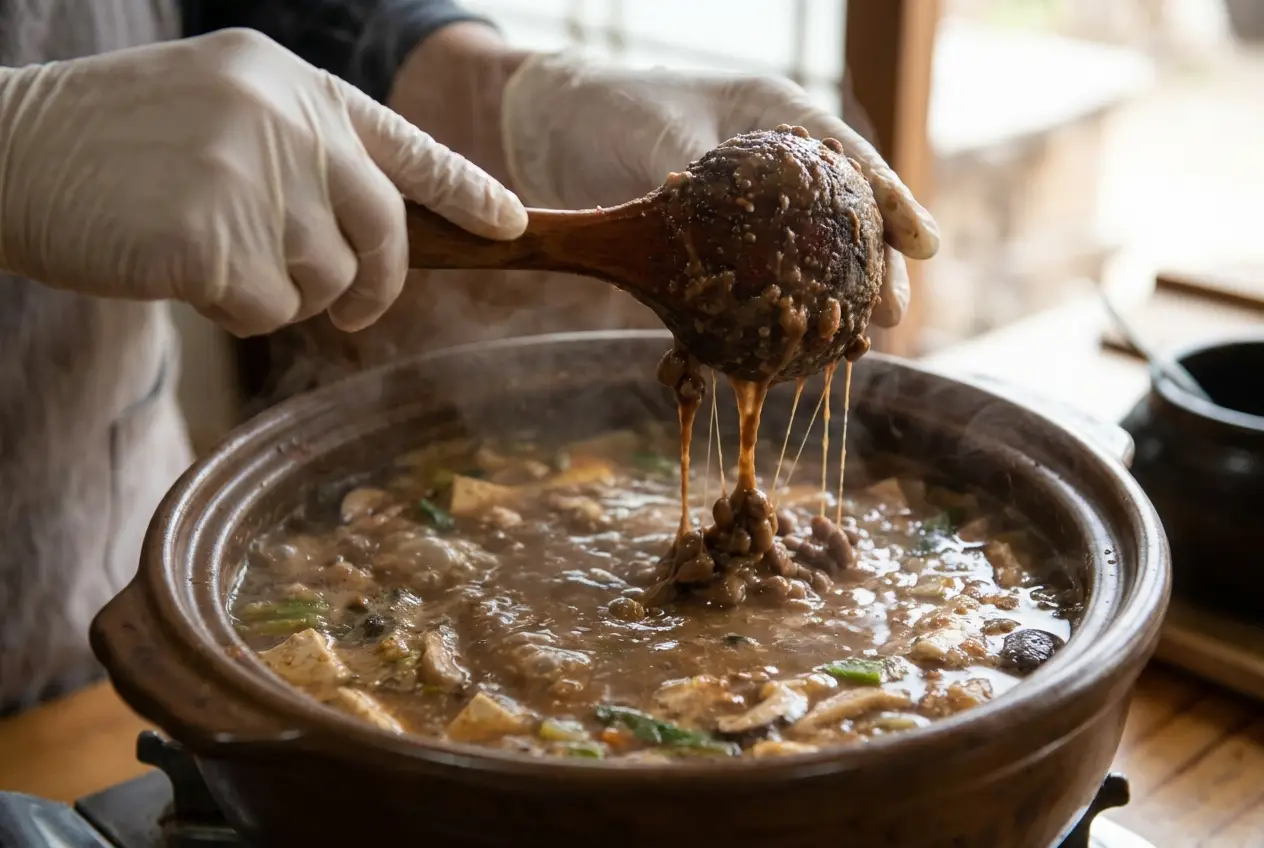
Lower the heat and press the ferment through the broth with the back of a ladle until no lumps remain. One brief boil is enough; long boiling chases off the aroma.
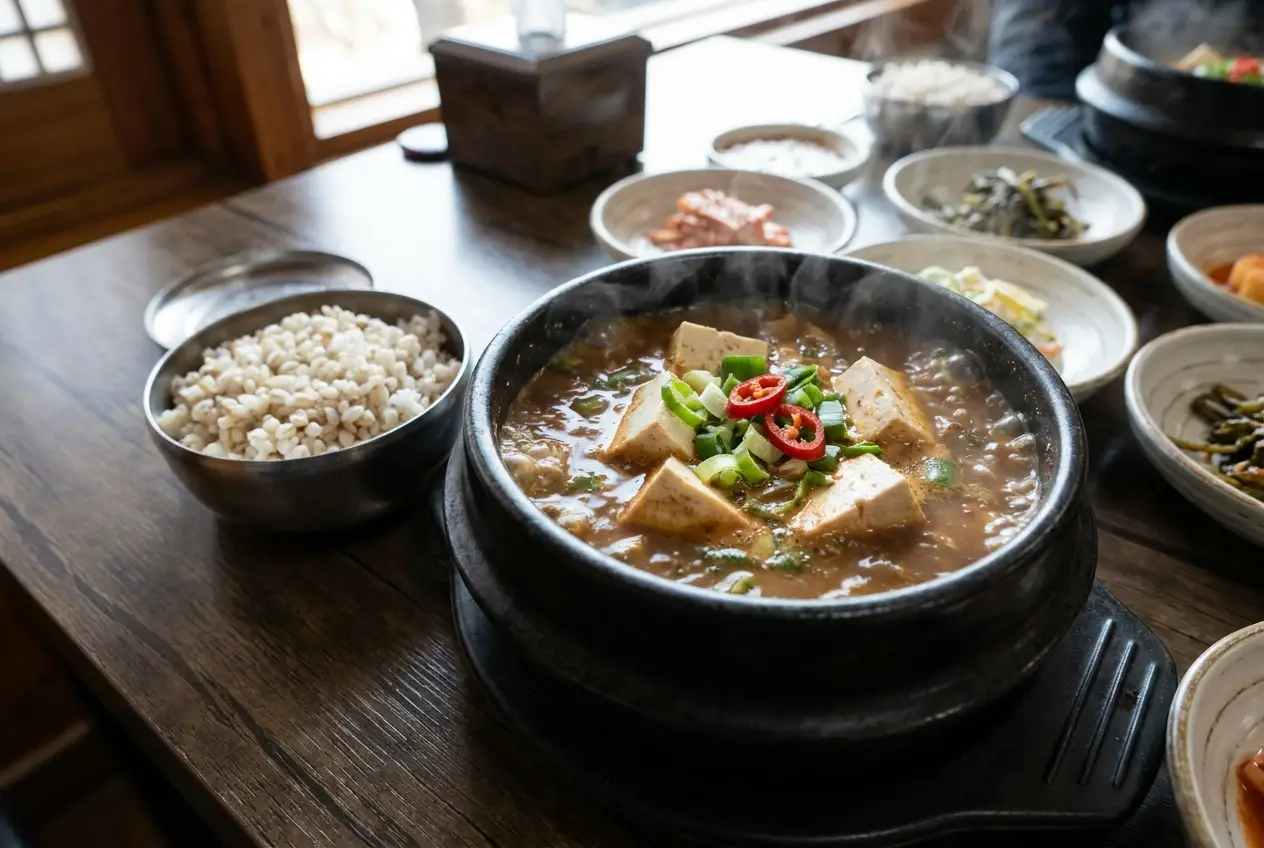
Add tofu, chili, and scallion, boil one more minute, and adjust with soup soy sauce or salt. Serve bubbling in the pot with barley rice.
Candidates to investigate for this food. Maps use sourced location records; confirm the current menu, opening and booking directly. This list is not a tasting review or an award certification.
Samgakji, Yongsan-gu, Seoul
Exact current location is not verified here. Confirm the venue through its official information before planning a visit.
Gongju, South Chungcheong
Public-record location check, not a live opening-hours guarantee. Confirm with the restaurant before visiting.
Earth element · a round, full face
Loud on first smell, pure gold underneath. You make decisions in three days flat, and once you give your heart it clings like fermented soybean strings and never lets go.
Upright: Today your true worth spreads through the whole neighborhood like your smell. Stop hiding it and throw the lid wide open. Even the nose-pinchers will come running with spoons.
Reversed: You are asking unripened beans for sticky strings. Do not lift the lid early. Give it three more days: beans and people alike only become jang once fully ripened.
Fictional food metaphors inspired by traditional face-reading, not measurements of your face or personality.
That forehead bulges round as a crock lid. A full crown means intuition that never stops bubbling, the old books say. You are cheonggukjang itself: while others wait months for doenjang, you pull sticky ferment strings out of straw in three days. But listen, you keep the lid shut on all that brewing, so none of your good ideas ever reach the table.
Those eye corners climb sharp to the sky. Upturned eyes mark quick judgment and a hatred of losing. That is exactly why you turned out cheonggukjang and not mild doenjang: no patience to age in the crock for months, so you boil yourself once over high heat and settle it fast. Fine, call it firepower. But learn to turn off the stove before the broth burns down, child.
Did someone pour ink on those brows? Thick and dark, a proper rich brew. A full Palace of Siblings means deep, long-lasting loyalty. Your affection is a well-fermented batch: once the beans ripen, the strings wrap around the chopsticks and never come off. Trouble is, you let that smell loose on strangers who panic at the first whiff. Sit them down and let them taste you slowly.
The same people who pinched their noses will line up at your stone pot when the cold wind blows. You were never a first-impression dish. You are the aftertaste that people cannot forget, so stop rushing and ferment your own way.
Grandma's blessing
Barley rice is your soulmate: a steady Earth type that receives your loud nuttiness without complaint. But the pale Pyongyang naengmyeon scholar loses his own flavor the moment your smell walks in, so spare him the shared table.