Taejo Gamjaguk
Seongbuk-gu, Seoul (Sungshin Women's University)
서울특별시 성북구 보문로34길 43 (동선동1가)Location sources checked 2026.08.09
Public-record location check, not a live opening-hours guarantee. Confirm with the restaurant before visiting.
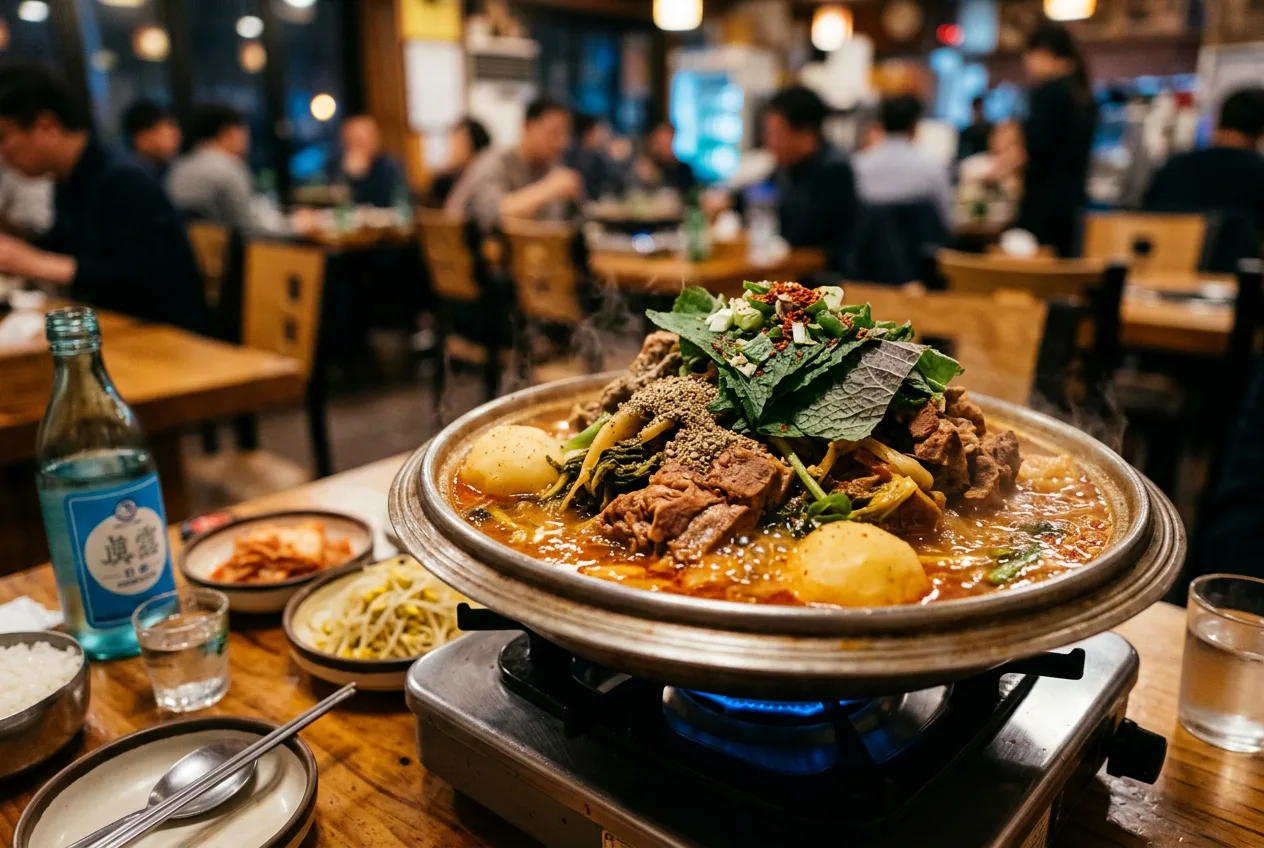
Soups & Stews · 9 of Ladles · Nine of Ladles
Gamjatang (Pork Backbone Stew) · 감자탕
Decision notes · editorial comparison of references and preparation plans
First consider whether you want to share bone-in meat. Against a single haejangguk bowl, bones, party size, noodles and fried rice matter more than counting potatoes.
Check before ordering or preparing: Check shared pot/solo bowl, bone portions and extras. At home, use the neck-bone/cabbage/sprout formula and regular pot below; do not transfer it to pressure-cooker ratios.
Source for the chosen formulation and sequence. Measurements retain source units; not our kitchen validation. Maangchi · gamjatang · author recipe · 2026-10-24
This is Maangchi’s 2–3-serving pork-neck-bone, cabbage and soybean-sprout version. Water and paste/sauce quantities are separated. The source’s differing onion counts are resolved by following its directions, explicitly noted below; no kitchen-test result is claimed.
An individual bone-soup bowl and a shared gamjatang pot may differ substantially in size. Arrange a bowl for discarded bones and serving utensils, then check whether finishing rice or noodles are separate orders.
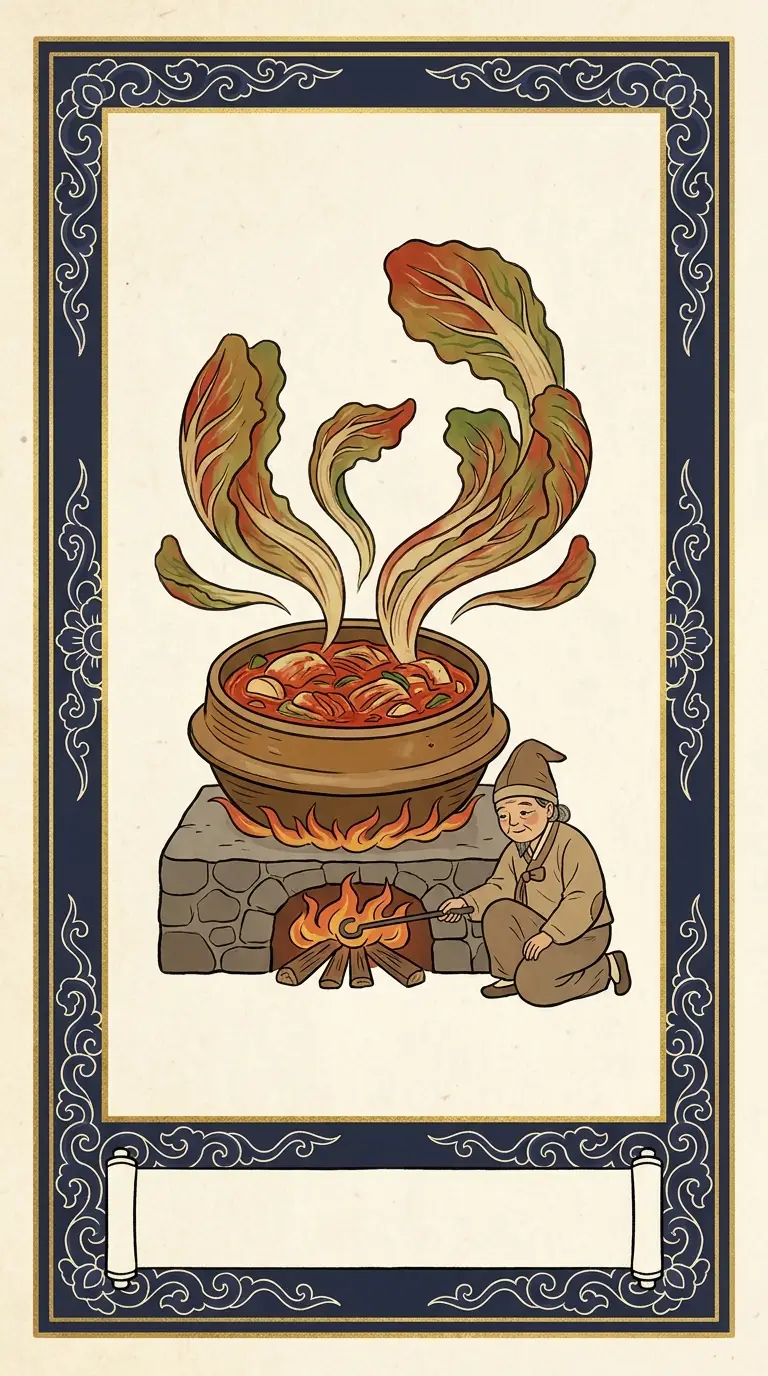
Images are AI-generated illustrations, not records of a kitchen test. Follow the written ingredients and steps. Ingredients and substitutions guide
Times and yields are planning values for this editorial preparation, not measured kitchen results. Substitutions can change flavor, texture and cooking needs. Read product directions and our measurement and doneness guide together.
Editorial total includes preparation, not a measured test. The source lists 4 cooking onions but uses 3 in its directions; we choose 3 plus 1 garnish. Half-cup water is split ¼ paste/¼ finish. Not a pressure-cooker conversion.
| Ingredient | Amount | Substitute abroad |
|---|---|---|
| Pork neck or spine bones | 2½–3 lb | |
| Sliced ginger | 1 oz | |
| Doenjang | 2 tbsp | |
| Dried shiitake mushrooms | 2 | |
| Medium onion, sliced | 1 | |
| Large dried red chili | 1 | |
| Napa cabbage, core removed | 1 lb | |
| Medium peeled potatoes | 2–3 | |
| Soybean sprouts | 8 oz | |
| Green onions, cut 5 cm | 3 (source directions) | |
| Chopped green onion | 1 | |
| Perilla leaves | 8–12 | |
| Minced garlic | 6 cloves | |
| Gochugaru | 3 tbsp | |
| Gochujang | 1 tbsp | |
| Fish sauce | 3 tbsp | |
| Finely ground hulled perilla-seed powder | 1/4 cup | |
| Ground black pepper | 1/2 tsp | |
| Stock water | 11 cups | |
| Water for paste | 1/4 cup | |
| Finishing water | 1/4 cup | |
| Soaking and blanching water | To cover; discard | |
| Cooked rice | Accompaniment for 2–3 servings |
Soak bones in cold water at least 30 min; drain. Refrigerate longer waits. Use a lidded stockpot with headroom for 11 cups plus bones/vegetables; have tongs, strainer, individual bowls and a bone plate.
Blanch cabbage 1 min, cool in cold water and tear lengthwise. Blanch bones in the same boiling water, covered, 7 min on medium-high. Discard water; remove fragments and foam from blanched bones.
Combine bones, ginger, doenjang, mushrooms, onion, dried chili and 11 cups water. Cook covered on medium-high 90 min; watch the boil and liquid level, adjusting heat to prevent overflow or drying.
Combine garlic, chili flakes/paste, fish sauce, perilla powder and pepper with ¼ cup water; reserve the other ¼ cup for finishing.
Slice cooked mushrooms and return them. Add cabbage, sprouts, 3 green onions, potatoes, paste and remaining ¼ cup water; cook covered 30–40 min. Check potato centers with a skewer and meat doneness; extend as needed.
Stir in perilla leaves; top with chopped green onion. Offer rice separately and ladle shared soup into individual bowls. Watch for bone fragments.
Preparing the tool. If controls remain disabled, enable JavaScript or try another browser. The guidance below remains readable.
Ask for enough food for the number of people eating. Portion sizes and minimum orders vary by shop. This card does not send an order or payment.
Candidates to investigate for this food. Maps use sourced location records; confirm the current menu, opening and booking directly. This list is not a tasting review or an award certification.
Seongbuk-gu, Seoul (Sungshin Women's University)
Public-record location check, not a live opening-hours guarantee. Confirm with the restaurant before visiting.
Jongno, Seoul
Public-record location check, not a live opening-hours guarantee. Confirm with the restaurant before visiting.

Earth element · a round, full face
You draw rich broth from what was nearly thrown away. The grit to boil all night and the generosity to share it bone and all: the guardian of the working alley.
Upright: The care that picks the last shred of meat off the bone pays off today. You draw rich broth where others walked away, and thrift is today's weapon.
Reversed: You are drooping like over-boiled cabbage. Even bone-deep hard times turn nutty with one spoon of perilla powder, so add some fragrance to your broth today.
Fictional food metaphors inspired by traditional face-reading, not measurements of your face or personality.
That chin is thick as an iron pot: late-life fortune. Gamjatang is that kind of dish: pork spine bones nobody valued, simmered overnight into a whole cauldron of working-class sustenance. Your life is that backbone. The hardships nobody pays you for now are steeping all night, becoming the rich broth of your later years.
Those brows are dark: a face of loyalty. Do you know why gamjatang houses stay open to dawn? To keep the last table for the people who finish their day late. Your loyalty runs those hours. Even after everyone else closes, your light stays on for your people. That single lamp is why your side never runs short of company.
That mouth is big and easy: a face of nerve. Gamjatang is no solo meal; everyone circles the pot, each gripping a bone. When you open the board, the whole table drops its manners and picks up the bones by hand. Disarming formality is your gift. Just ask about stomach capacity before ordering the fried rice; your nerve has burst other people's waistbands.
The thing once dismissed as scrap bones became the byword for rich broth: that is gamjatang's history. Your bone-deep hard times all become broth once simmered. Lay on the cabbage, add the perilla powder, and keep your pot boiling to the end.
Grandma's blessing
Fried rice with seaweed in the last of your broth is a match written into the constitution of the gamjatang table. With cool kongguksu the temperature gap spans a whole season, so live apart: summer for them, winter for you.