Cheongjinok
Jongno, Seoul
서울특별시 종로구 종로3길 32, 1~4층 (청진동)Checked 2026.08.09
Public-record location check, not a live opening-hours guarantee. Confirm with the restaurant before visiting.
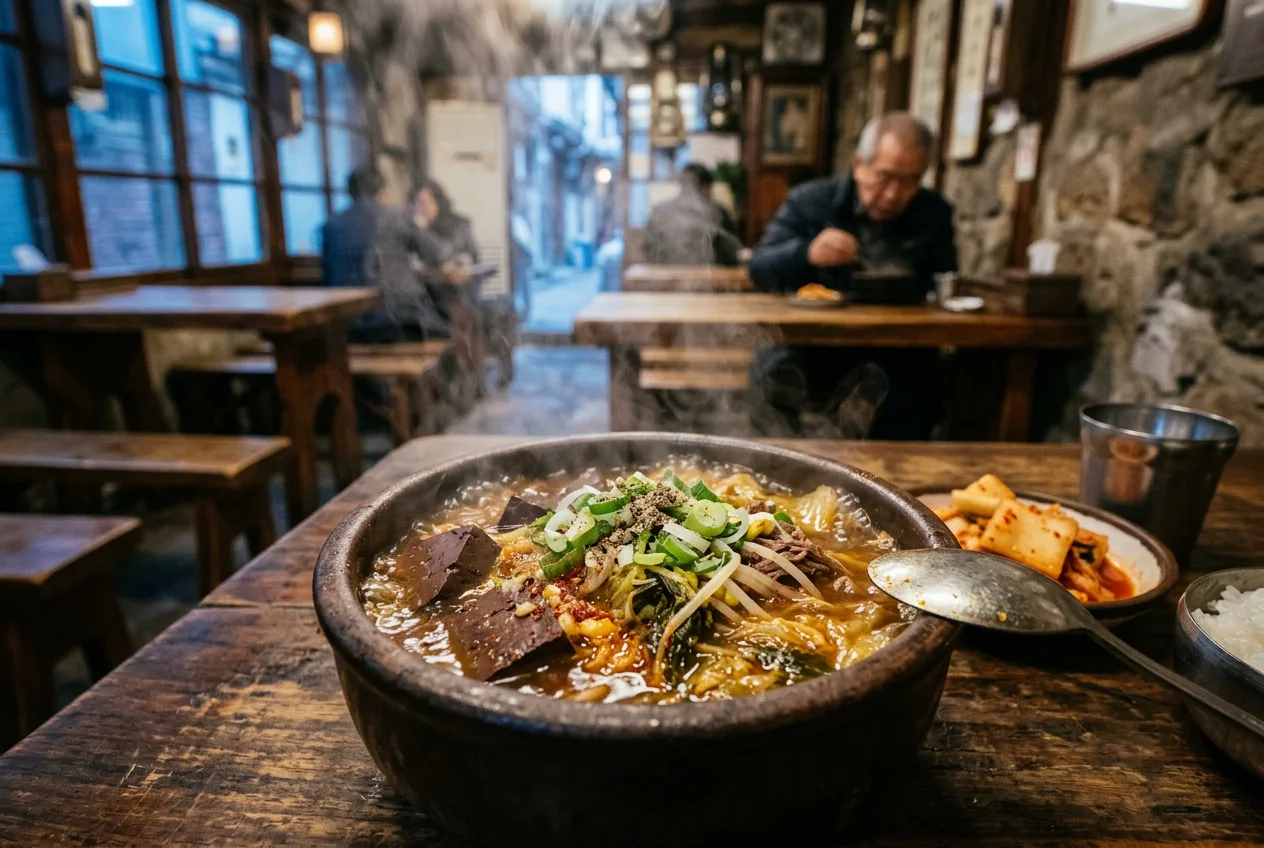
Soups & Stews · King of Ladles · King of Ladles
Haejangguk (Hangover Soup) · 해장국
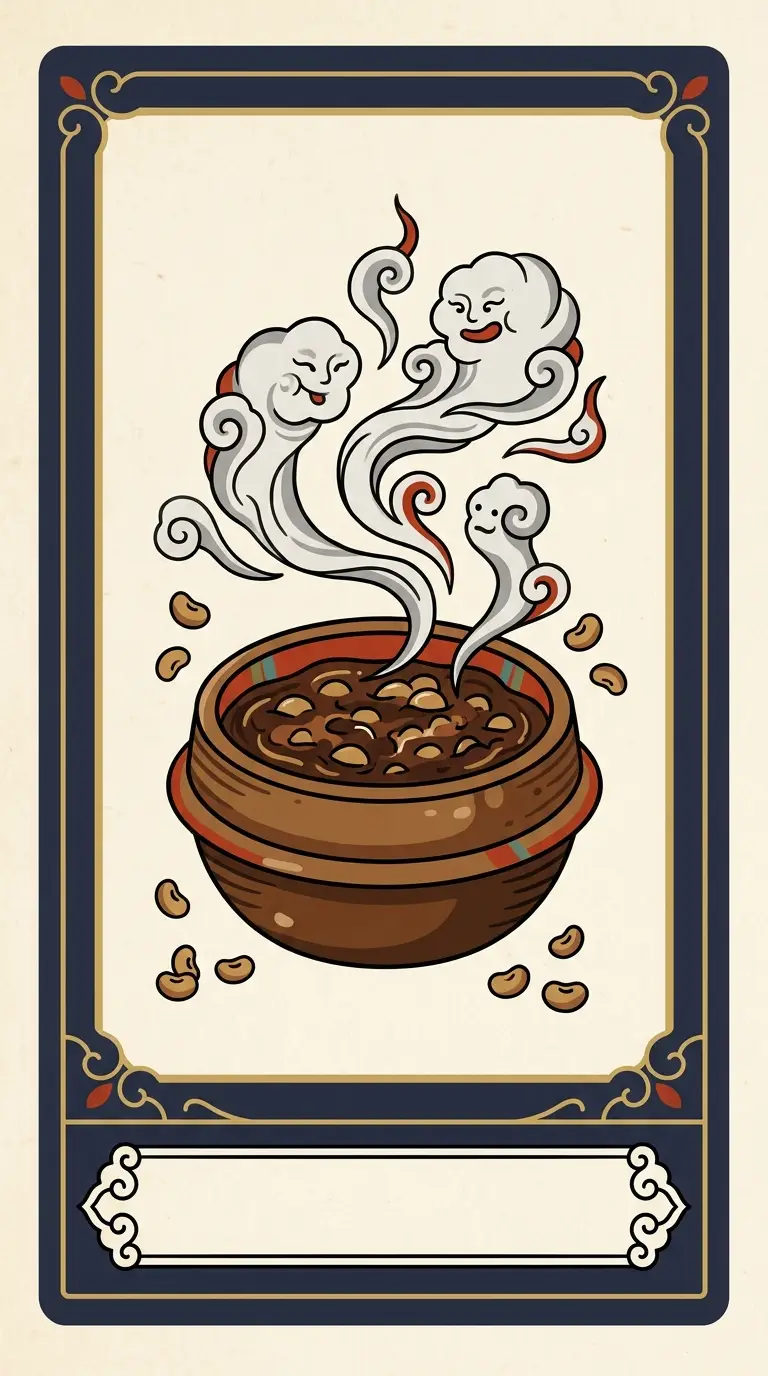
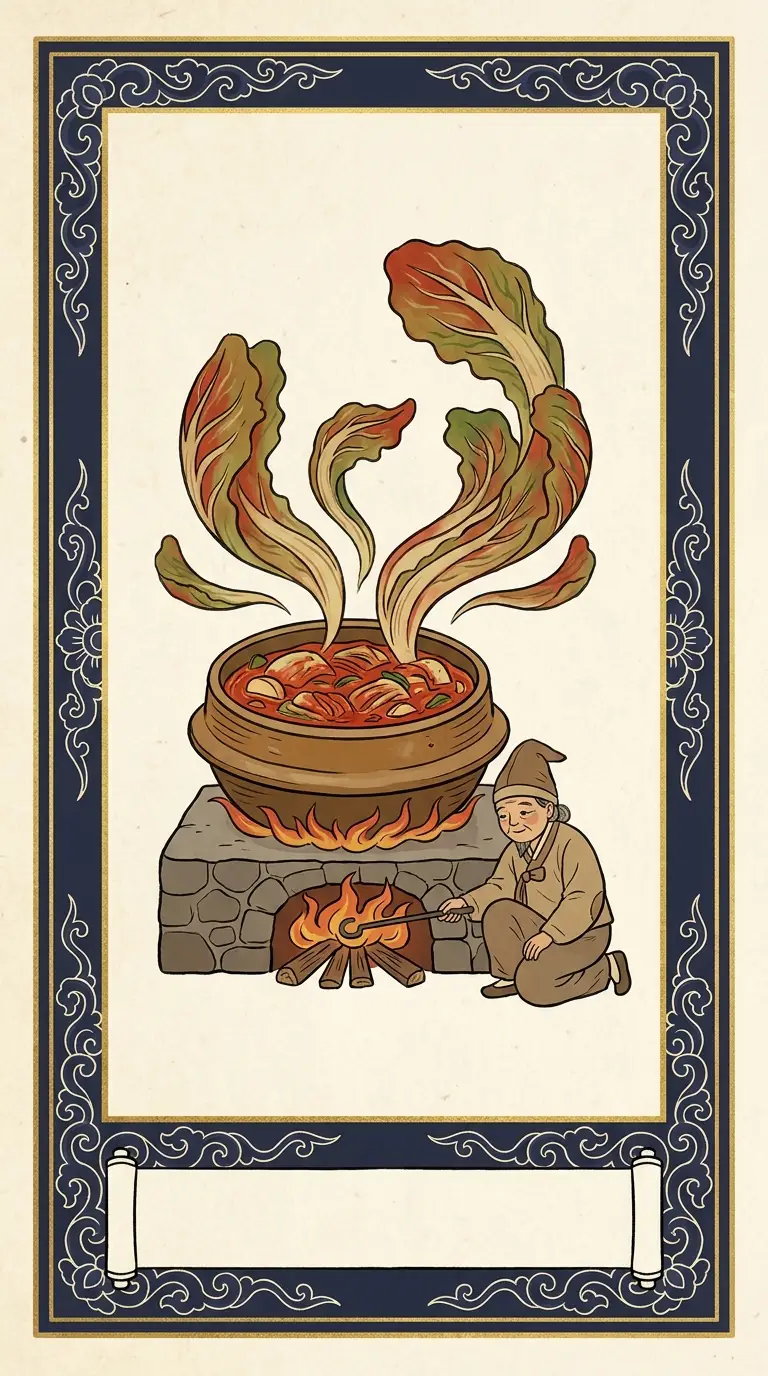
Haejangguk does not name one fixed ingredient formula. This page describes beef-bone broth with cabbage greens and soybean paste, with blood curd as an optional addition.
Establish whether blood curd, offal or meat is included before comparing it with bean-sprout gukbap. Haejang describes a dining context, not a promise that a bowl removes alcohol’s effects.
Images are AI-generated illustrations, not records of a kitchen test. Follow the written ingredients and steps. Ingredients and substitutions guide
Prepared bone stock cuts the total to about 50 minutes. Cook blood curd until steaming hot and firm through the center.
| Ingredient | Amount | Substitute abroad |
|---|---|---|
| Beef bones | 800 g | Bone-broth packs to save time |
| Boiled cabbage outer leaves | 2 handfuls | Dried radish greens |
| Congealed ox blood (optional) | 300 g | Fine to omit; tofu stands in |
| Doenjang | 2 tbsp | Korean grocers online |
| Gochugaru and garlic | A little | Korean grocers online |
| Scallion | 2 stalks | Leek |
| Soup soy sauce and salt | To season | Anywhere |
| Cooked rice | 3 bowls | Torim style, or served separately |
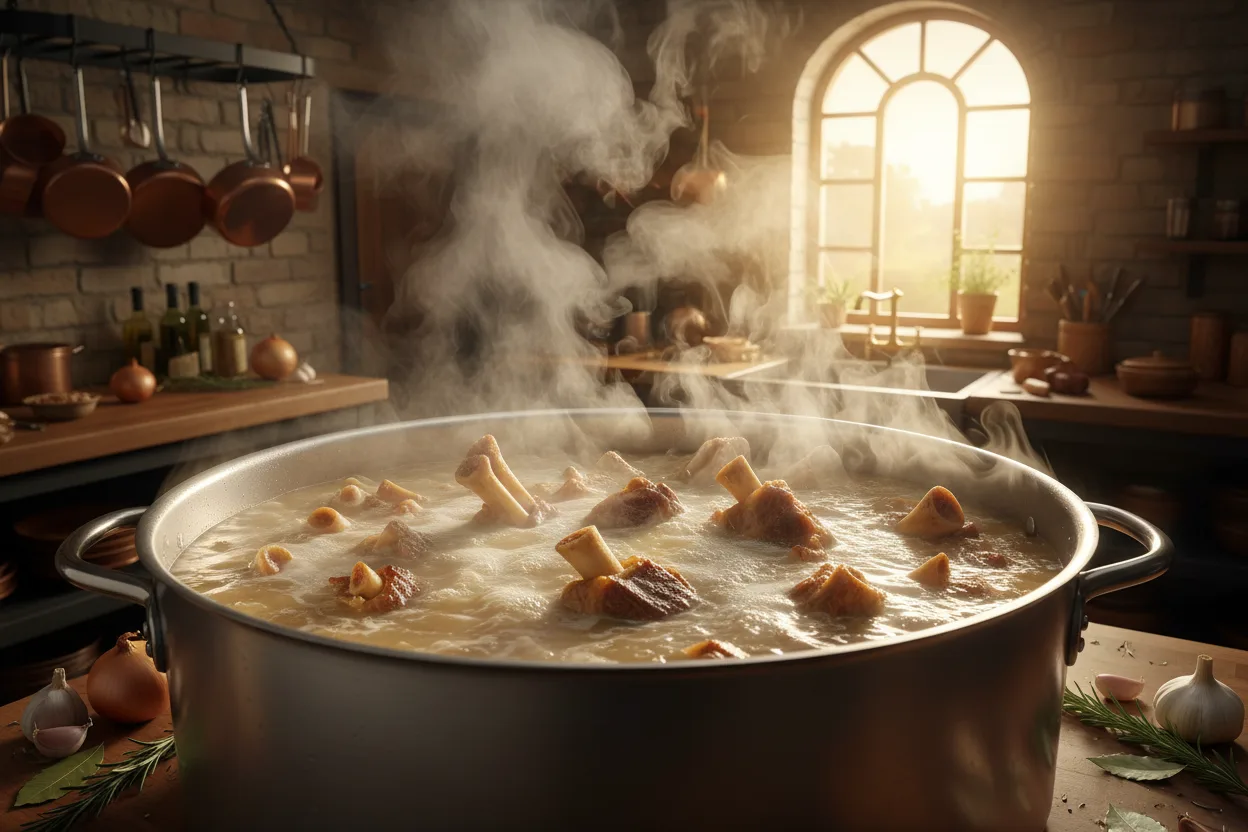
Blanch and rinse the soaked bones, then cover with water and simmer two hours or more.
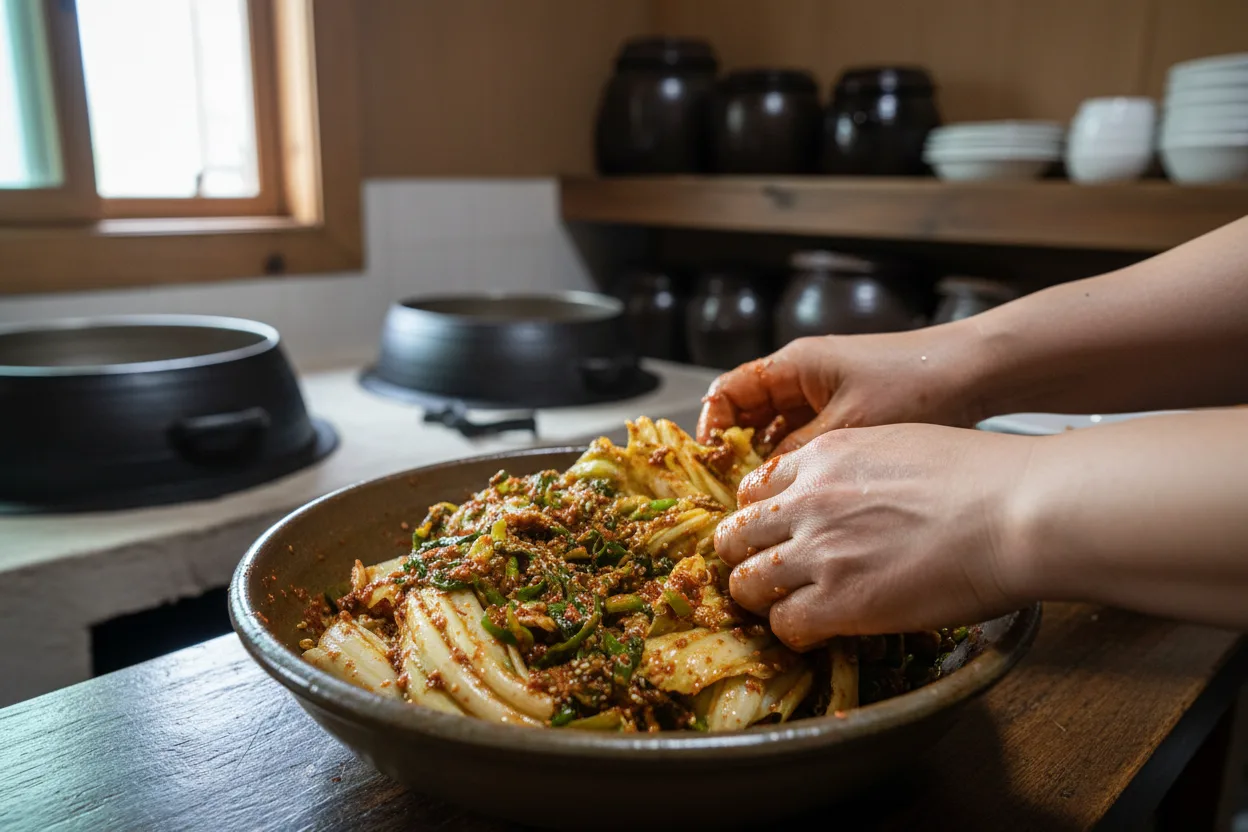
Massage the boiled cabbage leaves with doenjang, chili flakes, and minced garlic.
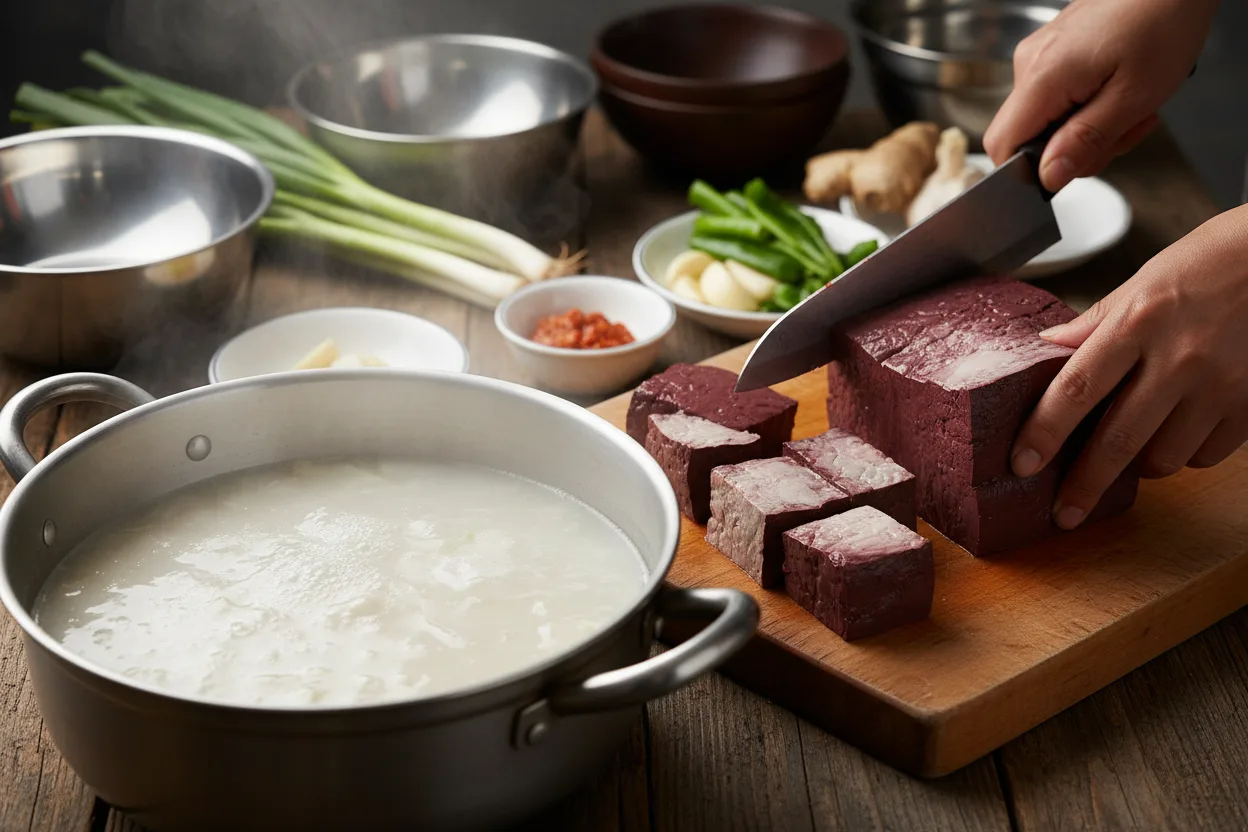
Blanch the congealed blood briefly in boiling water and cut into generous cubes.
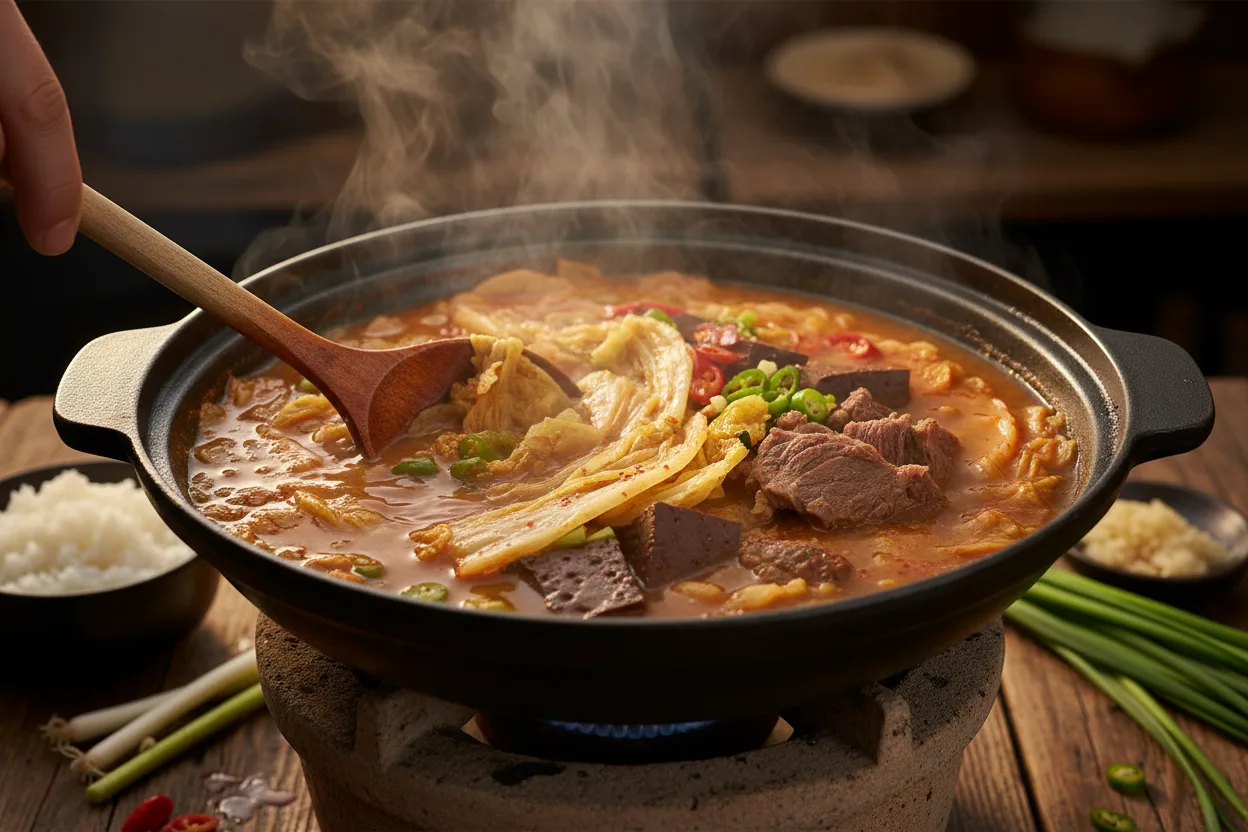
Add the dressed cabbage to the bone broth for thirty minutes, then the blood for ten more. Verify that the blood curd is steaming hot and firm through the center, then season with soup soy sauce.
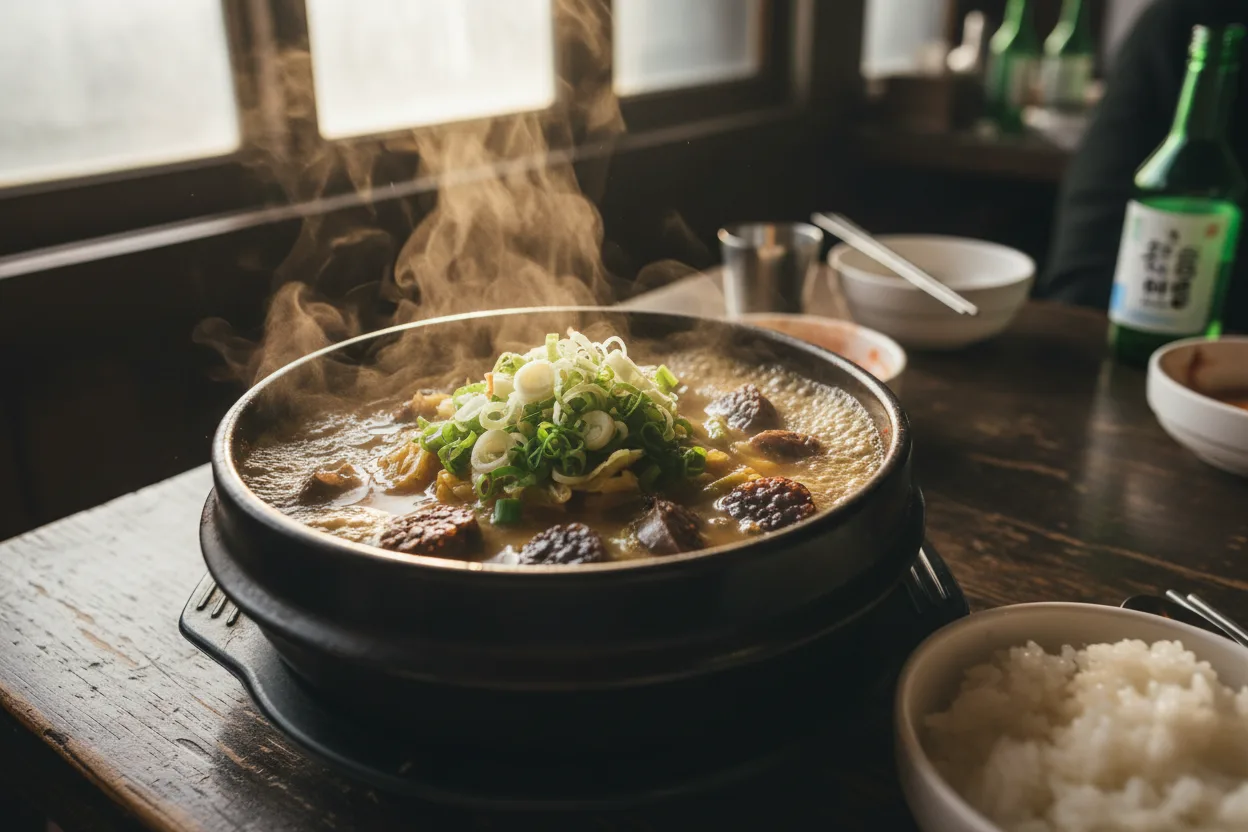
Serve at a rolling boil in stone bowls, scallion on top, rice in or alongside.
Candidates to investigate for this food. Maps use sourced location records; confirm the current menu, opening and booking directly. This list is not a tasting review or an award certification.
Jongno, Seoul
Public-record location check, not a live opening-hours guarantee. Confirm with the restaurant before visiting.
Jeonju, North Jeolla
Exact current location is not verified here. Confirm the venue through its official information before planning a visit.
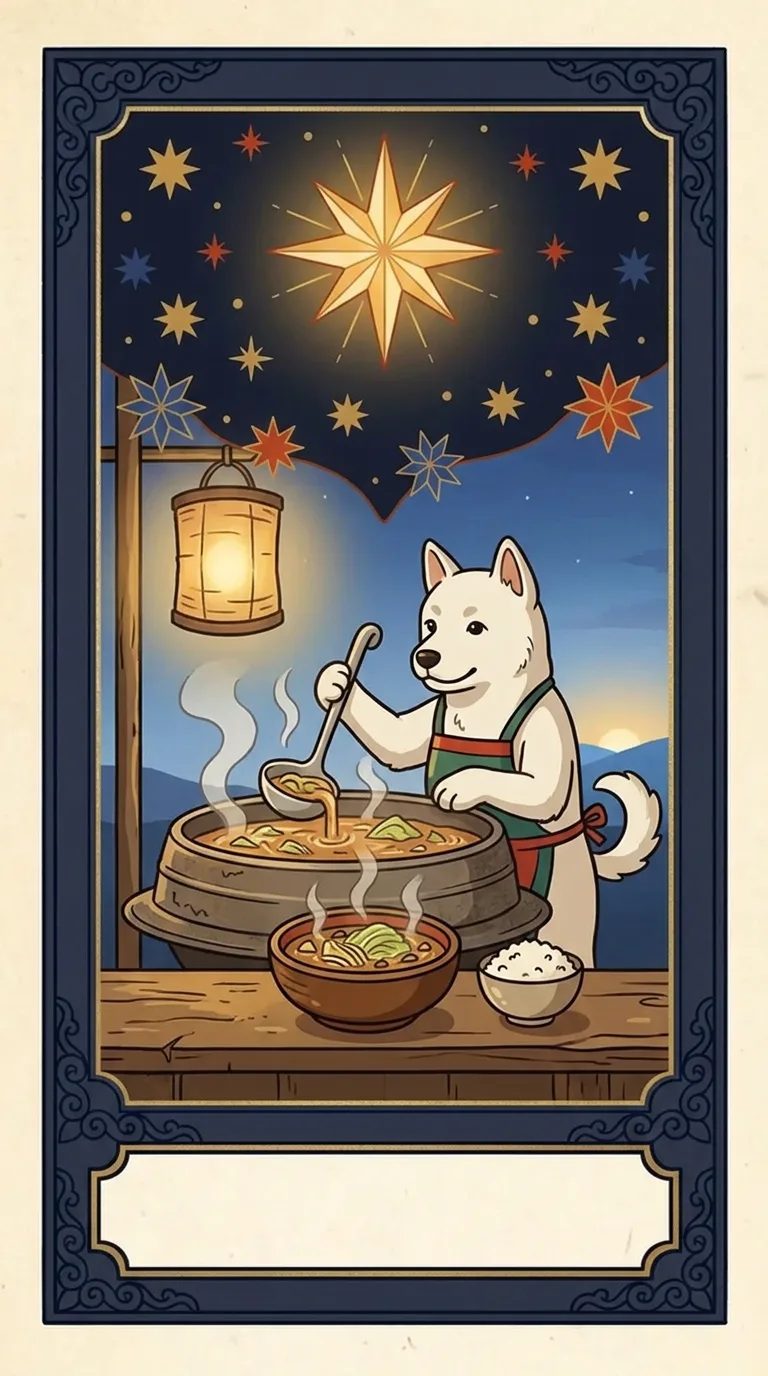
Water element · a face of soft curves
You forgive last night's mistakes with a bowl of dawn broth. Like a cauldron that has not gone out in nearly a century, the master's face of tolerance that keeps its post.
Upright: Whatever last night was, your cauldron is boiling this morning. Do not scold the one who stumbled; hand them broth first. That tolerance is what makes you the master.
Reversed: You have loosened everyone's insides while your own ledger tangles. Even the haejangguk house closes out its register, so tend your own gut and your own accounts today.
Fictional food metaphors inspired by traditional face-reading, not measurements of your face or personality.
That forehead opens wide as a dawn market: a large-vessel face. Haejangguk is that vessel: a broth that asks no questions about the night before and receives everyone. Why has Cheongjinok endured ninety years? Because it fed every dawn of Jongno without a verdict. Your embrace is that embrace. The one who warms without asking is the greatest elder of all.
Those eye corners droop gently: a face of affection. The haejangguk keeper never startles at a customer's state; they guess at last night's battle and set down the bowl. Your eyes are those eyes, reading a story instead of a fault in someone's disheveled morning. That is why people come to you on their worst mornings of all.
That chin is thick: a sturdy old age. Haejangguk knows no fashion; as long as there are long nights, the trade is eternal. Your livelihood sits on the same untrending ground. Not the splashy opening but the cauldron that never goes out: the hundred-year houses proved that road, and it is yours.
To loosen the knotted gut, that is the original meaning of haejang. You are the one who unknots people's tangled insides and tangled days, so do not set down that ladle. The footsteps that seek you at dawn are your life's medals.
Grandma's blessing
Kkakdugi brine beside the dawn stone bowl is a match certified by hundred-year houses. Summer-only kongguksu misses you in both season and hour, so keep your dawn and let them keep their noon.