Jukdosan
47-1 Ganggu-daegae-gil, Ganggu-myeon, Yeongdeok, North Gyeongsang
Public-record location check, not a live opening-hours guarantee. Confirm with the restaurant before visiting.

Specialty Dishes · Season 27 · Season of Winter V
Daege-jjim (Steamed Snow Crab) · 대게찜
Decision notes · editorial comparison of references and preparation plans
Add crab, cooking, table service and extra rice separately. Unlike a pot of crab stew, steamed crab also needs a shell-opening and sharing plan.
Check before ordering or preparing: Ask about the weight basis, cooking and table fees, shell tools and extra shell fried rice.
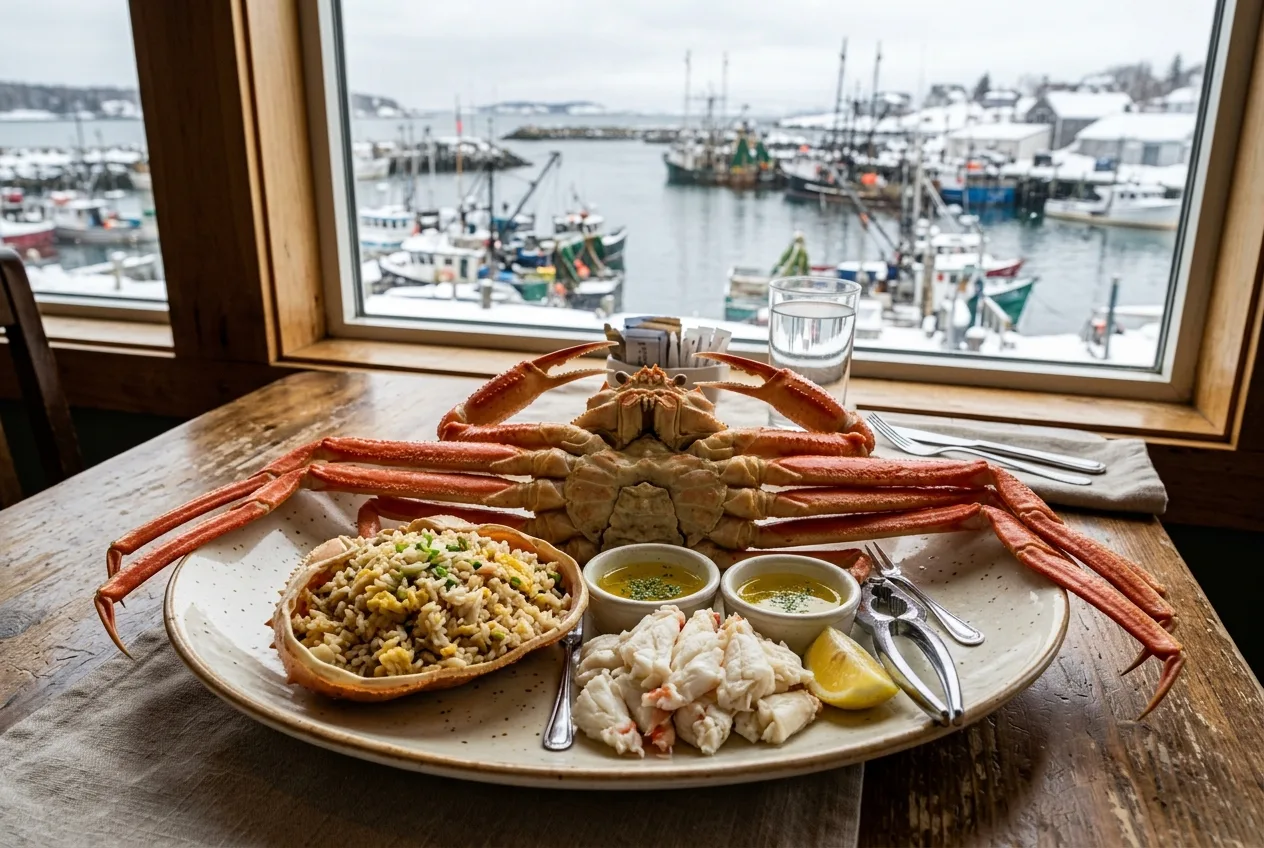
KTO describes steaming snow crab and removing the shell to eat the meat. KTO · Steamed Snow Crab (대게찜 / Daegejjim) · 2026-09-13
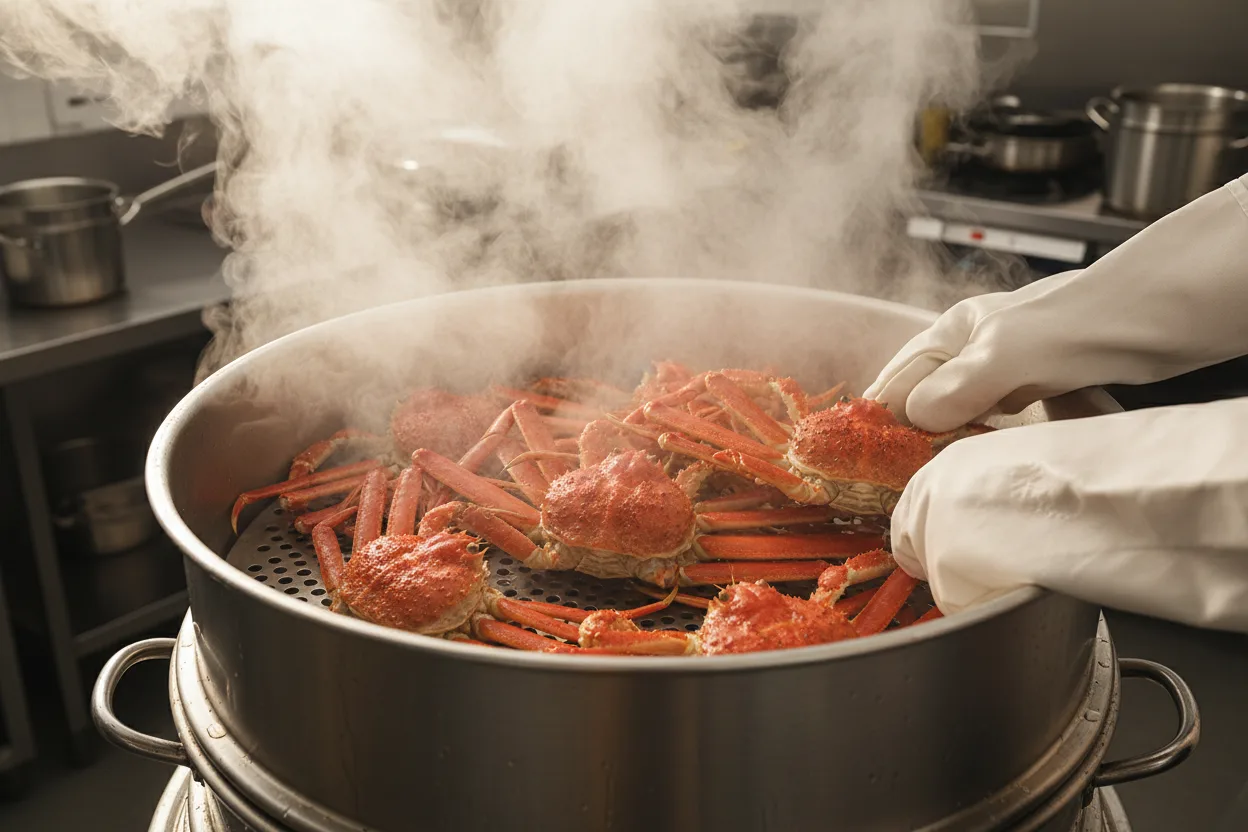
Steamed snow crab cooks the crab with steam before the legs and body are opened for their meat. Shell fried rice is an additional preparation, not something automatically included with every order.
At a fish market, ask whether price is based on live weight and whether steaming or table service costs extra. Check current notices for seasons or festivals, and arrange shell tools and a discard bowl.
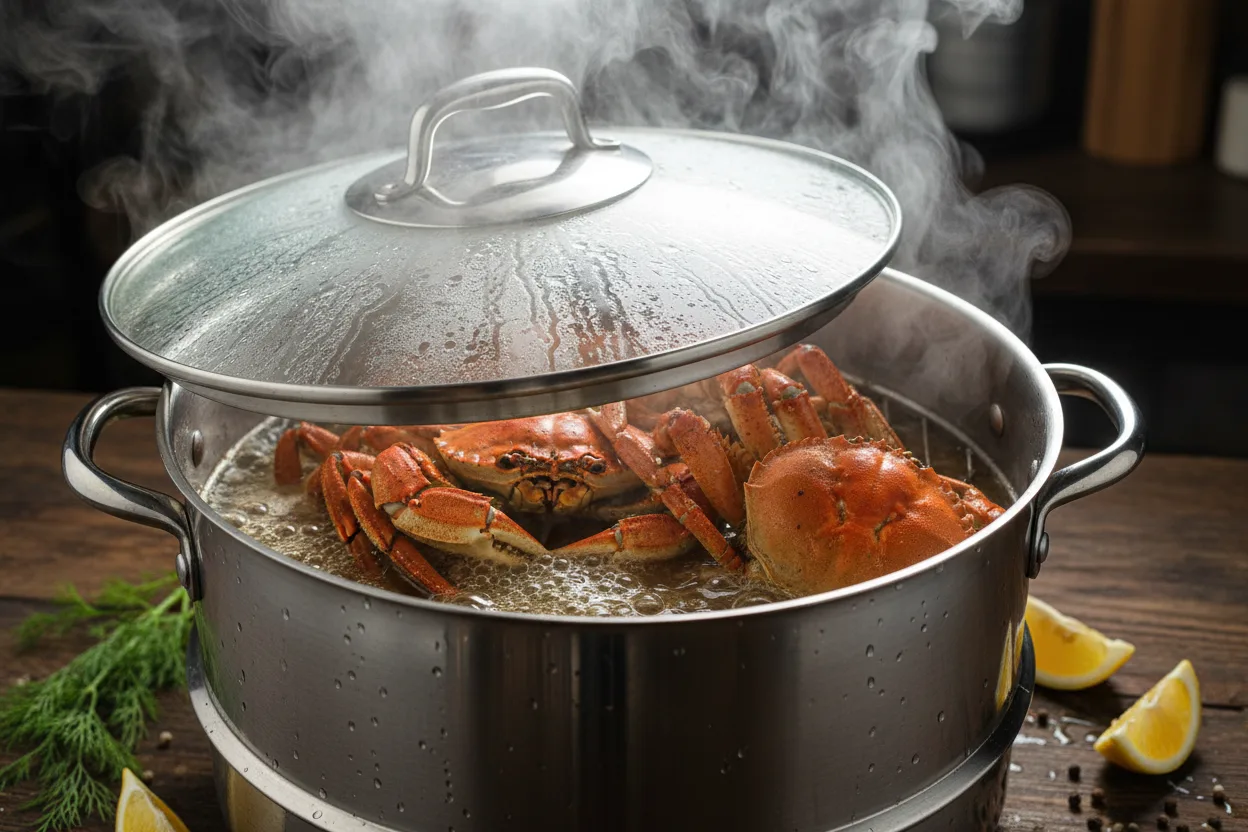
Images are AI-generated illustrations, not records of a kitchen test. Follow the written ingredients and steps. Ingredients and substitutions guide
Times and yields are planning values for this editorial preparation, not measured kitchen results. Substitutions can change flavor, texture and cooking needs. Read product directions and our measurement and doneness guide together.
| Ingredient | Amount | Substitute abroad |
|---|---|---|
| Raw snow crab prepared for cooking by the seller | 2 | Check whether a frozen product is raw or precooked. Follow its thawing/cooking instructions for raw crab or reheating instructions for precooked crab; freezing alone does not justify a shorter time. |
| Rice wine | Half cup | Plain water works |
| Water | For the steamer base | Anywhere |
| Rice, seaweed, sesame oil (optional fried rice) | 1 bowl's worth | Optional; the meal can finish with the crab meat. |
Use crab prepared for cooking by the seller and follow its storage and cooking guidance. Stillness after freshwater immersion is not evidence of humane stunning or safe handling.

Add water and rice wine to the steamer; when steam rises, lay the crabs belly-up.

Follow the product or seller’s cooking directions. The 15–20 minute steam and 5-minute rest are estimates without a specified crab size, not proof of doneness. Check the thick meat in the legs and body is pearly or white and opaque. For precooked products, follow the package reheating directions instead of this raw-crab method.

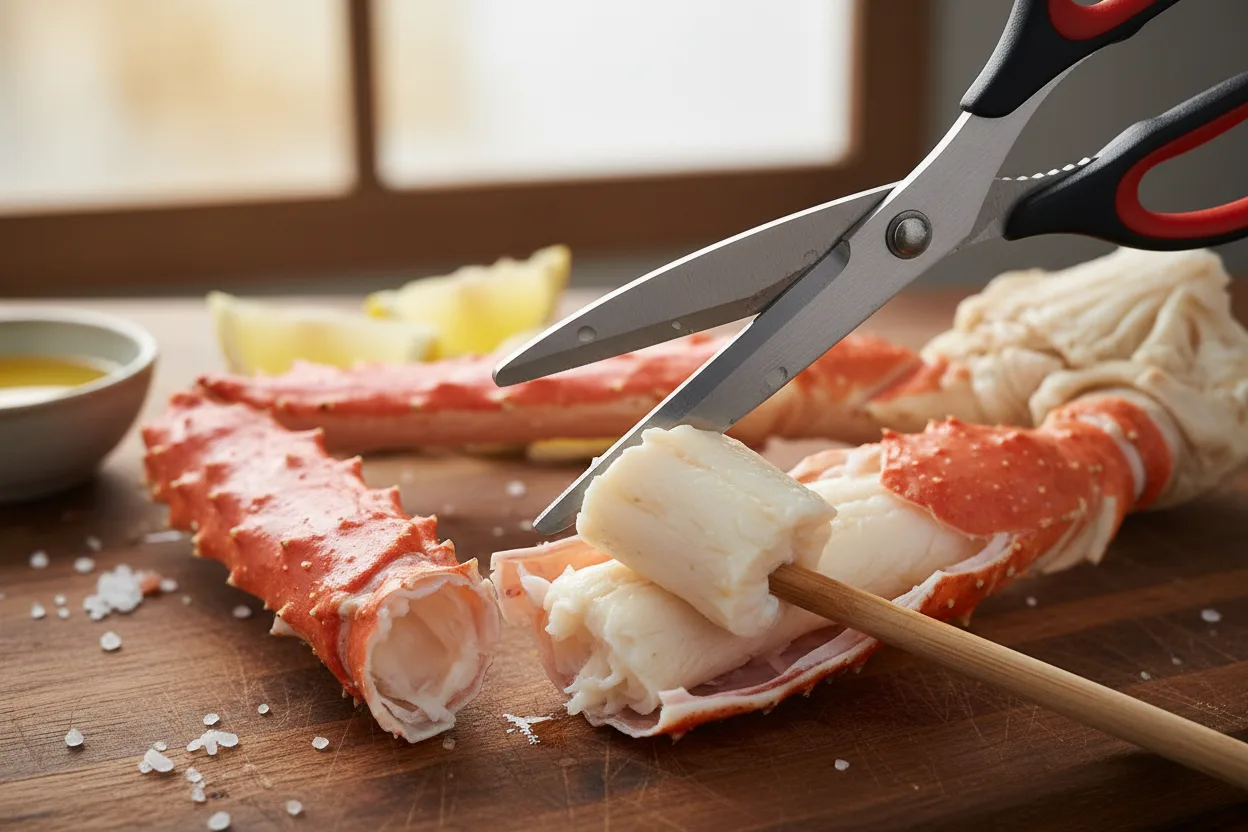
Cut each leg at the joints and push the meat through with a pick.

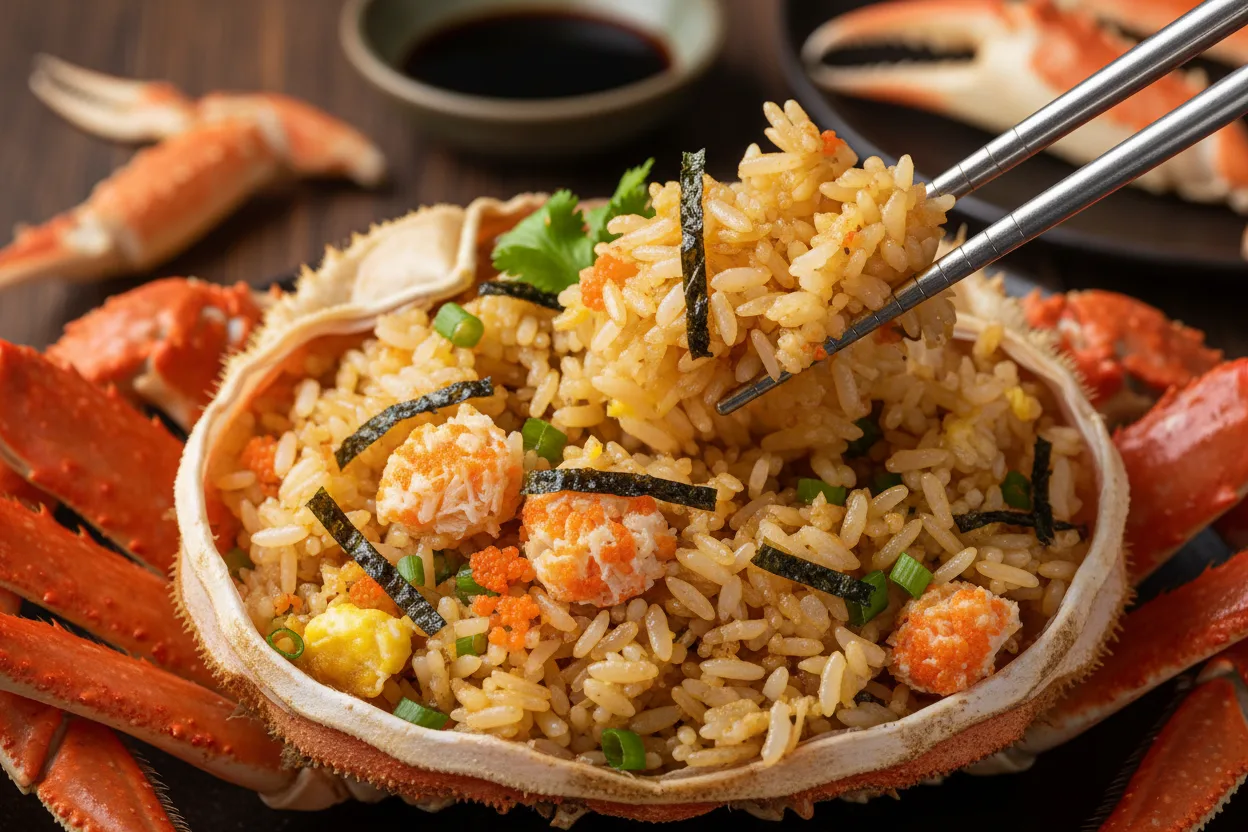
After the meat, mix rice, seaweed flakes, and sesame oil into the shell's innards and fry lightly.
Preparing the tool. If controls remain disabled, enable JavaScript or try another browser. The guidance below remains readable.
Ask for enough food for the number of people eating. Portion sizes and minimum orders vary by shop. This card does not send an order or payment.
Candidates to investigate for this food. Maps use sourced location records; confirm the current menu, opening and booking directly. This list is not a tasting review or an award certification.
47-1 Ganggu-daegae-gil, Ganggu-myeon, Yeongdeok, North Gyeongsang
Public-record location check, not a live opening-hours guarantee. Confirm with the restaurant before visiting.
Yeongdeok, North Gyeongsang
Exact current location is not verified here. Confirm the venue through its official information before planning a visit.

Metal element · an angular, solid face
Straight, jointed legs packed with clean sweet meat. A face like steamed snow crab at the winter harbor.
Upright: The crab's 'dae' means bamboo, not big: straight, jointed legs that fill with meat. A name earns its worth from straightness, not from size. Straighten your joints today.
Reversed: Too lazy to work the legs, you aim only for the shell. That is the habit of wanting sweetness without labor. The crab demands effort at every joint and pays in sweetness exactly to that measure. Work your task from the joints too.
Fictional food metaphors inspired by traditional face-reading, not measurements of your face or personality.
That nose runs straight as bamboo, and that is where the crab got its name: dae for bamboo, not for big. Legs straight and jointed like the stalk. A name that boasts of straightness, not size. Your pride carries the same pedigree, respected not for being high but for being straight. Do not confuse the places to bow with the places to stand unbent.
Those eyes work joint by joint, like crab legs themselves. Snow crab meat never comes out in one pull: you cut each joint and push the meat through, one segment at a time, a food of measured labor. Your working style runs on that joint arithmetic. Among people who try to swallow things whole, you cut and clear segment by segment. It looks slow, but yours is the plate where the most meat piles up.
That mouth closes plain and quiet: a mouth that competes without sauce. Steamed crab takes no seasoning; steaming it well is the entire recipe, and many elders call even the dipping sauce an extravagance. Your ability is the same kind, shining brightest unpackaged. Spend the presentation-polishing hours on filling the meat instead.
The snow crab was the winter sea's king, sent up to the royal table. But even that king had to be steamed before it could be served. Your talent too must endure the hot steam before it takes the throne, so count the steam rising around you now as the smoke of your coronation.
Grandma's blessing
On the east coast table, steamed crab and mulhoe represent winter and summer and honor each other's season, while gochujang is the extravagance that halves a crab's price the moment it touches this clean sweet meat.