Chungnam Seosan Jip (Yangdo-myeon)
911 Jungang-ro, Yangdo-myeon, Ganghwa-gun, Incheon
Exact current location is not verified here. Confirm the venue through its official information before planning a visit.
Soups & Stews · Season 19 · Season of Autumn V
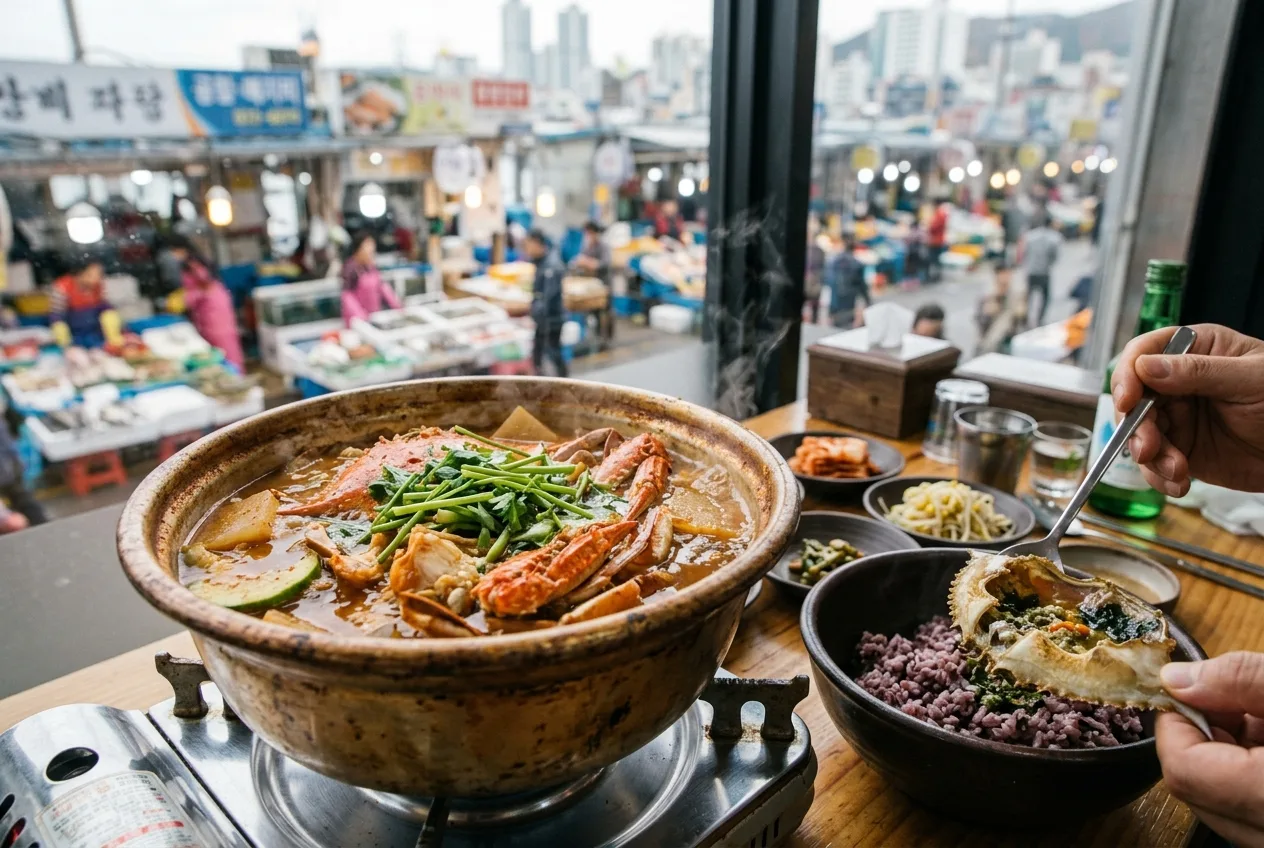
Kkotgetang (Blue Crab Stew) · 꽃게탕
Kkotgetang cooks prepared crab and vegetables in broth. This version uses soybean paste, gochujang, radish and zucchini, a different process from marinating uncooked crab in soy sauce.
For frozen cut crab, follow its thawing and cooking label. Check the shared pot’s portion size and whether rice is extra, then separate the hard shell and watch for fragments while eating.
Images are AI-generated illustrations, not records of a kitchen test. Follow the written ingredients and steps. Ingredients and substitutions guide
| Ingredient | Amount | Substitute abroad |
|---|---|---|
| Blue crabs, live or cut frozen | 3 | Frozen cut crab |
| Doenjang and gochujang | 1 tbsp each | Online Korean grocers |
| Radish and zucchini | 1/4 each | Potato |
| Water dropwort and scallion | 1 handful, 1 stalk | Crown daisy |
| Chili flakes and garlic | 1 tbsp each | Anywhere |
| Rice-rinsing water | 5 cups | Anchovy stock |
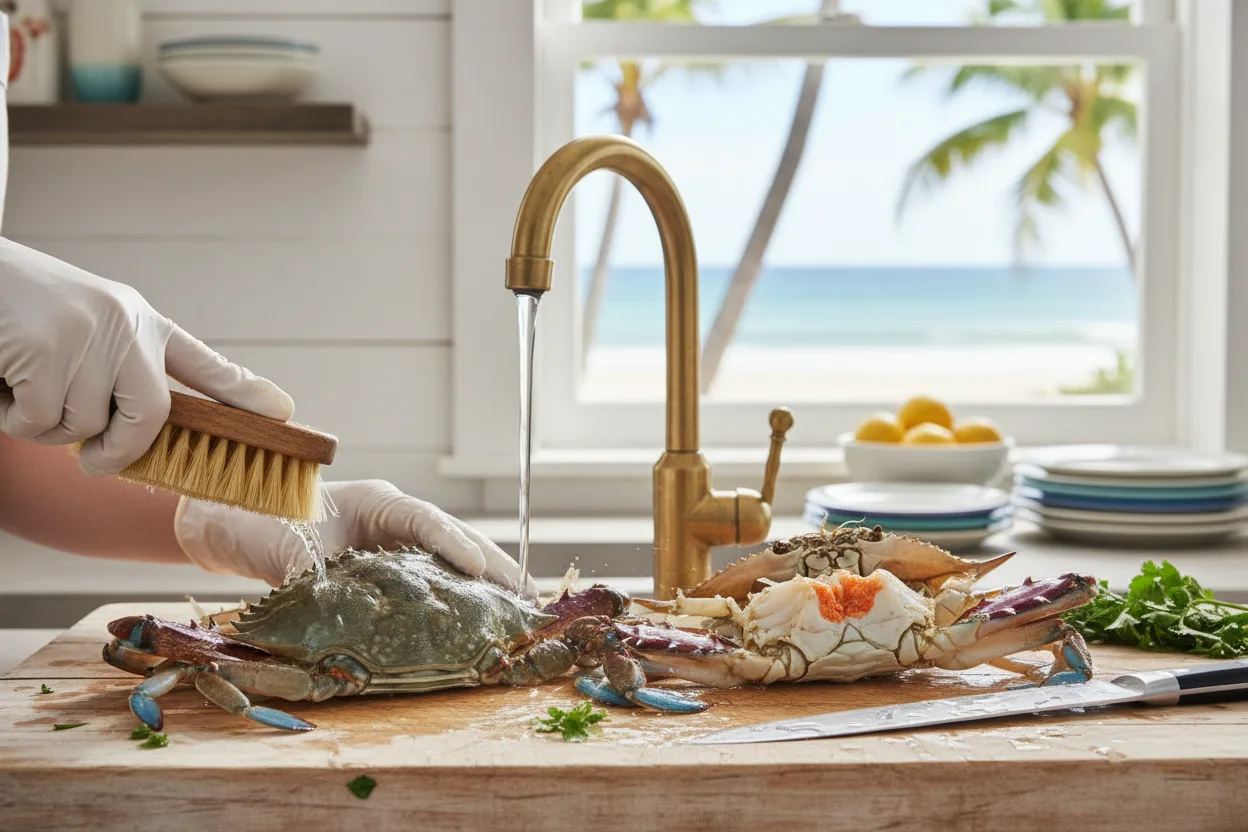
Scrub with a brush, lift the apron, remove the gills, and halve the bodies.
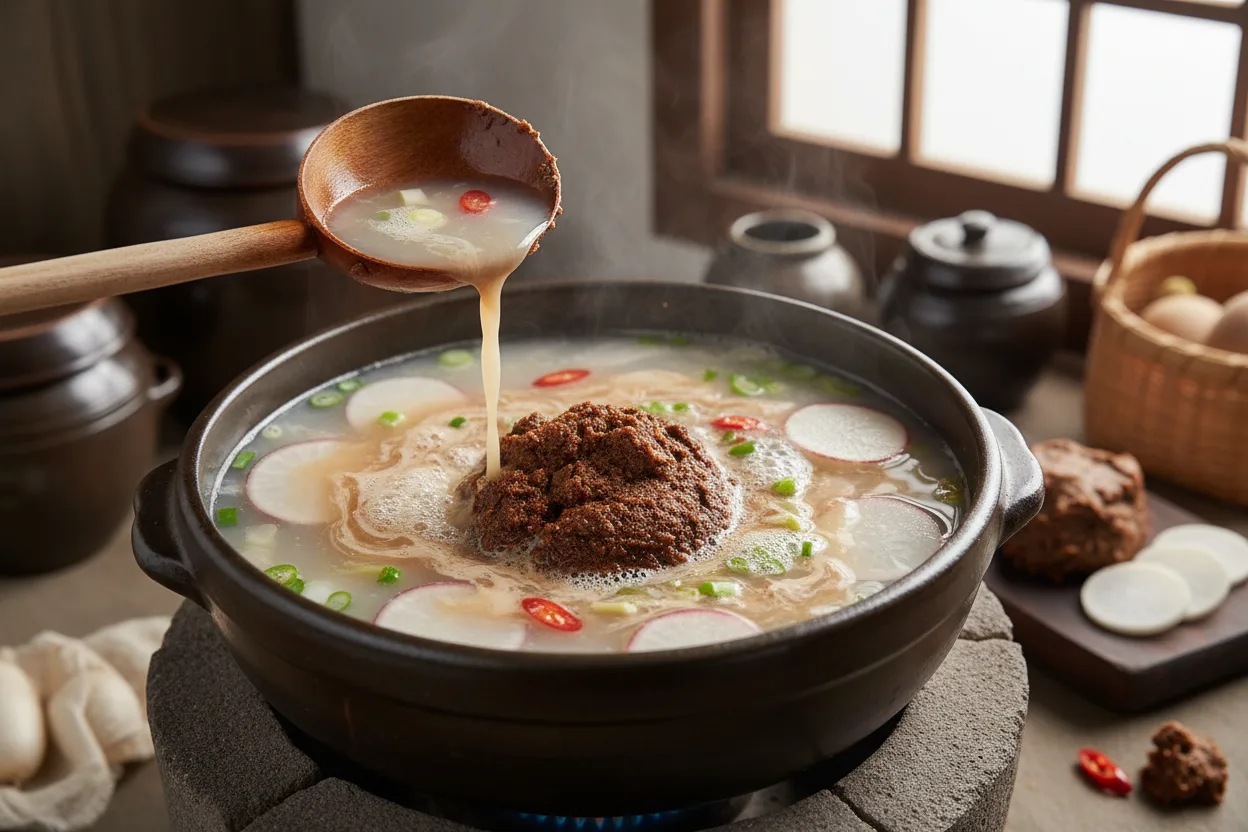
Dissolve doenjang and gochujang in rice water, add radish, and boil.
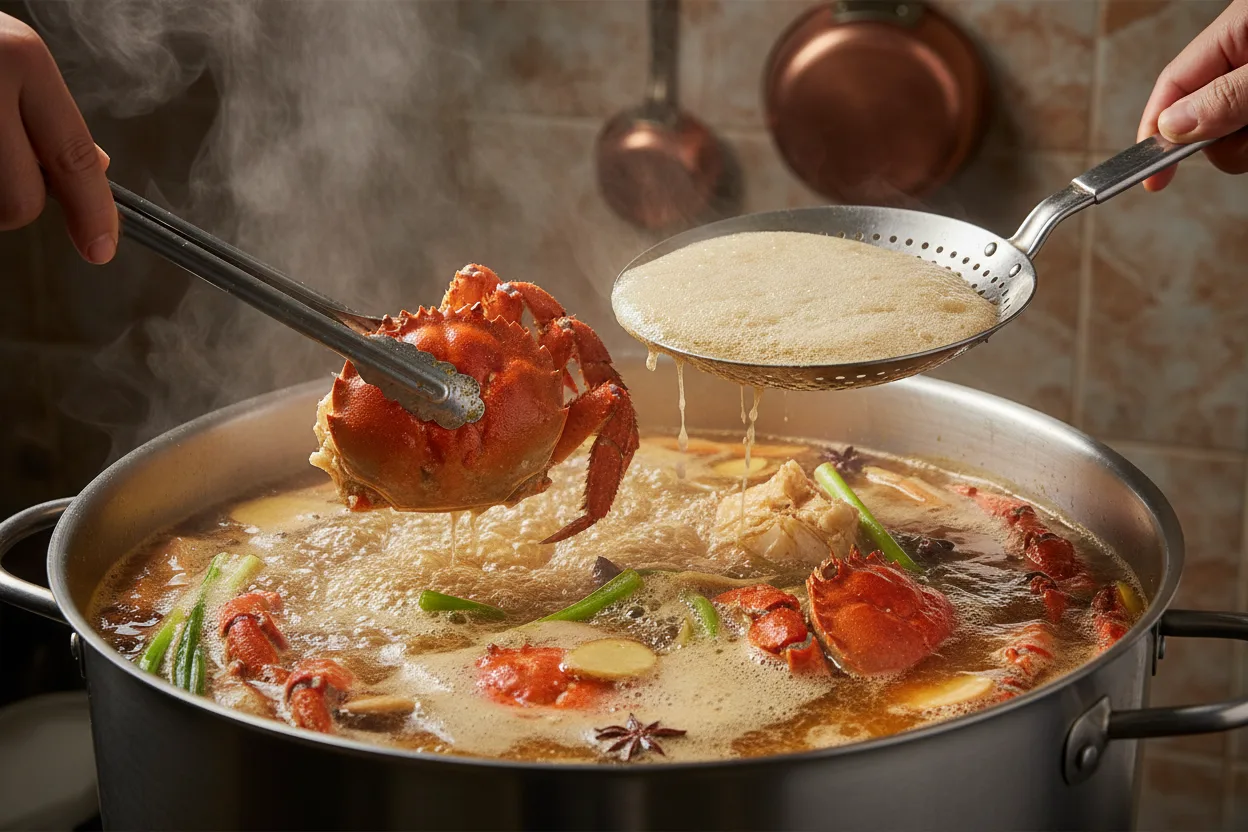
When boiling, add the crab and simmer 10 minutes, skimming foam.
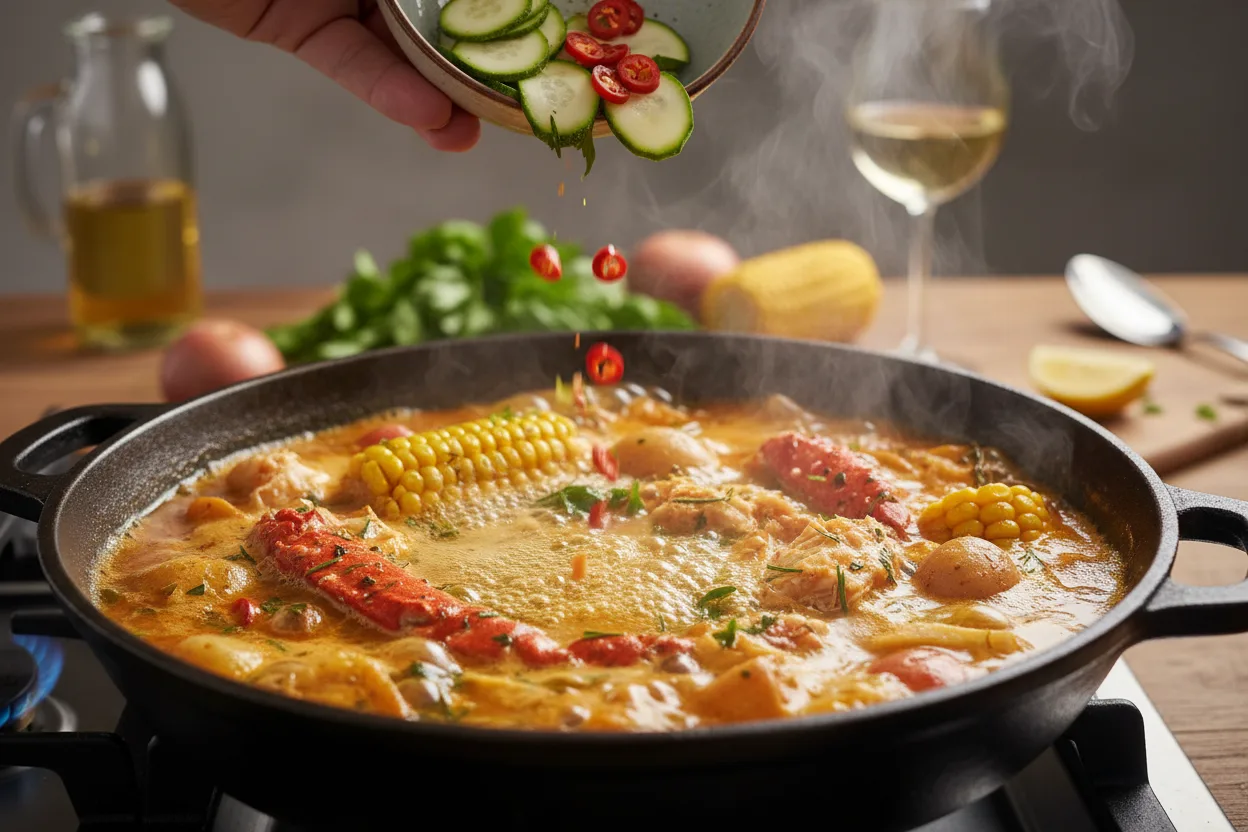
Add zucchini, chili flakes, and garlic; simmer 5 more minutes.
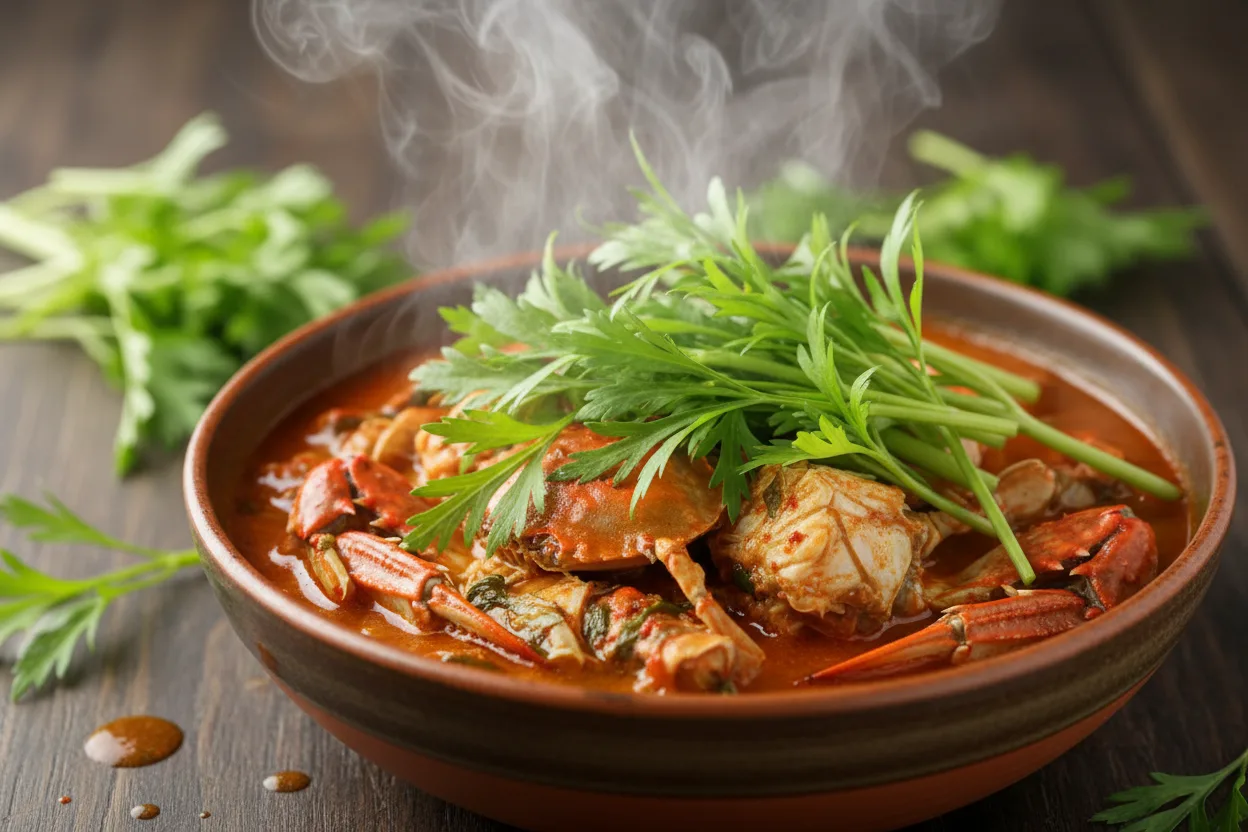
Lay on water dropwort and scallion just before the flame dies, and serve.
Candidates to investigate for this food. Maps use sourced location records; confirm the current menu, opening and booking directly. This list is not a tasting review or an award certification.
911 Jungang-ro, Yangdo-myeon, Ganghwa-gun, Incheon
Exact current location is not verified here. Confirm the venue through its official information before planning a visit.
Ongjin, Incheon
Exact current location is not verified here. Confirm the venue through its official information before planning a visit.
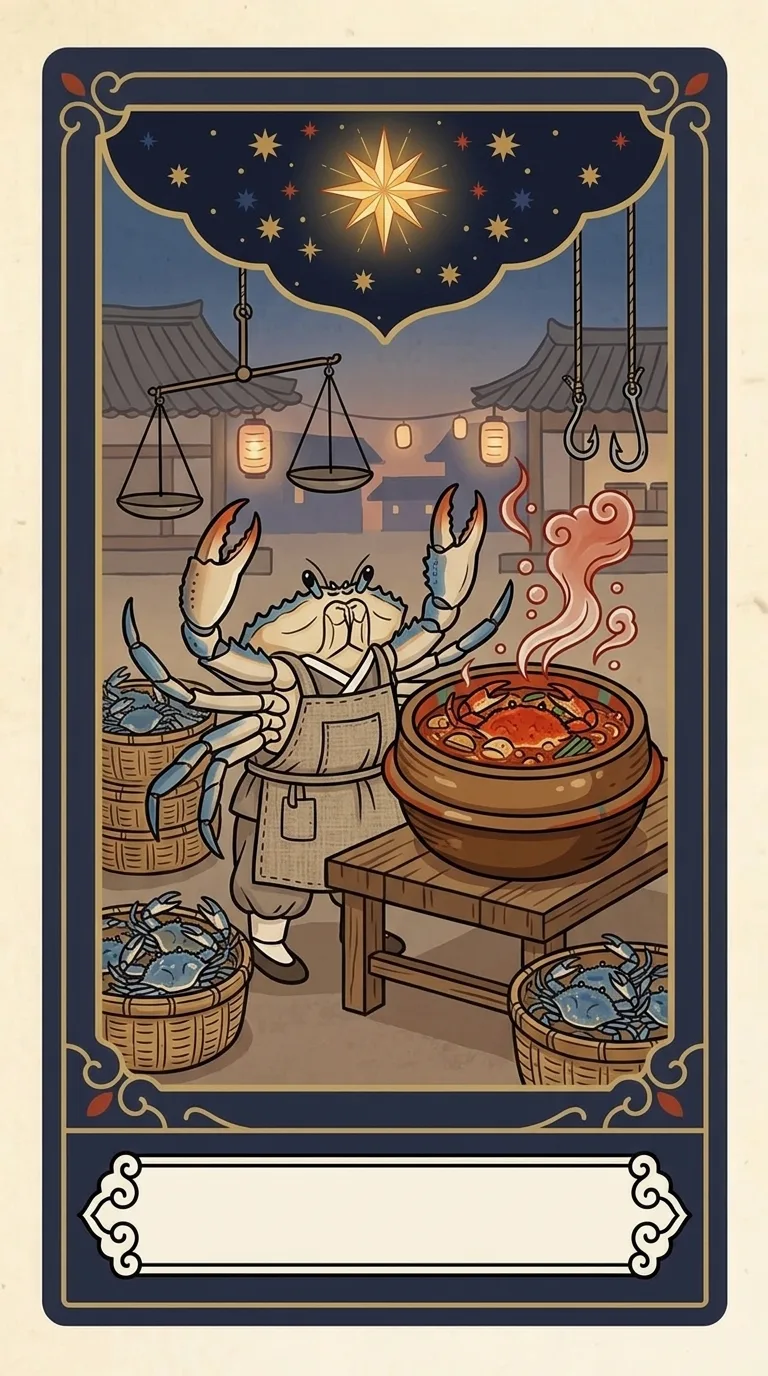
Fire element · a sharp, vivid face
A hard shell outside, packed meat inside, and a walking direction all your own. A face like autumn blue crab stew.
Upright: The autumn male crab packs its shell full. A hard carapace does not mean an empty inside. For those who misread your hard exterior, open the shell today and show them.
Reversed: The crab walks sideways yet still reaches its destination. A different walking direction is not a wrong road. But check your footprints: is the sideways walk an excuse for walking in place?
Fictional food metaphors inspired by traditional face-reading, not measurements of your face or personality.
Those eyes stretch long and sharp to the sides: crab eyes. A crab raises its eyestalks and sees every direction at once. So does your vision, minding the flanks and the rear among people who only face forward. That is why you sense the board's danger first. But eyes that watch every direction tire quickly, child. Keep one trustworthy shell beside you.
That forehead has hardened firm as a carapace. But know the crab's truth: the harder the shell's season, the fuller the meat inside. Spring belongs to roe-heavy females, autumn to meat-packed males; what fills changes by season, but no season is empty. With your life, you only need to know what this season is filling. Being mid-fill and being empty are different things.
That mouth clamps shut with focus: the mouth of someone picking crab meat. Even the chattiest table falls silent before crab stew, hands and mouths too busy for talk. That is your face at work: absorption is your finest expression. But when the shell is finally empty, everyone says the same line, that it tasted better together. At the end of your absorption, be the first to say it.
Crab stew is a table shared only by those who permit each other broth-stained hands. Count how many people you can drop your dignity and dip hands with: that is your true asset register. Guard that list.
Grandma's blessing
Crab and prawn, the two autumn leads of the West Sea, lay the season's peak in double layers on one table, while sweet sikhye politely waits its turn as dessert before this fiery broth.