Gokseong Taro Fields
Jukgok, Gokseong, South Jeolla
Exact current location is not verified here. Confirm the venue through its official information before planning a visit.
Soups & Stews · Season 16 · Season of Autumn II
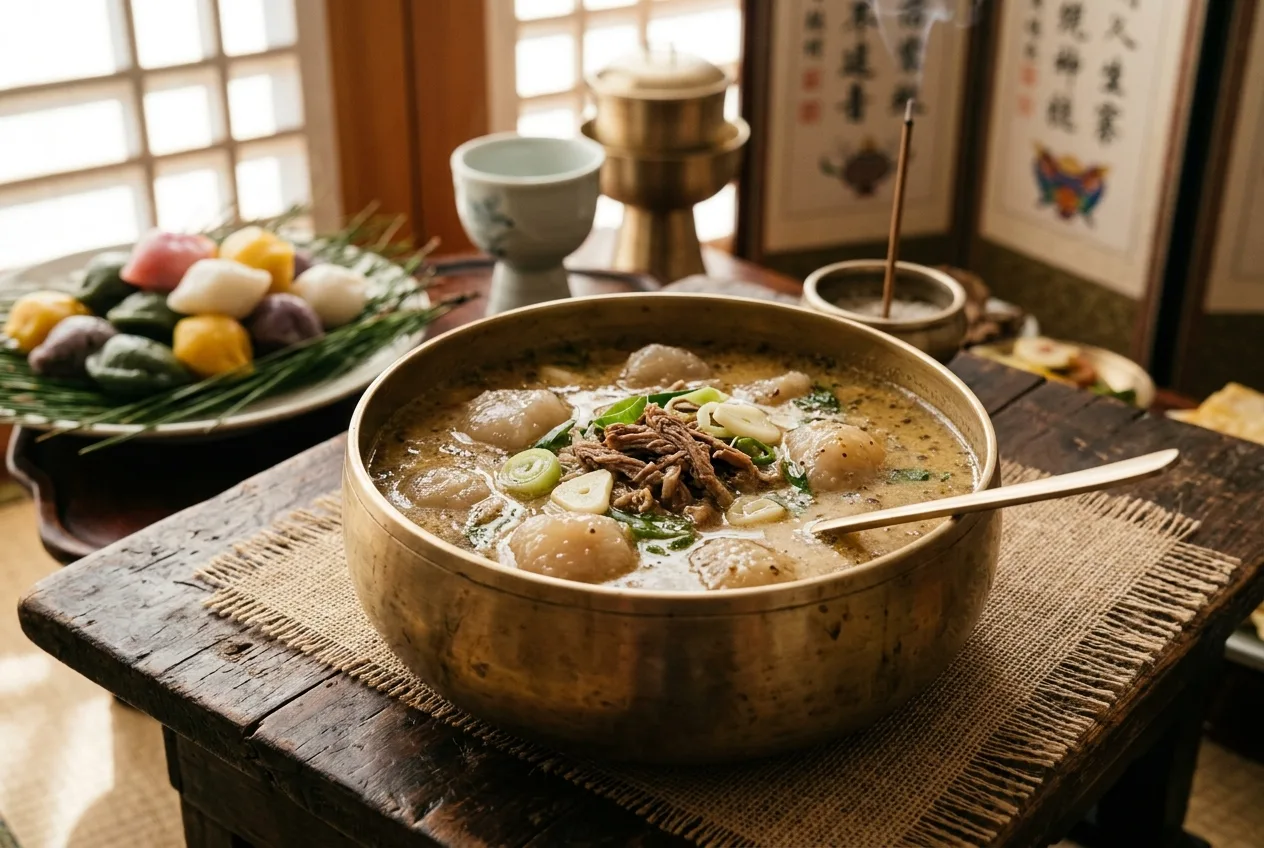
Toran-guk (Taro Soup) · 토란국
This taro-soup version uses peeled taro, beef or stock, kelp and perilla seed powder. The amount of perilla powder affects the broth consistency. Whether you begin with beef or prepared stock changes what you need to have ready at the first step.
The ingredient list starts with peeled taro. If you buy whole taro, account for preparation before following the cooking steps. Read the full method; adding more broth or leaving out perilla powder changes the texture and aroma of the version shown here.
Images are AI-generated illustrations, not records of a kitchen test. Follow the written ingredients and steps. Ingredients and substitutions guide
| Ingredient | Amount | Substitute abroad |
|---|---|---|
| Peeled taro | 400g | Frozen peeled taro |
| Beef brisket (or bone broth) | 200g | Kelp vegetable broth |
| Kelp | 1 palm-sized sheet | Can skip |
| Perilla seed powder | 3 tbsp | Omit for the clear Seoul style |
| Soup soy and garlic | To season | Anywhere |
| Scallion | 1 stalk | Anywhere |
| Rice-rinsing water (for parboiling) | Plenty | Salted water |
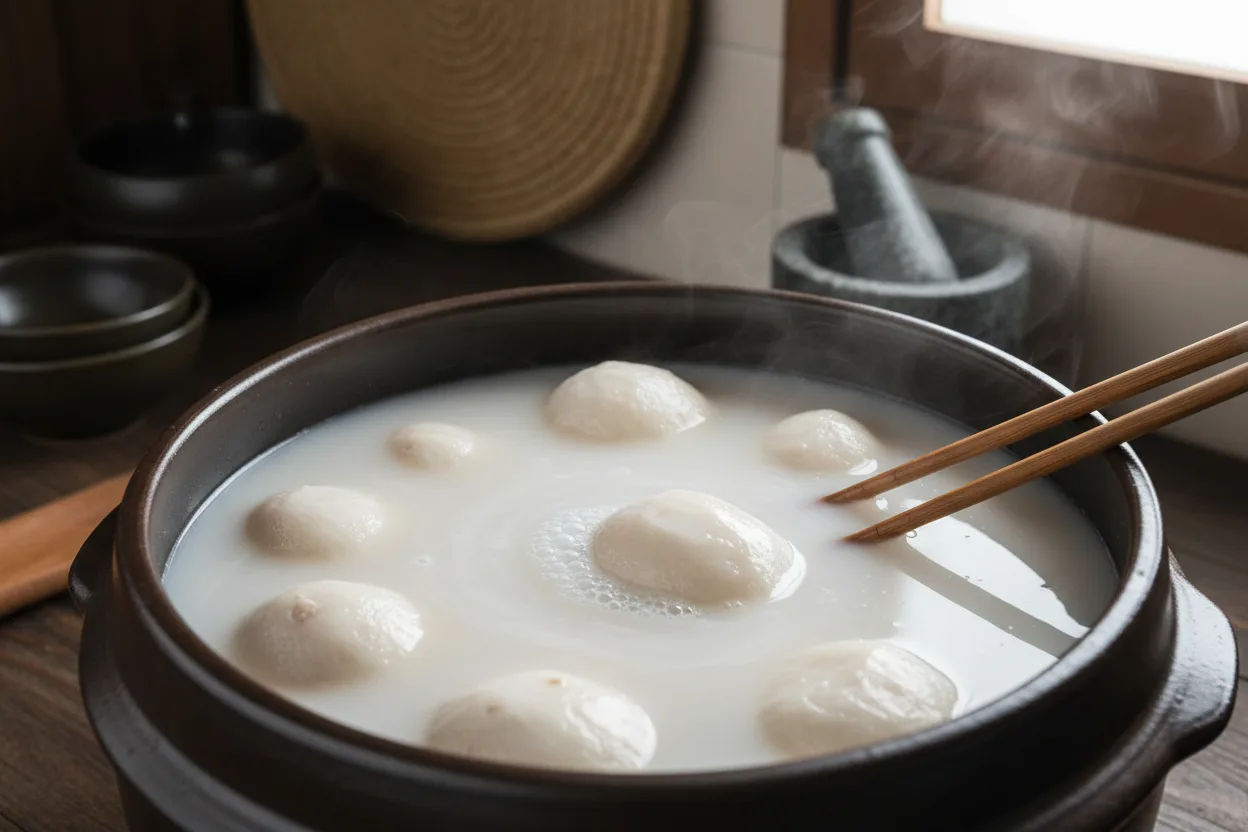
Parboil peeled taro in rice water 5 minutes and rinse.
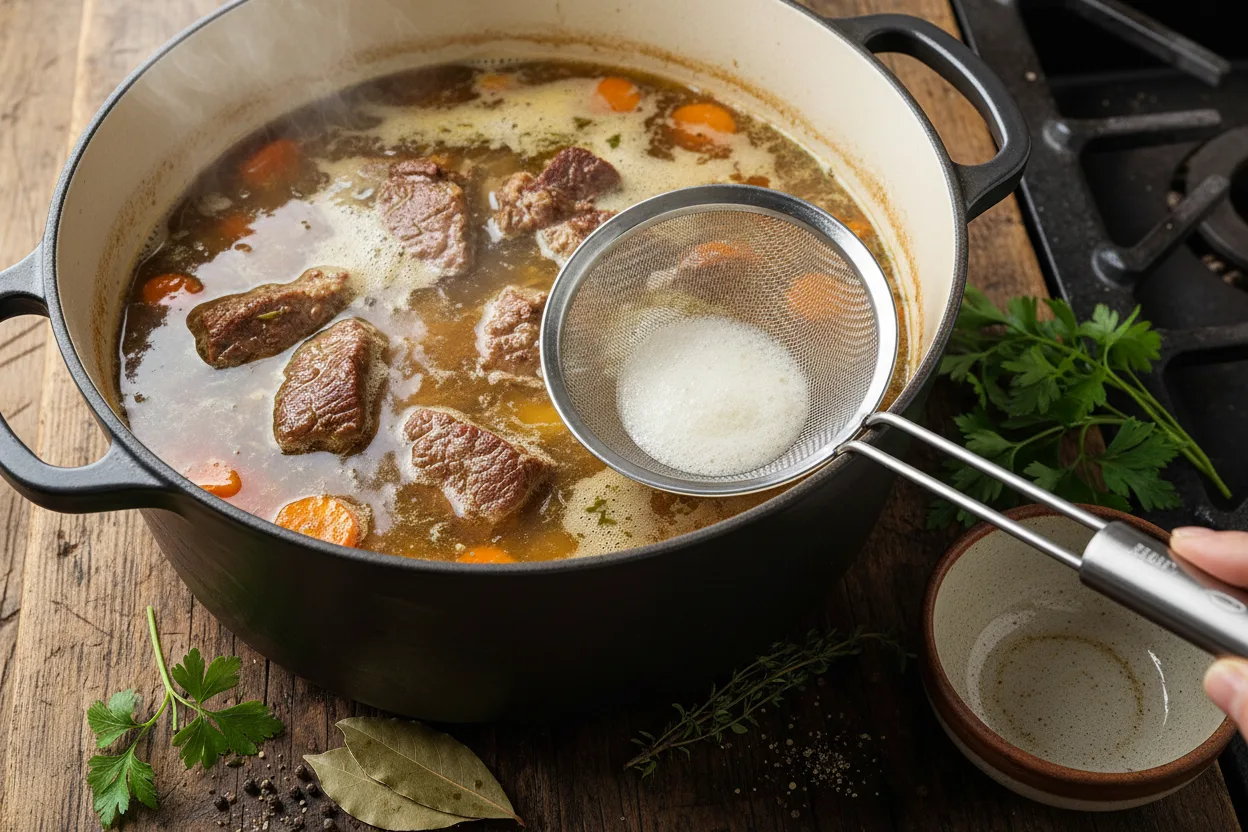
Start brisket in cold water, skim, and simmer 40 minutes; lift the meat and shred it.
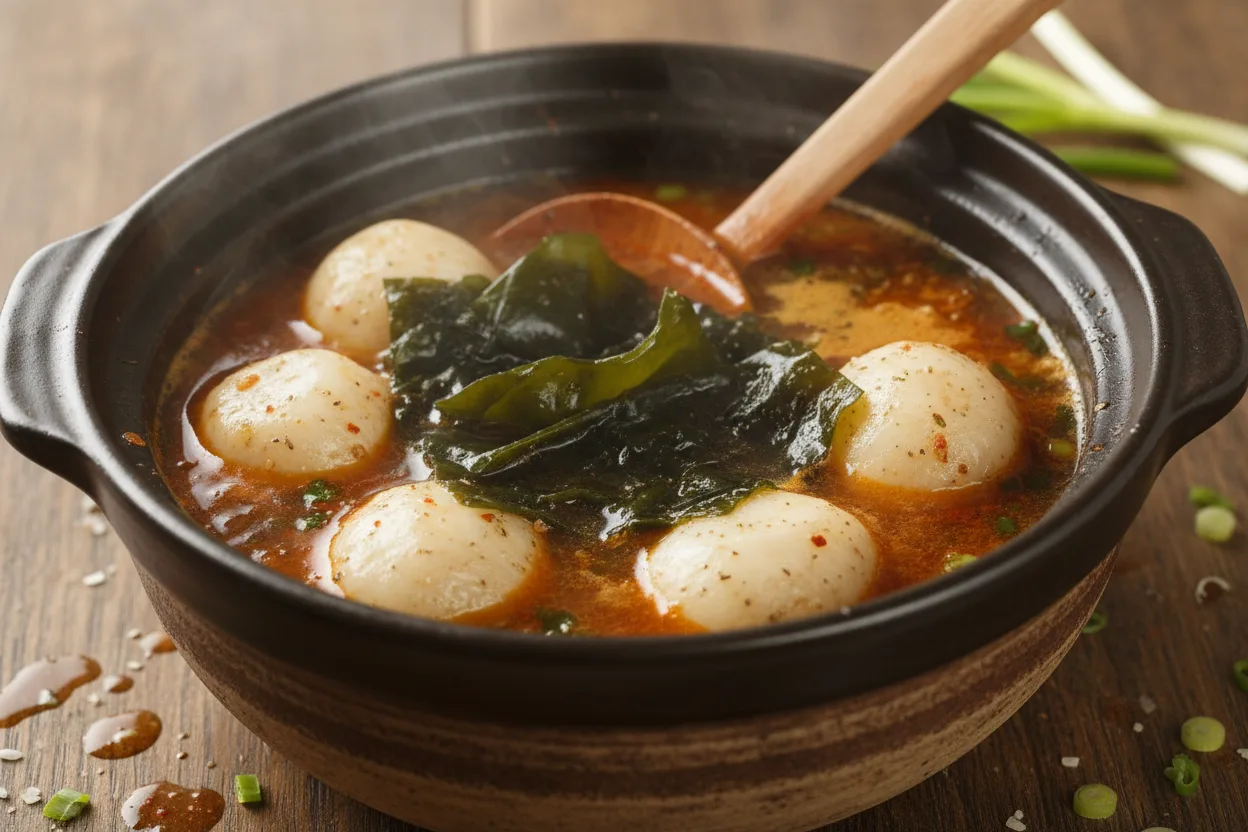
Add taro and kelp to the broth and simmer 15 minutes until translucent.
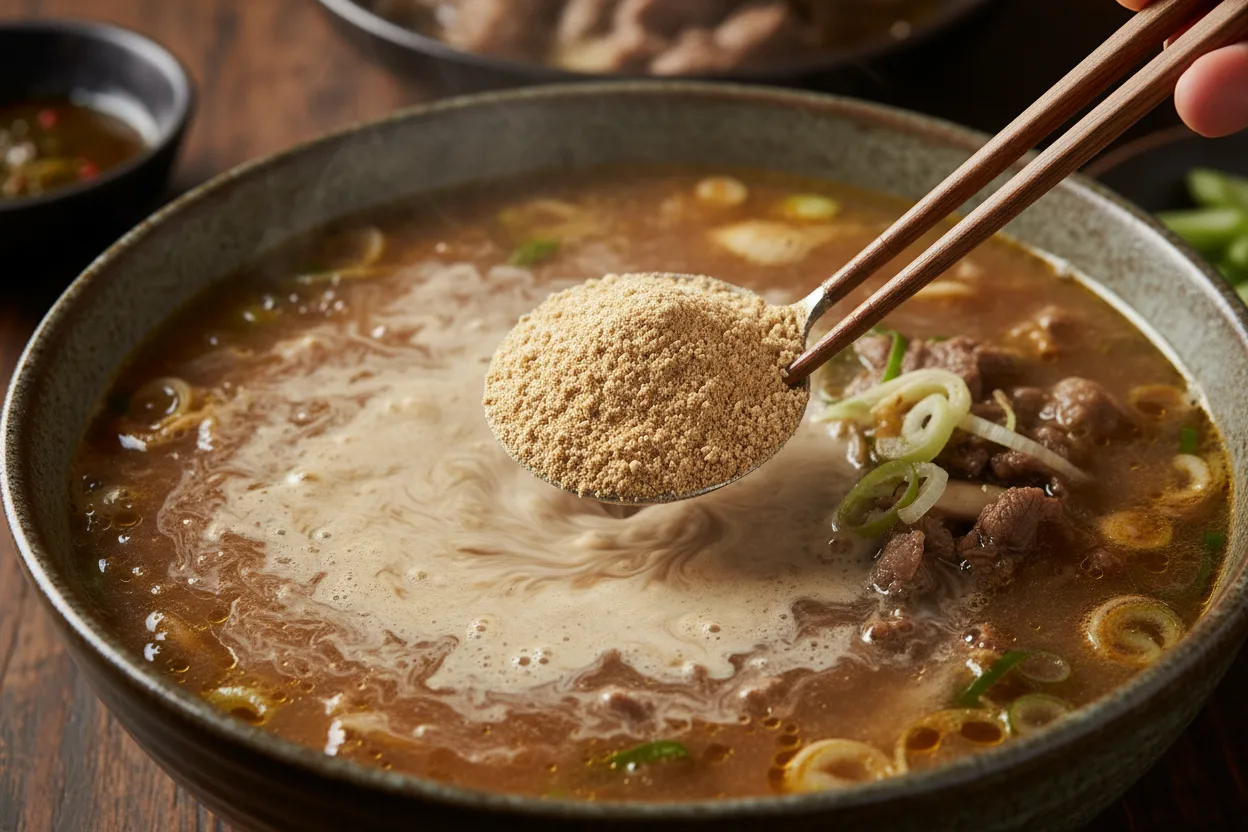
Dissolve perilla powder in a ladle of broth, stir it back in, and season with soup soy and garlic.
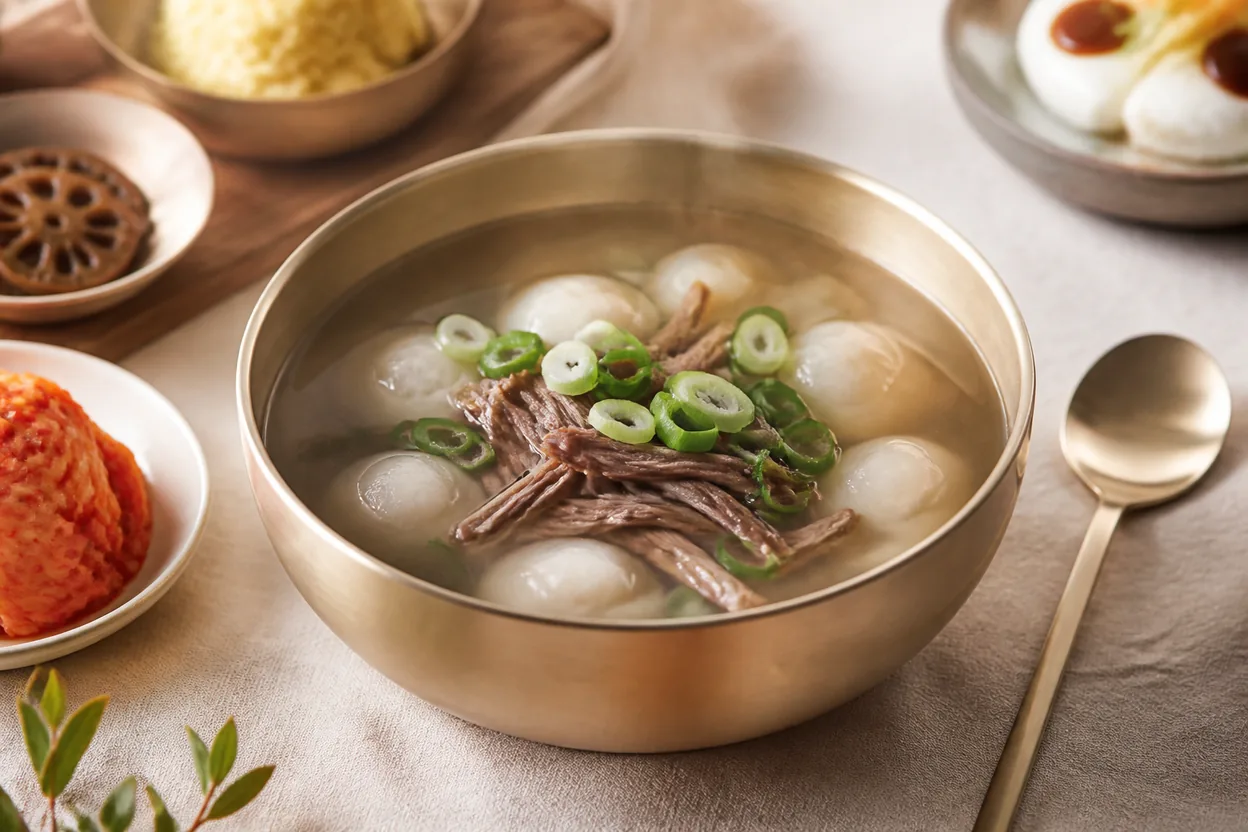
Return the shredded beef with scallion, boil once, and serve.
Candidates to investigate for this food. Maps use sourced location records; confirm the current menu, opening and booking directly. This list is not a tasting review or an award certification.
Jukgok, Gokseong, South Jeolla
Exact current location is not verified here. Confirm the venue through its official information before planning a visit.
Gokseong, South Jeolla
Exact current location is not verified here. Confirm the venue through its official information before planning a visit.
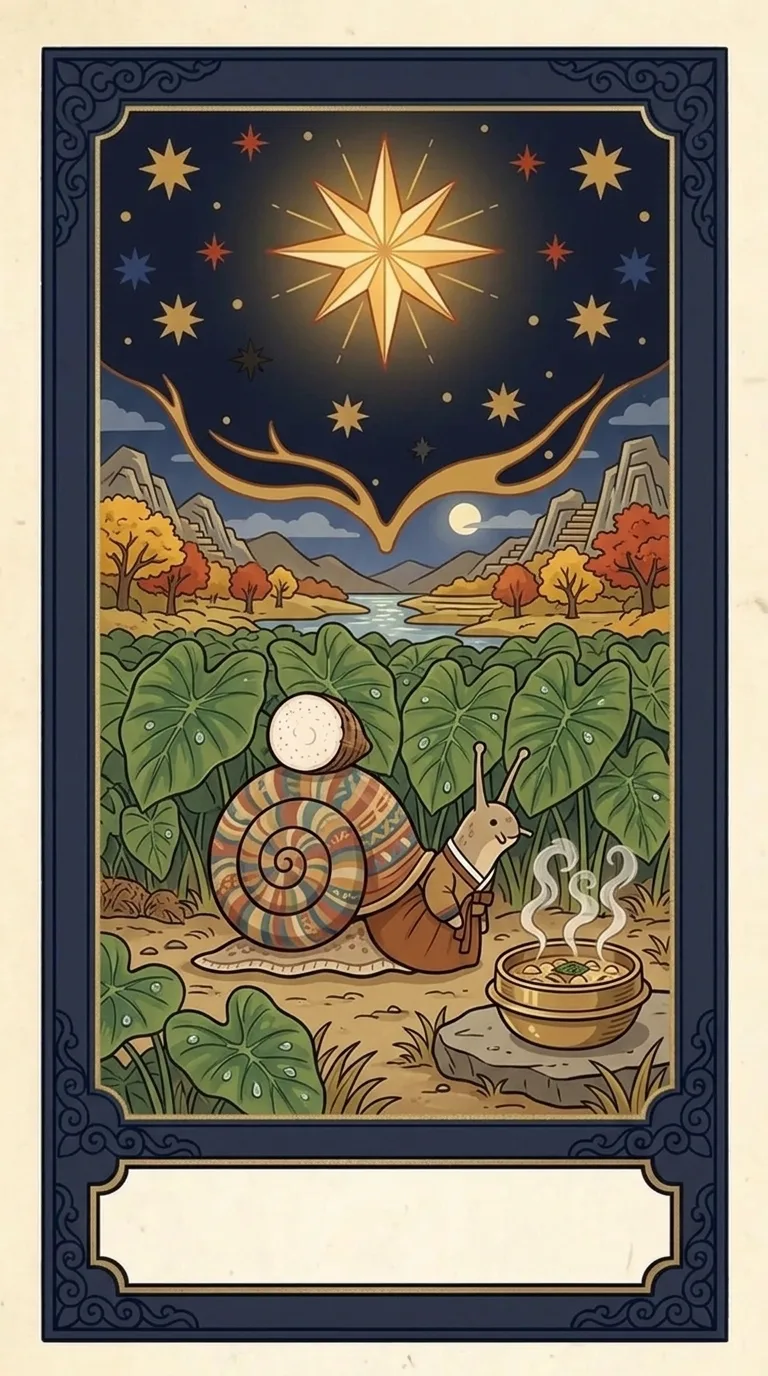
Earth element · a round, full face
Rough-skinned outside, milky white once peeled. A face like the taro soup of a Chuseok morning.
Upright: Called the egg of the earth, taro still never brags; it melts its body quietly into the broth. The more substance one has, the humbler one gets. Dissolve your skill gently, like broth.
Reversed: Raw taro stings the tongue. Nothing good skips the parboiling. That relationship you want to spit out for its sting may soften too, given its blanching time.
Fictional food metaphors inspired by traditional face-reading, not measurements of your face or personality.
You tuck your gaze away shyly: the eyes of taro hiding its egg in the earth. Do you know what toran means? Earth and egg: the egg of the soil. It buries its treasure underground and shows the world only homely leaves. Your talent is buried the same way. But taro must be dug up to become soup, child. Chuseok is coming: how long will you keep it interred?
That forehead is round and earthy, like a furrow in a Gokseong taro field. Six-tenths of the nation's taro grows around Jukgok valley, not because the valley is glamorous but because the land happens to fit taro. The luck in your forehead works the same: it ripens not in the glamorous seat but in the seat that fits you. Stop envying other fields and find your own valley.
Your speech slides smooth as taro flesh. But that silkiness is taro's weapon and its trap at once: handled well it is an easy swallow, handled poorly it is just slippery. Your soft words are the same. Backed by sincerity they become comfort; hollow of it, they read as slick maneuvering. Always stir in sincerity like perilla powder.
Taro soup is one of the few soups that climbs onto the Chuseok ancestral table. There is a reason it was chosen for the one soup the ancestors receive each year: plain outside, packed full within. That is this soup, and that is you.
Grandma's blessing
Chuseok morning's taro soup and songpyeon are official siblings down from the ancestral table, while midsummer's deck-born mulhoe overlaps with this soup in neither season, temperature, nor etiquette.