Beolgyo Cockle Festival
Beolgyo, Boseong, South Jeolla
Exact current location is not verified here. Confirm the venue through its official information before planning a visit.
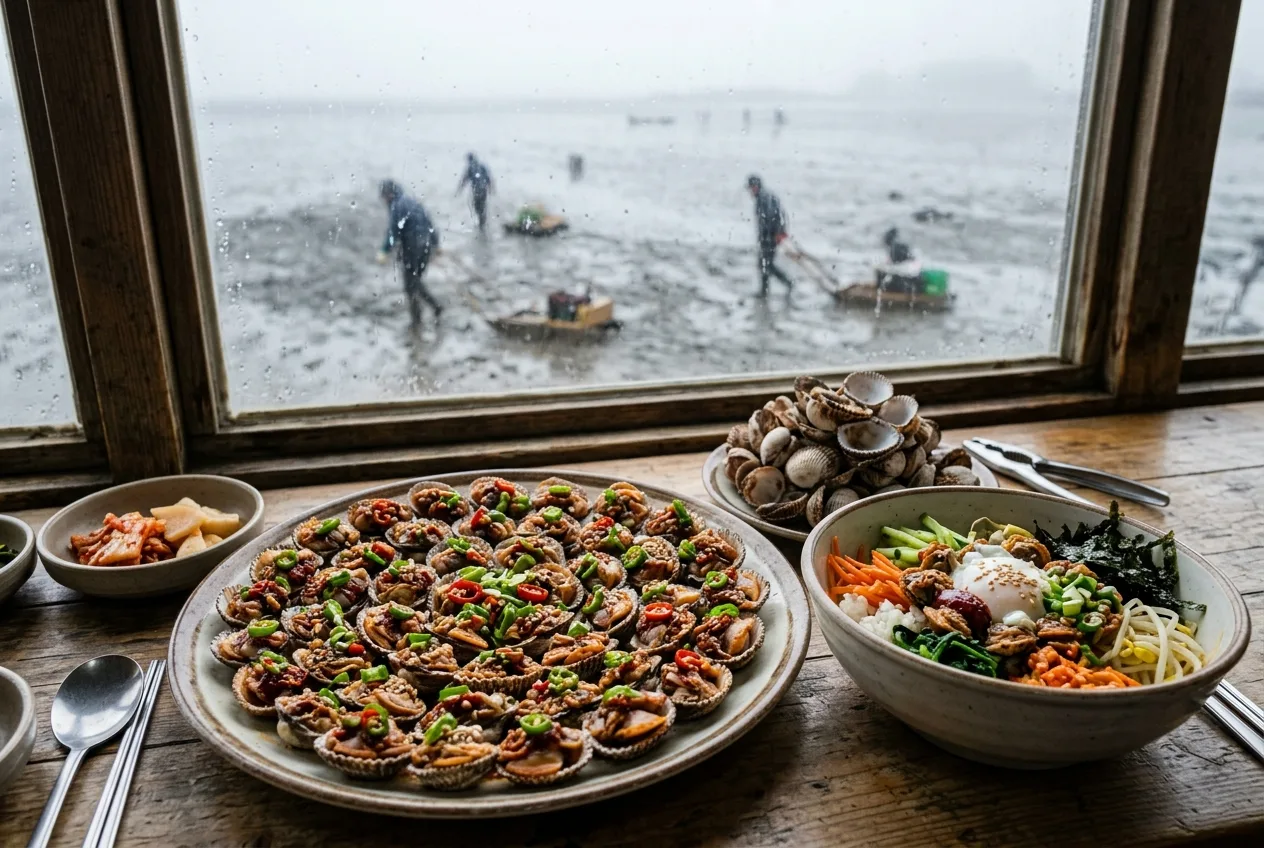
Regional & Country Table · Season 30 · Season of Winter VIII
Kkomak-muchim (Seasoned Cockles) · 꼬막무침
This seasoned cockle dish cooks the shellfish before adding a soy, chili and scallion dressing. Serving on shells or as shelled meat is a separate presentation choice.
For a set meal, check whether dressed cockles, plain cockles and bibimbap are each included. Pair fully cooked meat with rice; shells opening is not a complete account of every food-safety requirement.
Images are AI-generated illustrations, not records of a kitchen test. Follow the written ingredients and steps. Ingredients and substitutions guide
Check the center of the largest cockle against Korea's MFDS seafood standard. Discard any shell that remains closed after cooking.
| Ingredient | Amount | Substitute abroad |
|---|---|---|
| Cockles | 1kg | Small ark shells |
| Soy, chili flakes, garlic | For the dressing | Online Korean grocers |
| Scallion and chili | A little | Anywhere |
| Sesame oil and seeds | A little | Perilla oil |
| Coarse salt (for purging) | 2 tbsp | Sea salt |
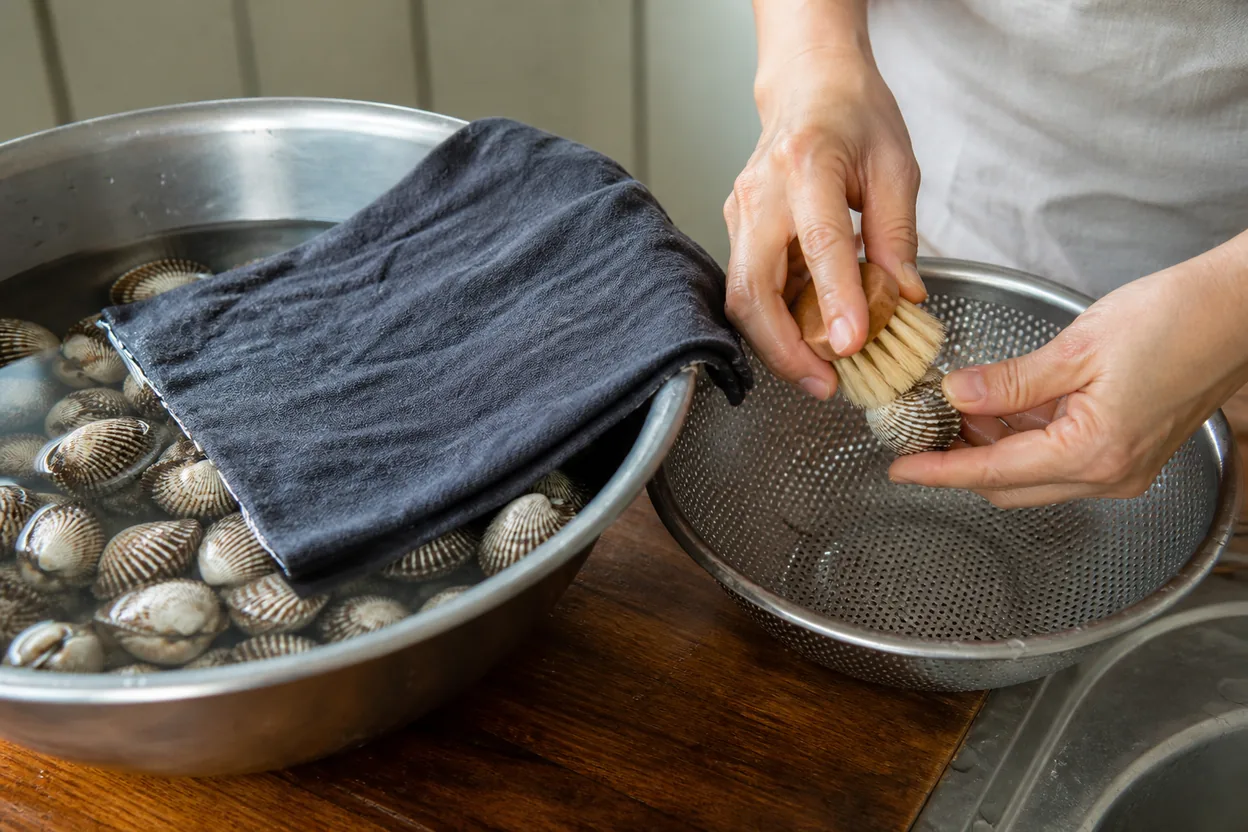
Soak in salt water in a dark place 2 hours, then scrub the shells together.
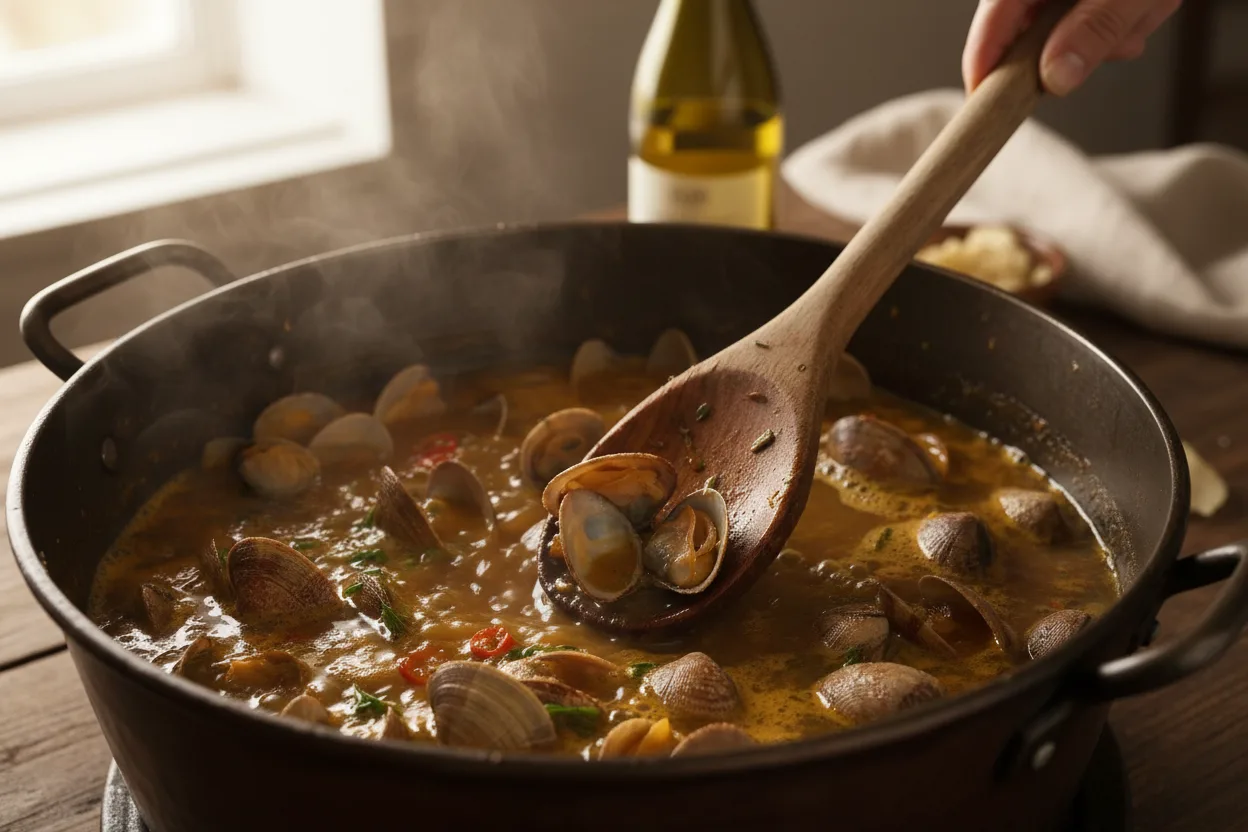
Add the scrubbed cockles to boiling water, stir in one direction, and cook for 10–15 minutes. Open one of the largest and verify that its center has reached 85°C/185°F and held there for 1 minute before draining.
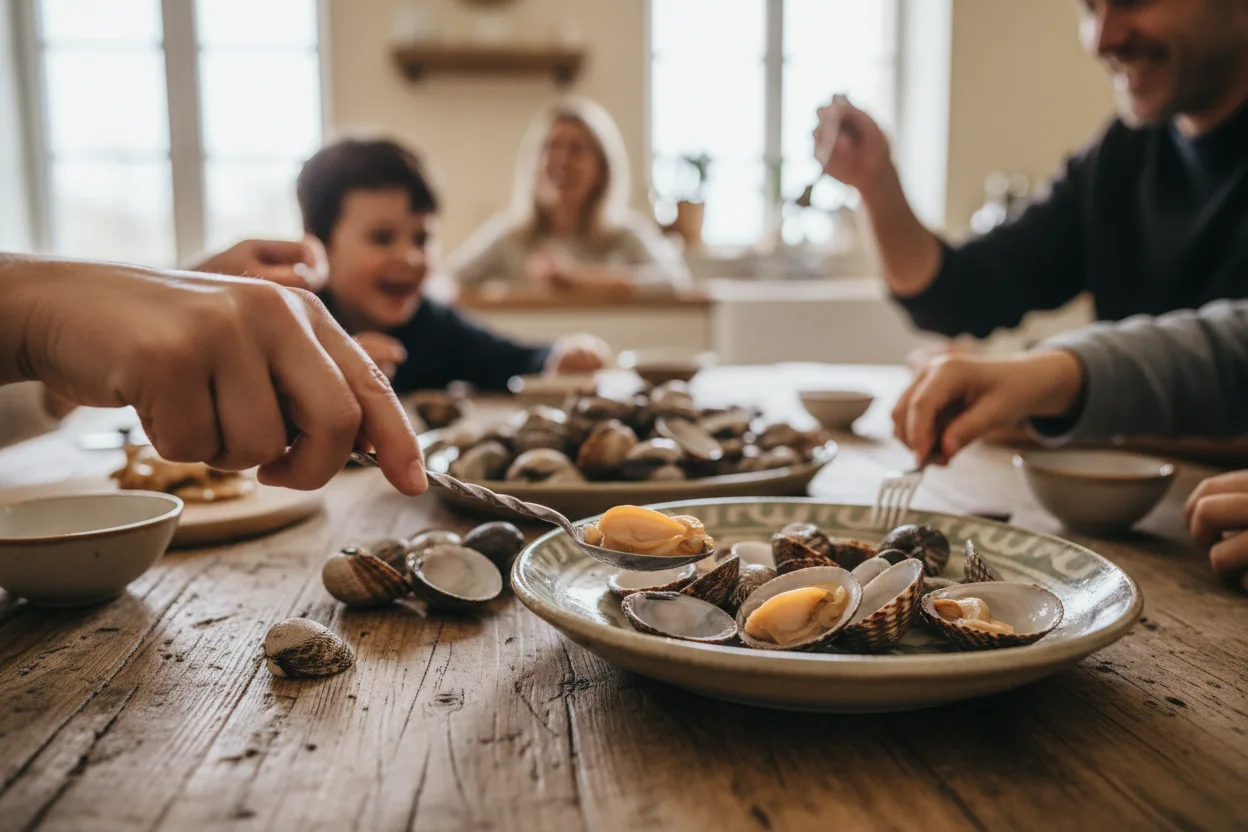
Twist a spoon tip into each hinge and open, leaving the meat on a half shell.
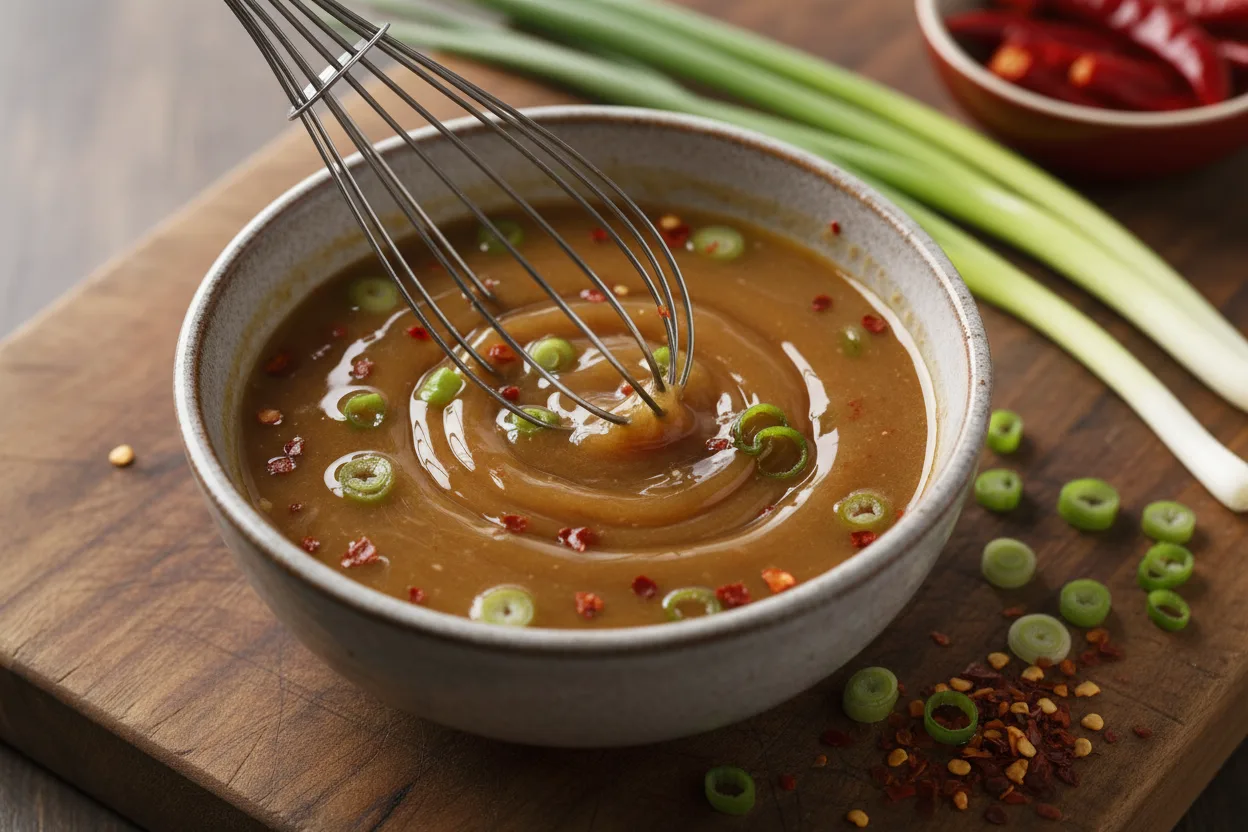
Combine soy, chili flakes, garlic, scallion, chili, sesame oil, and seeds.
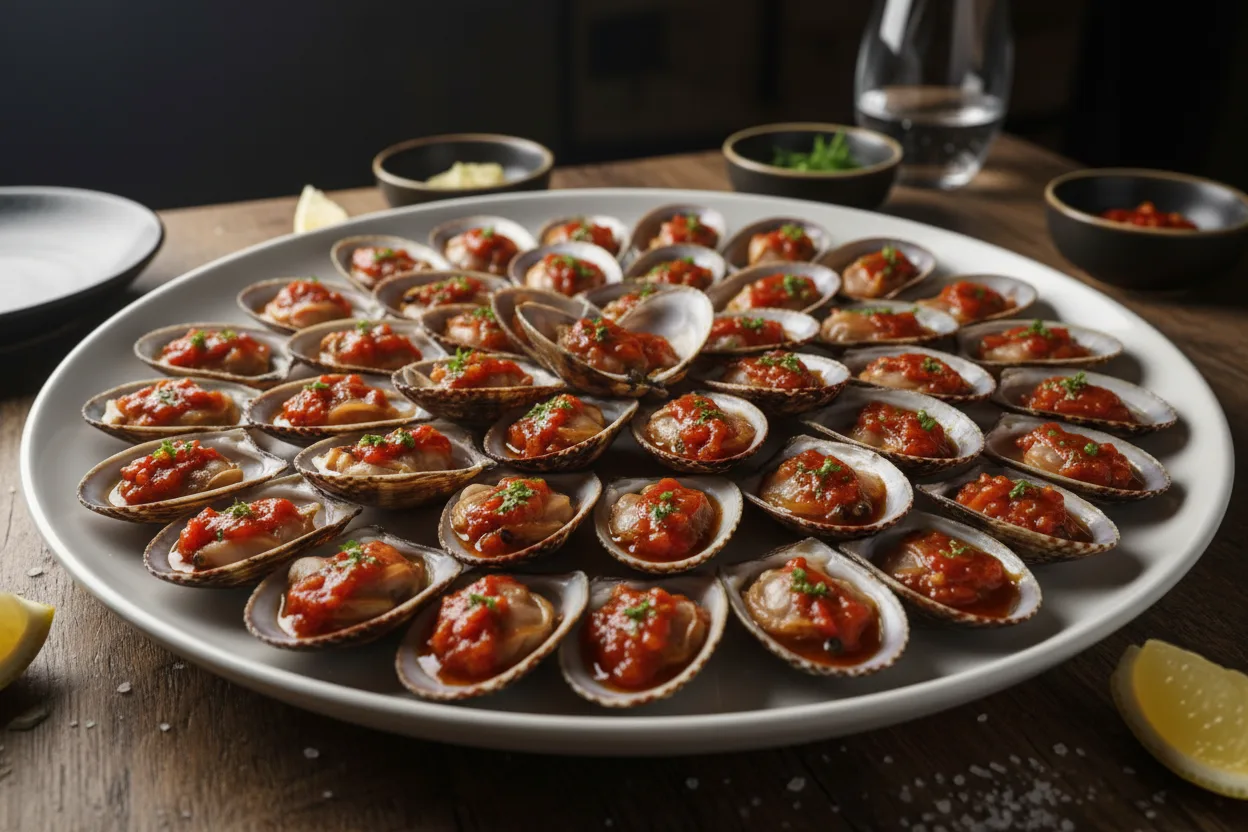
Discard any cockle still closed after cooking, then dab dressing on each cooked half-shell and arrange in circles on a platter.
Candidates to investigate for this food. Maps use sourced location records; confirm the current menu, opening and booking directly. This list is not a tasting review or an award certification.
Beolgyo, Boseong, South Jeolla
Exact current location is not verified here. Confirm the venue through its official information before planning a visit.
Beolgyo-eup, Boseong, South Jeolla
Exact current location is not verified here. Confirm the venue through its official information before planning a visit.
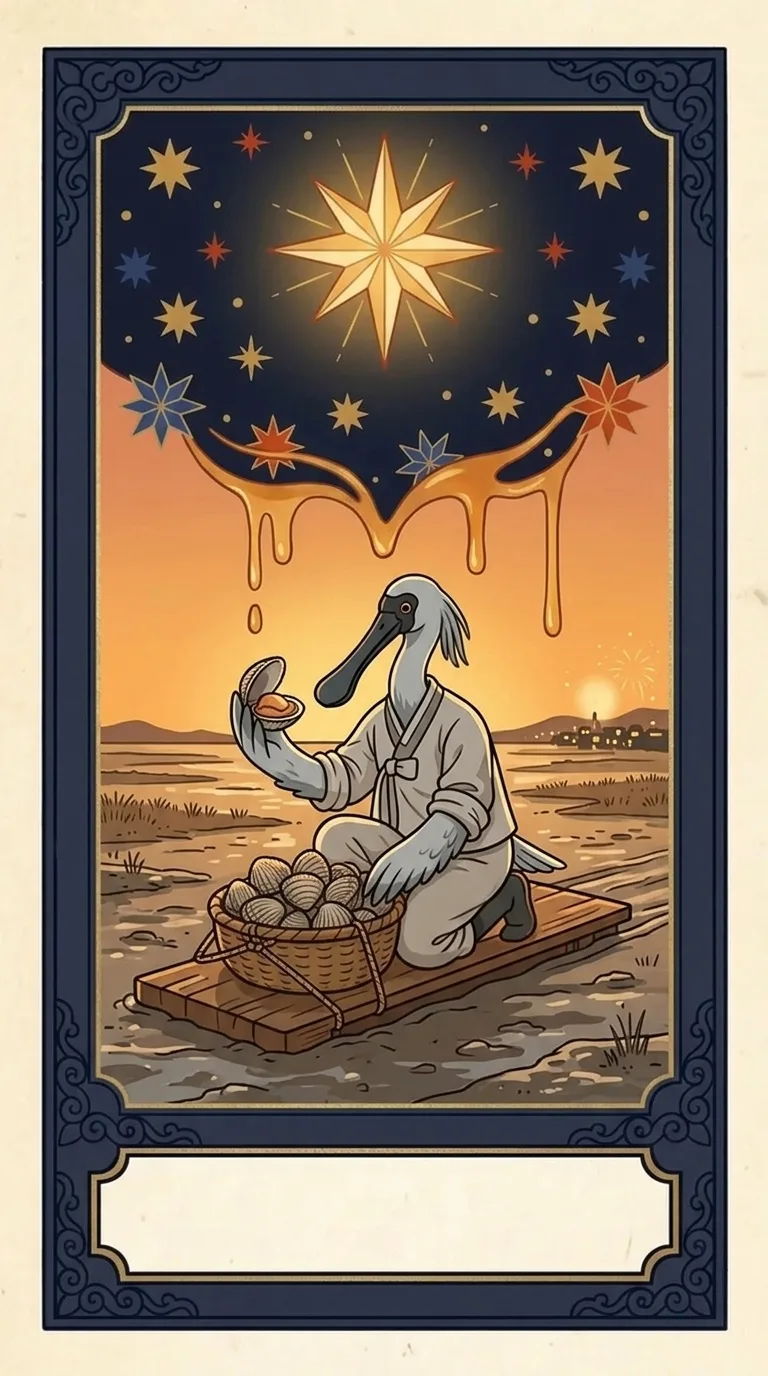
Fire element · a sharp, vivid face
You slide across the mire and dig up treasure. A face like the cockles of Beolgyo's winter mudflats, the deck's final card.
Upright: Fittingly for the deck's last card, the cockle crowns the winter mudflat's finale. As a plate exists only after every shell is opened by hand, your torments have been shelled one by one. Now set the table.
Reversed: You heard that chew matters and took safety out with the cooking time. Cook cockles fully, then avoid unnecessary extra heating to reduce toughness. Whether your work's unfinished edge is designed margin or plain neglect, you yourself already know.
Fictional food metaphors inspired by traditional face-reading, not measurements of your face or personality.
Those eyes glitter even in muddy water: mud-board eyes. The women of Beolgyo push flat boards with one knee and slide across mire that swallows anyone who tries to walk. They learned to glide where walking fails. Your way through the world is that board, child: in the bog where others flail, you slide forward. Only those who have known the mire own that skill.
The lines on your forehead run clear as cockle ridges: furrows not carved by age but pooled with savor. Beolgyo cockle became Korea's first geographically protected seafood not for a smooth shell but for the taste of the deep-ridged true cockle. Your lines are that grade mark. Why the smooth cockle and the ridged one price differently, the market has always known.
Your talk carries a briny savor, like the dressing itself. The craft of kkomak-muchim is restraint, not seasoning: the dressing steps half a pace back so the chewy flesh can speak. Your storytelling works the same, tastiest exactly when you step half a pace back. The novel Taebaek Sanmaek needed no hundred words for Beolgyo cockles: briny and chewy, one line, done.
The cockle is the winter flat's last treasure and this deck's final torment. Having shelled a hundred and eight of them to get here, you know now: torments are not erased but shelled, one by one, and set on the table. Your table, child, is already abundant.
Grandma's blessing
Southern cockles and Jeju yellowtail on one table become the beginning and end of the winter sea, while midsummer watermelon punch runs on the opposite calendar and the two never receive each other's invitations.