Big Village Nutritious Oyster Rice
Ganwoldo, Seosan, South Chungcheong
충청남도 서산시 부석면 간월도1길 65Location sources checked 2026.08.09
Public-record location check, not a live opening-hours guarantee. Confirm with the restaurant before visiting.
Specialty Dishes · 8 of Tables · Eight of Tables
Gul-bap (Oyster Rice) · 굴밥
Decision notes · editorial comparison of references and preparation plans
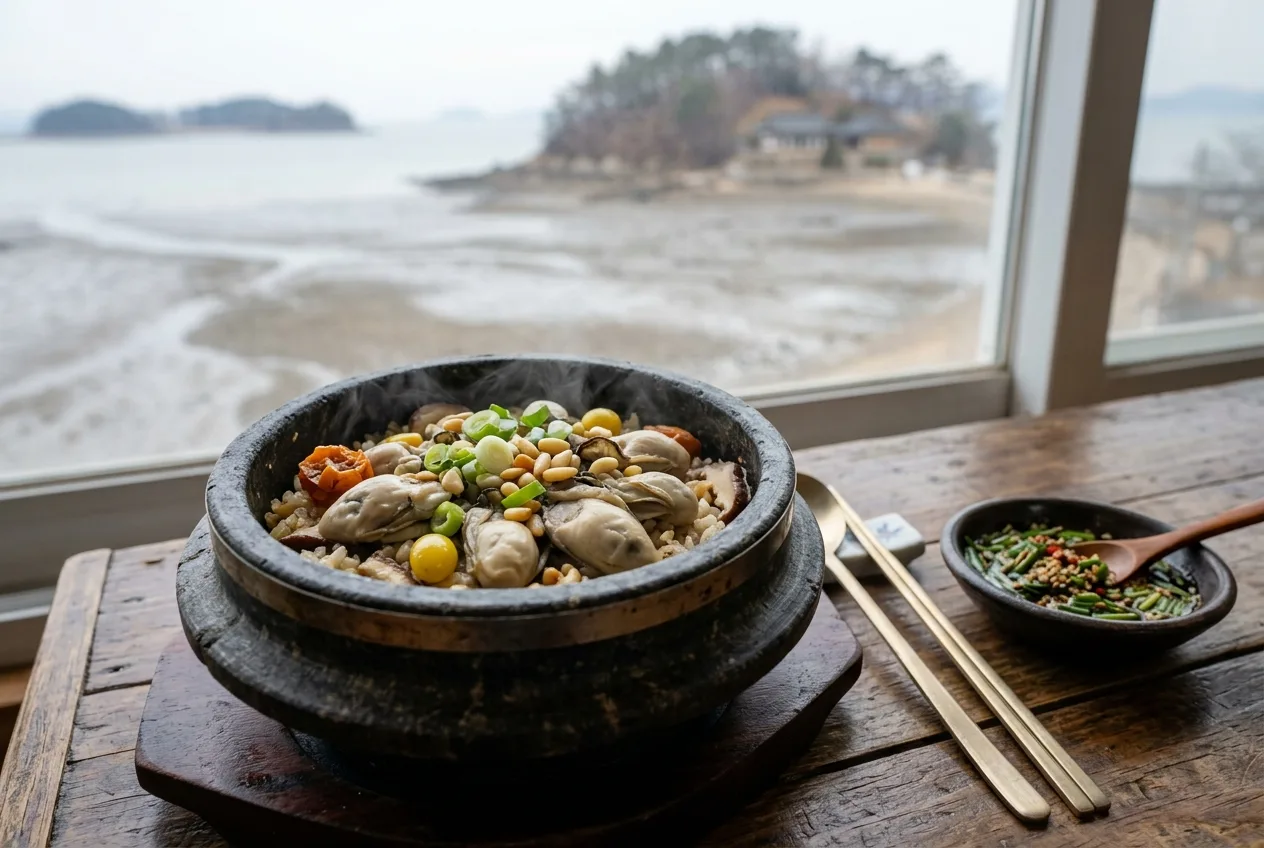
Our oyster rice cooks oysters with rice. Distinguish it from sea-squirt bibimbap assembled with prepared seafood; cooking state comes before a general seafood label.
Check before ordering or preparing: Check whether oysters are cooked with the rice, the dressing and the rice portion.
Rice 300g, oysters 300g, sprouts 150g and water 340ml. This page scopes the method to a pot and adds a doneness check. Korean Traditional Knowledge Portal · Gul Bap · 2026-10-24
Gul-bap cooks oysters with rice. This version selects the Korean Traditional Knowledge Portal’s soybean-sprout formula and adds a doneness check. Do not mix in water quantities from a different mushroom-and-nut version.
Compare the way rice takes up moisture with oysters served in pancakes or soup. Taste rice and oyster before pouring on dressing, and attend to storage and complete cooking as well as the timer.
Images are AI-generated illustrations, not records of a kitchen test. Follow the written ingredients and steps. Ingredients and substitutions guide
Times and yields are planning values for this editorial preparation, not measured kitchen results. Substitutions can change flavor, texture and cooking needs. Read product directions and our measurement and doneness guide together.
Formula: the portal’s soybean-sprout version. Portions and schedule are editorial, not kitchen measurements.
| Ingredient | Amount | Substitute abroad |
|---|---|---|
| Dry short-grain rice | 300g | |
| Shucked oysters | 300g | |
| Soybean sprouts | 150g | |
| Water for rice | 340ml | |
| Perilla oil and laver | 1 tbsp; 1 sheet | |
| Soy sauce and chili flakes | 3 tbsp; 1 tbsp | |
| Chopped wild chives, scallion, garlic and sesame oil | 1/2 tsp each | |
| Sesame seeds | A pinch |
This selects the Korean Traditional Knowledge Portal’s soybean-sprout version. Rinse rice, soak 30 minutes and drain. Prepare oysters and sprouts.
Put drained rice, 340ml water and sprouts in a lidded pot. The water corresponds to 300g dry rice, not 300g soaked rice.
At boiling, add oil and oysters and reduce heat. Finish when rice is tender and oysters are firm, opaque and 63°C/145°F inside. Continue cooking if needed.
Combine the listed sauce ingredients. Top rice with crushed laver; offer the sauce separately for gradual seasoning.
Preparing the tool. If controls remain disabled, enable JavaScript or try another browser. The guidance below remains readable.
Ask for enough food for the number of people eating. Portion sizes and minimum orders vary by shop. This card does not send an order or payment.
Candidates to investigate for this food. Maps use sourced location records; confirm the current menu, opening and booking directly. This list is not a tasting review or an award certification.
Ganwoldo, Seosan, South Chungcheong
Public-record location check, not a live opening-hours guarantee. Confirm with the restaurant before visiting.
Ganwoldo, Seosan, South Chungcheong
Exact current location is not verified here. Confirm the venue through its official information before planning a visit.
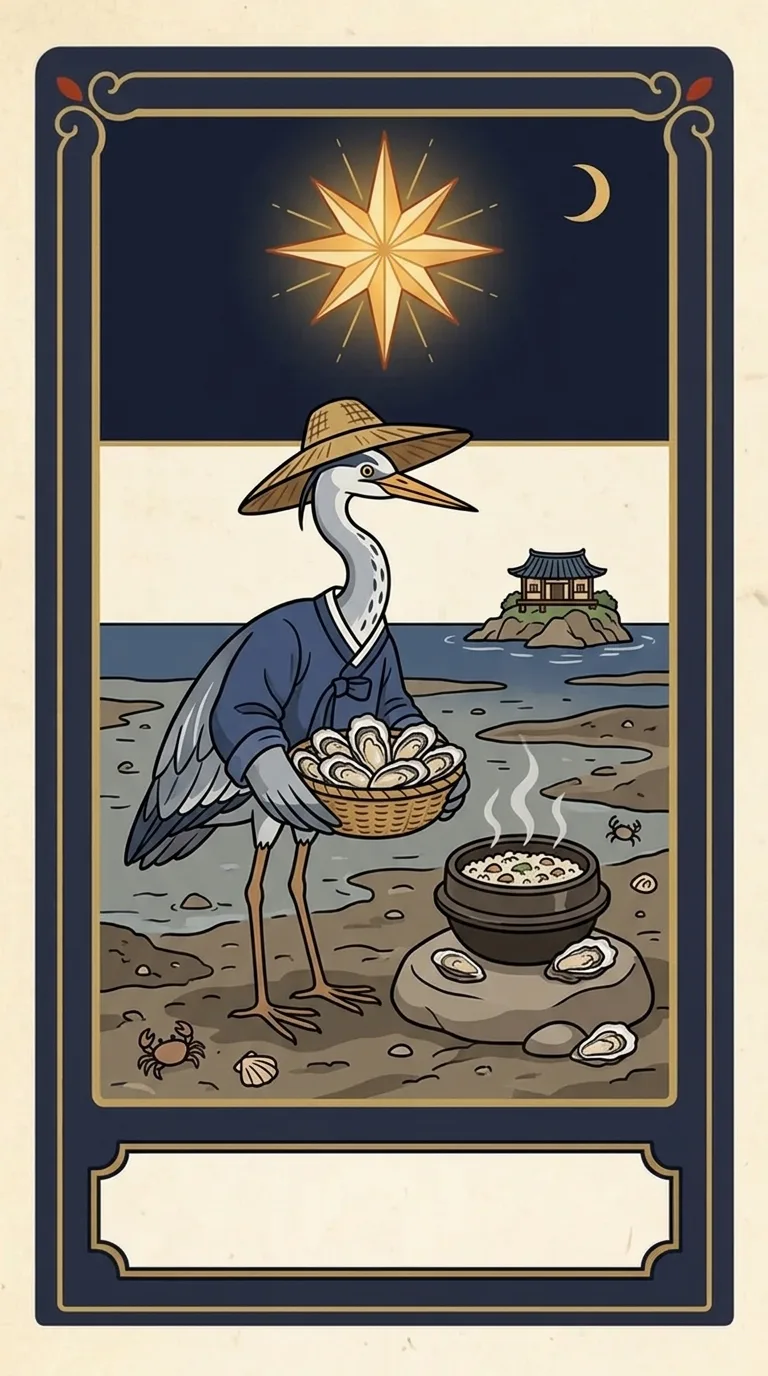
Water element · a face of soft curves
A rough shell outside, packed full inside. The face of a tidal-village keeper who reads the water clock before moving.
Upright: The tidal flat does not open on demand; only those who read the tides dig oysters. That thing you have been waiting on? The water is out. Take your hoe and go.
Reversed: You are insisting on walking into the flat at high tide. Diligence and bad timing are different things. Today, take off the boots and read the tide table first.
Fictional food metaphors inspired by traditional face-reading, not measurements of your face or personality.
Those eyes glitter like winter sea-light: eyes with wit in them. That is the oyster's story. Look at the black shell and you would swear it is a rock, but open it and the pale flesh is packed tight. Your worth also lives inside the shell, known only to those who know. Do not sulk about it, child. Why do oysters cost dear? Because not just anyone can open them.
That nose is small but solidly set: a nose that earns modestly and leaks nothing. The Big Village oyster-rice house on Ganwoldo lives that way, one stone pot topped with oysters, ginkgo, and jujube, walking a single road for nearly forty years. No flashy expansion, just one full pot at a time. Your money luck is that stone pot: hot and long-lasting, no lightning windfalls. So put down the lottery ticket.
Those moist lips were born with eating luck, but an oyster-eating mouth is a sensitive mouth, and yours is one. Spoiled food or spoiled words, you catch them like a ghost. That sharpness turns to poison when spent on gossip and to craft when spent on setting the table. Serve your own words like oysters too, only while fresh. Aged remarks upset stomachs.
The oyster fills itself by filtering the whole sea through its body. You are the same, straining the world as it flows through and keeping what feeds you. So do not fear murky water. Filtering is your gift.
Grandma's blessing
Oyster and crab grew up on the same mudflat and will talk sea-stories all night at one table, while beside a syrup-dripping hotteok the oyster's cold sea scent has nowhere to go.