Myeongdong Kyoja (main)
Myeong-dong, Jung-gu, Seoul
Exact current location is not verified here. Confirm the venue through its official information before planning a visit.
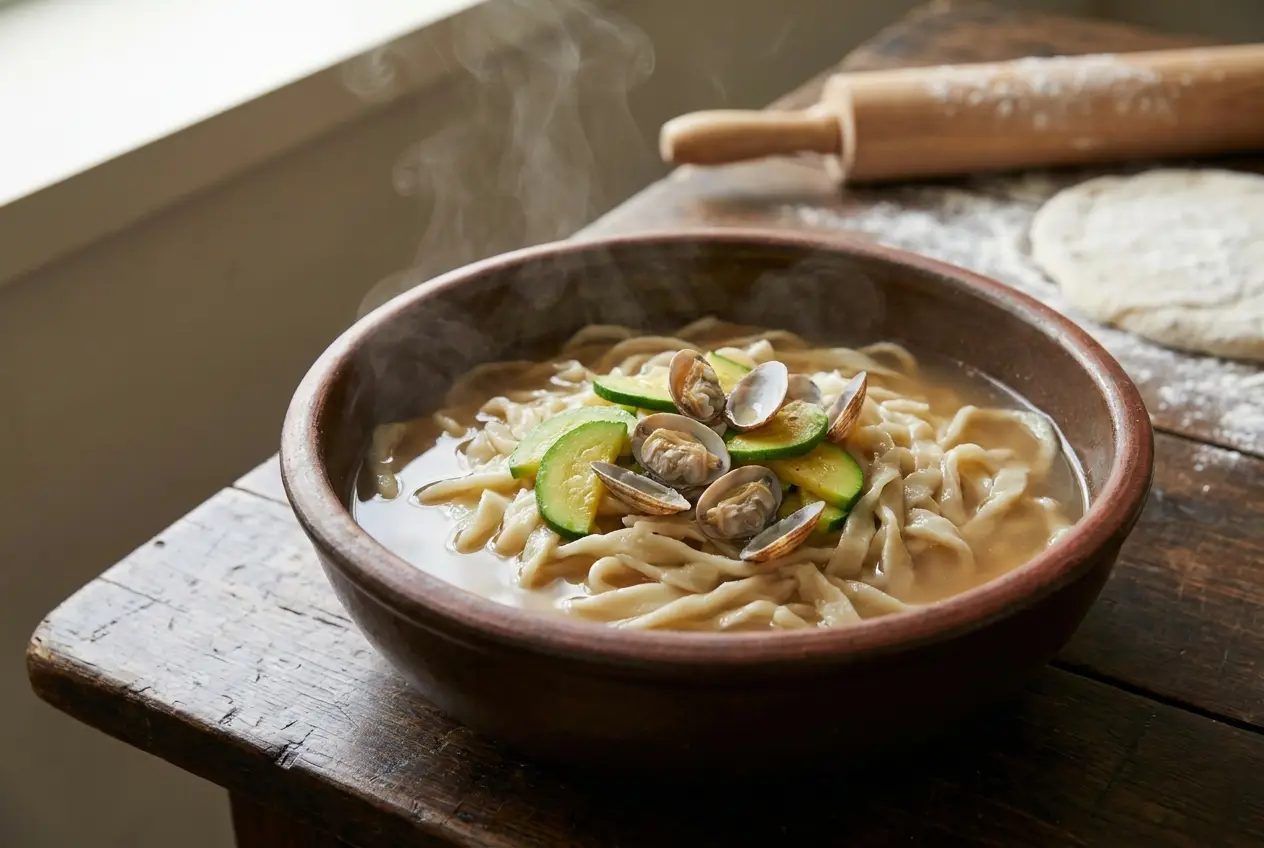
Noodles · XI · The Honest Blade
Kalguksu (Knife-cut Noodle Soup) · 칼국수
This kalguksu makes sliced wheat noodles and serves them in clam, anchovy and kelp broth. Making dough and preparing stock are separate tasks; using purchased noodles changes the preparation work.
Compare sliced noodles with the uneven pieces of sujebi dough. At a restaurant, establish whether the broth uses clams, chicken or another base; the word kalguksu alone does not tell you whether seafood is present.
Images are AI-generated illustrations, not records of a kitchen test. Follow the written ingredients and steps. Ingredients and substitutions guide
Prepare the broth and vegetables while the dough rests. No raw flour should remain inside the noodles; discard clams that remain closed after cooking.
| Ingredient | Amount | Substitute abroad |
|---|---|---|
| All-purpose flour | 300 g | Any all-purpose flour |
| Manila clams | 400 g (purged) | Manila or littleneck clams, or frozen clam meat |
| Dried anchovies for broth | 15 g (about 10) | Japanese niboshi, or Korean grocers online |
| Dried kelp (dasima) | 2 sheets, 5x5 cm | Japanese kombu |
| Korean zucchini | 1/2 | Zucchini |
| Potato | 1 medium | Any potato |
| Scallion | 1 stalk | Scallion or leek whites |
| Minced garlic | 1 tbsp | Freshly minced |
| Soup soy sauce (guk-ganjang) | 1 to 2 tbsp | Half soy sauce and half salt, or a little fish sauce |
| Salt | 1 tsp for dough, plus to taste | Any salt |
| Korean chili flakes (gochugaru) | 1 tbsp | No substitute; Korean grocers online (regular chili flakes taste different) |
| Toasted sesame oil | 1 tsp | Asian market toasted sesame oil |
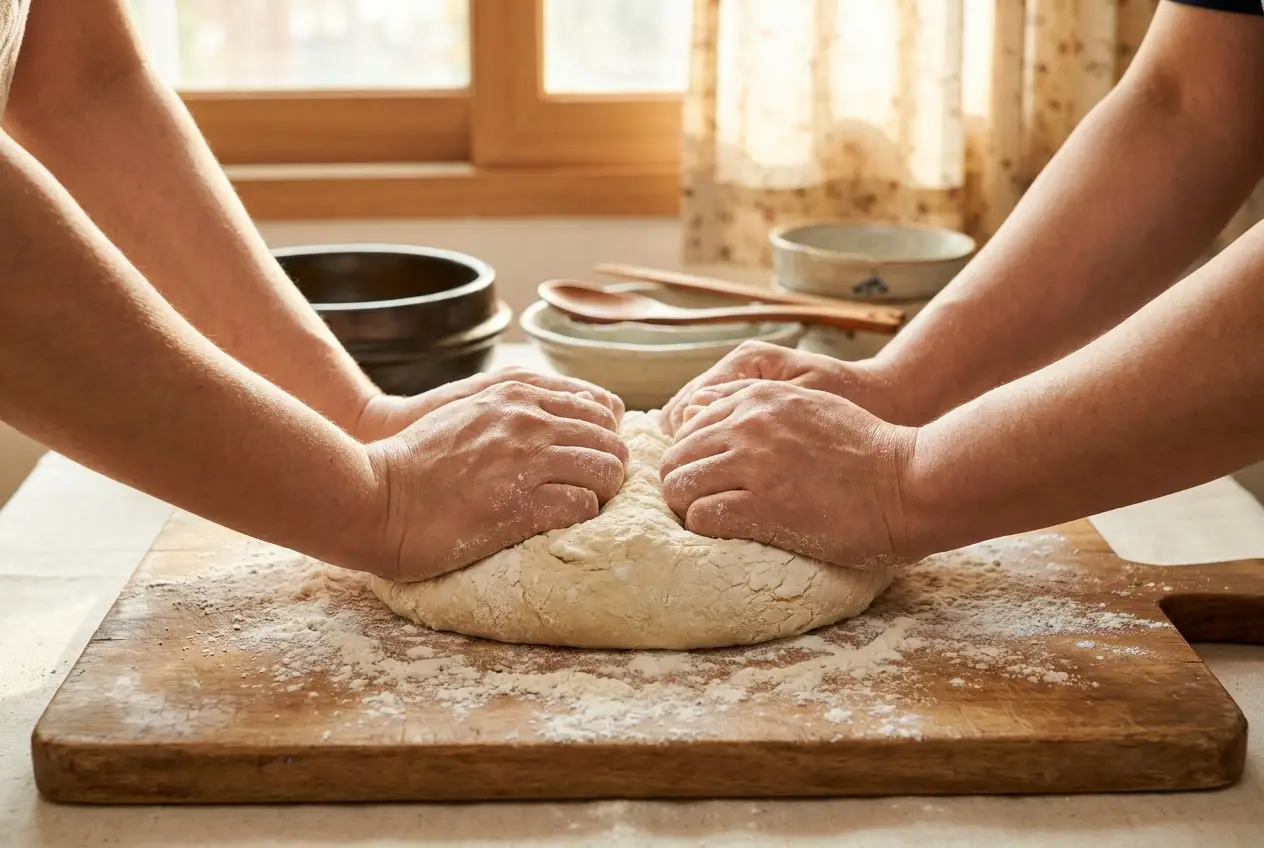
Mix 300 g flour with a teaspoon of salt and 150 ml water, gather into one mass, and knead ten minutes. When the surface turns smooth, cover with a damp cloth or wrap and rest in the fridge at least thirty minutes.
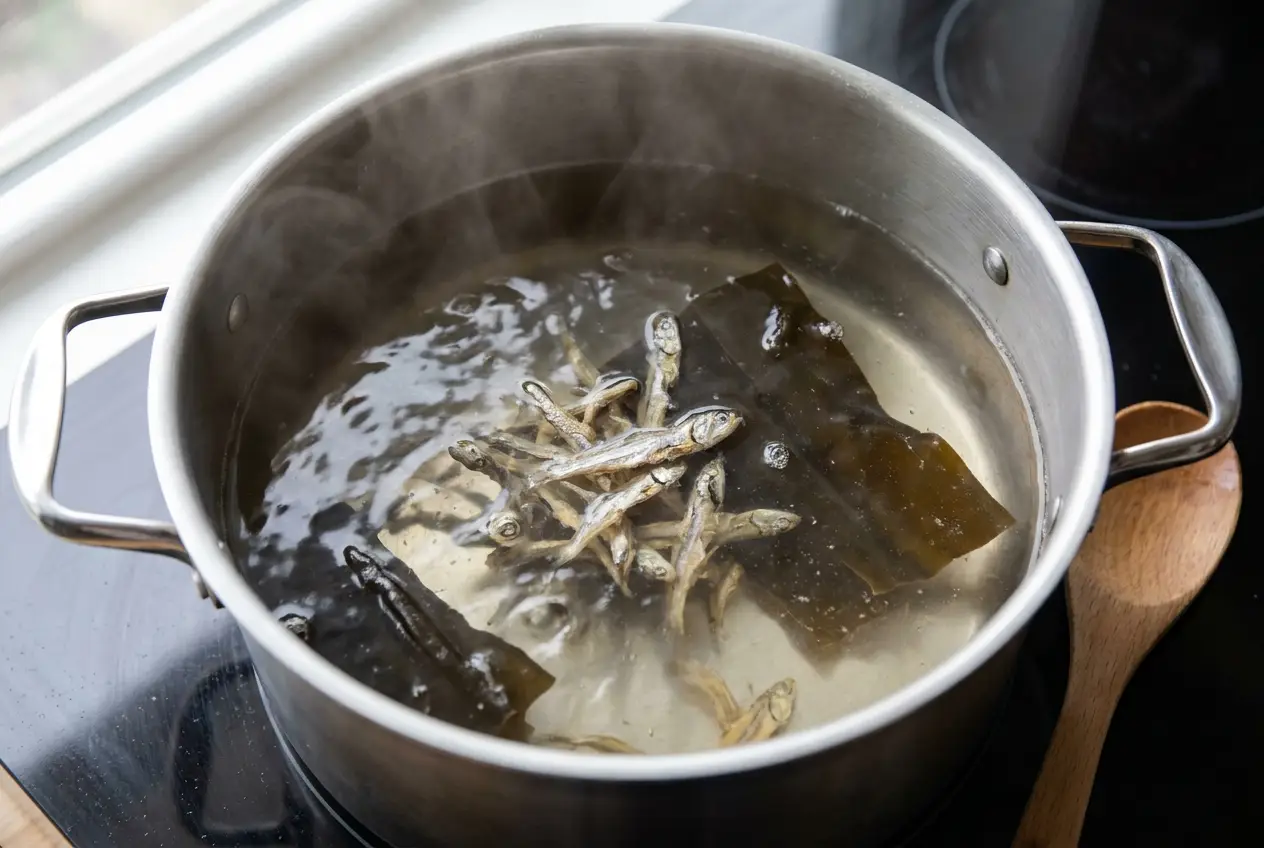
Simmer 1.2 liters of water with headed and gutted anchovies and the kelp for ten minutes; lift the kelp first, steep the anchovies five minutes more, and strain. Rinse the purged clams in cold water.
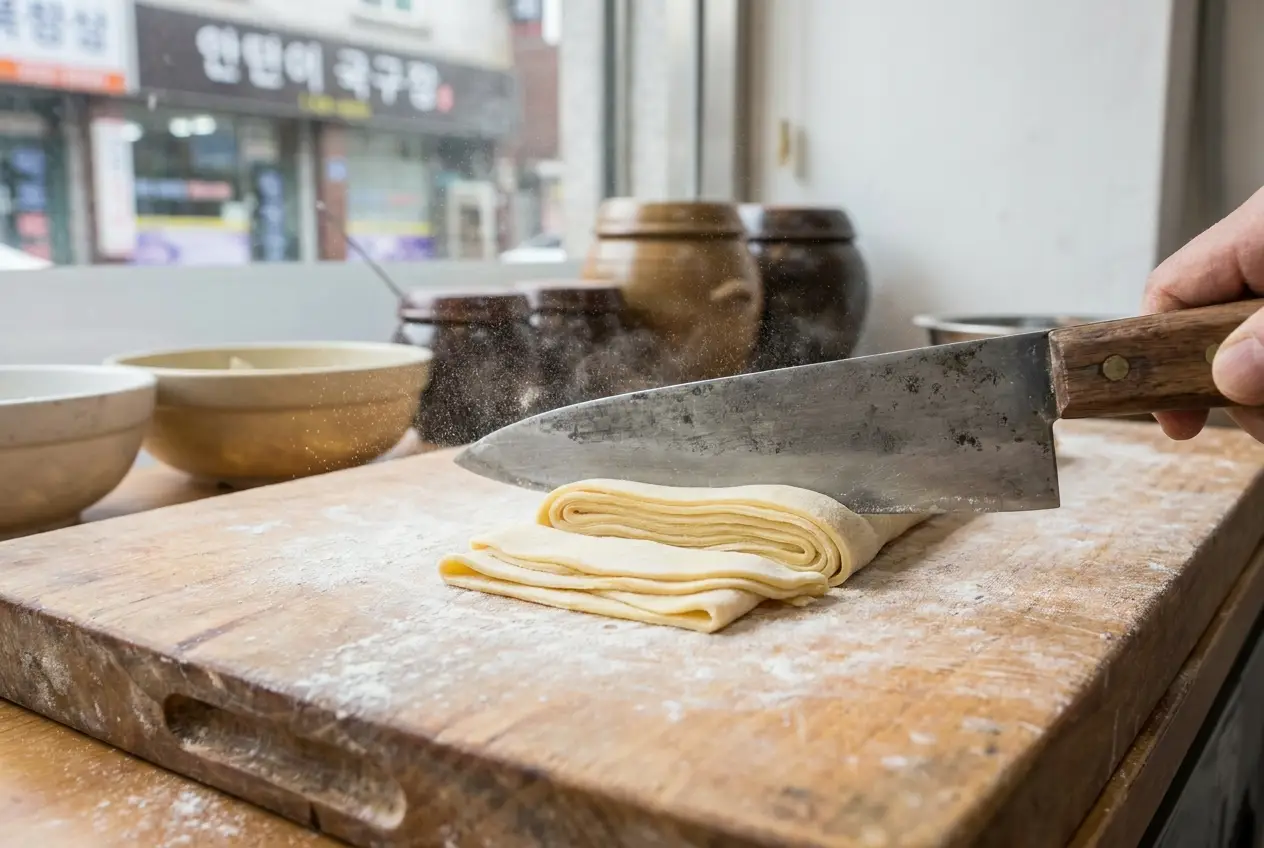
Dust the rested dough generously and roll it out 2 to 3 mm thin. Dust again, fold it like a folding screen, cut into even 5 mm ribbons, and shake them loose.
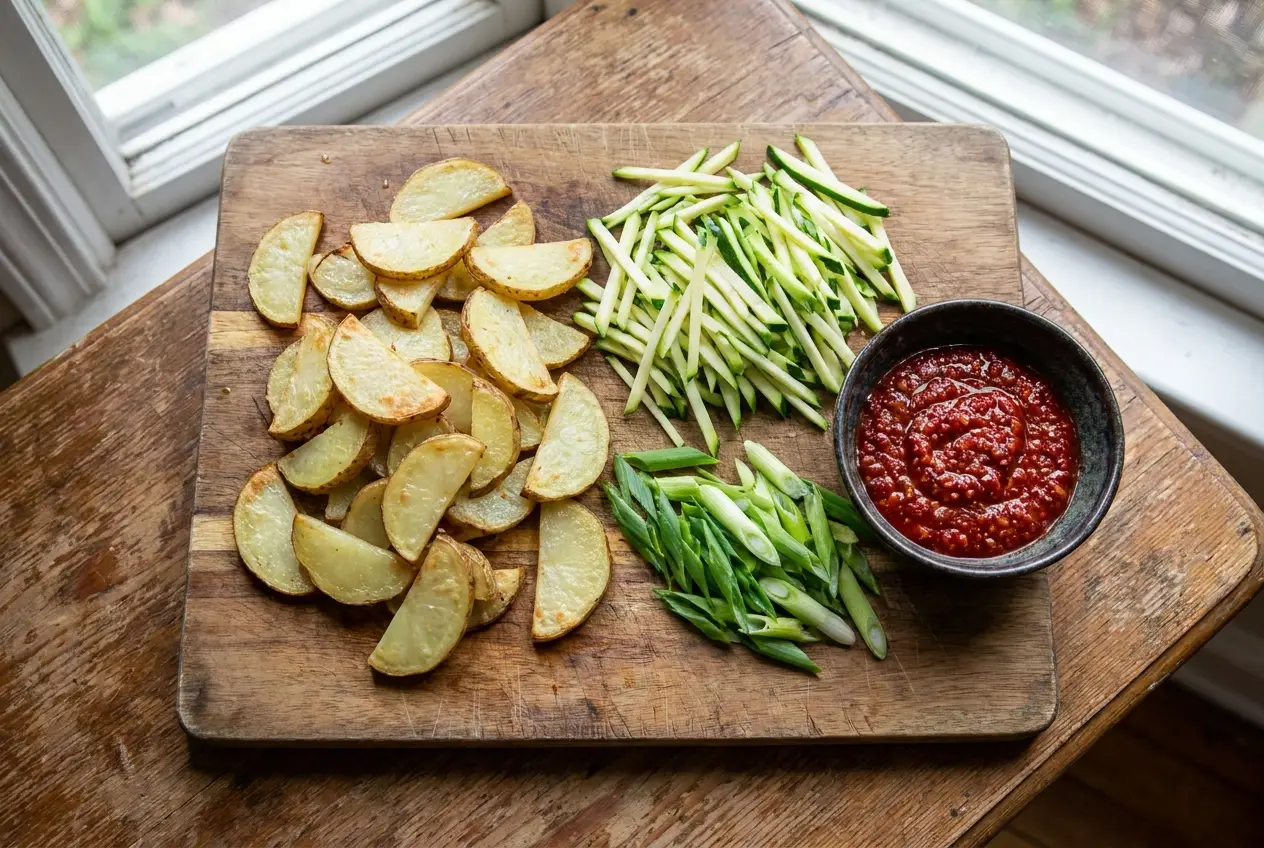
Cut the potato into half-moons, julienne the zucchini, slice the scallion on the bias. In a small bowl mix a tablespoon of chili flakes, two of soy sauce, a teaspoon of sesame oil, and chopped scallion into a seasoning sauce.
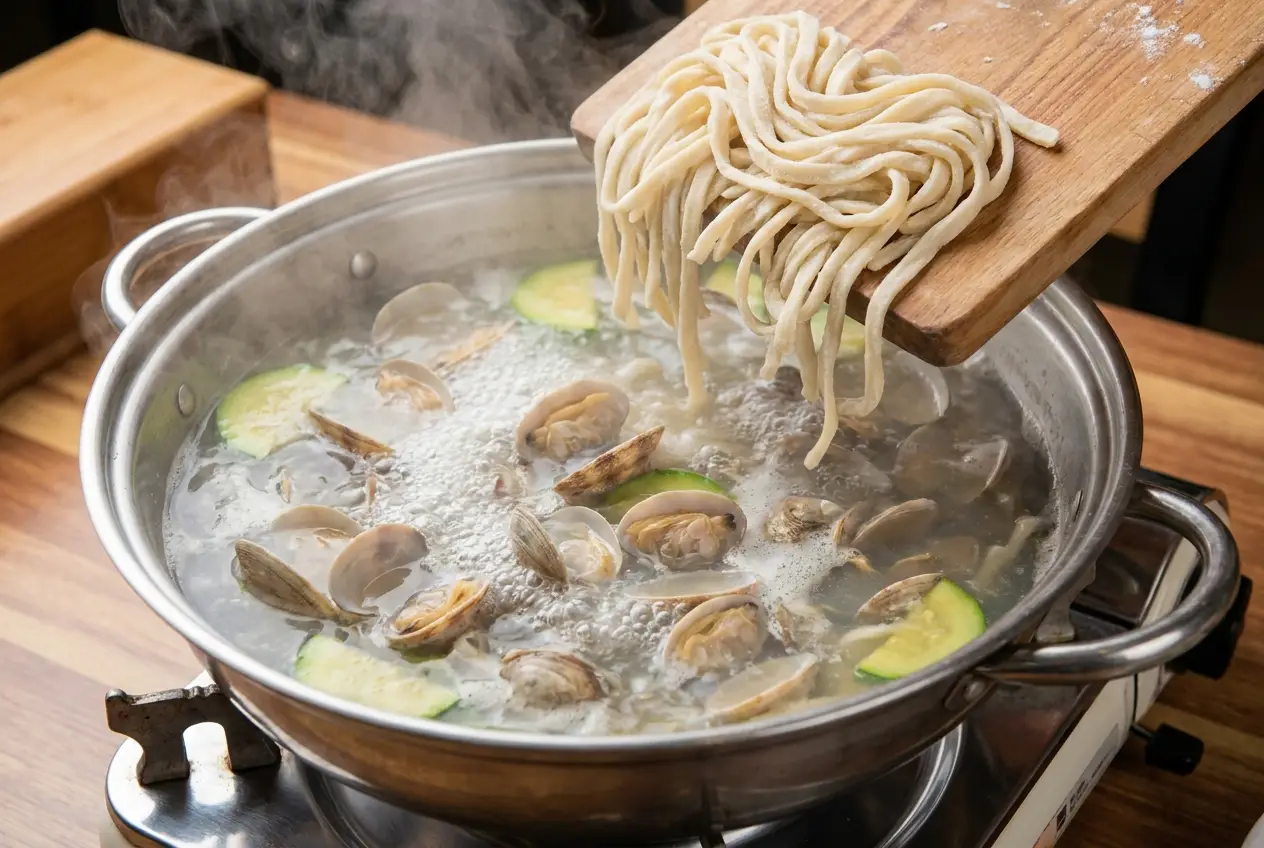
Boil the potato in the broth for 3 minutes. Shake excess flour from the noodles, add them, and loosen for 2–3 minutes. Add the clams, zucchini, and garlic and cook another 4–6 minutes, until no raw flour remains inside the noodles. Before cooking, discard cracked clams and live clams that do not close when tapped; after cooking, discard any that remain closed. Season with soup soy sauce and salt.
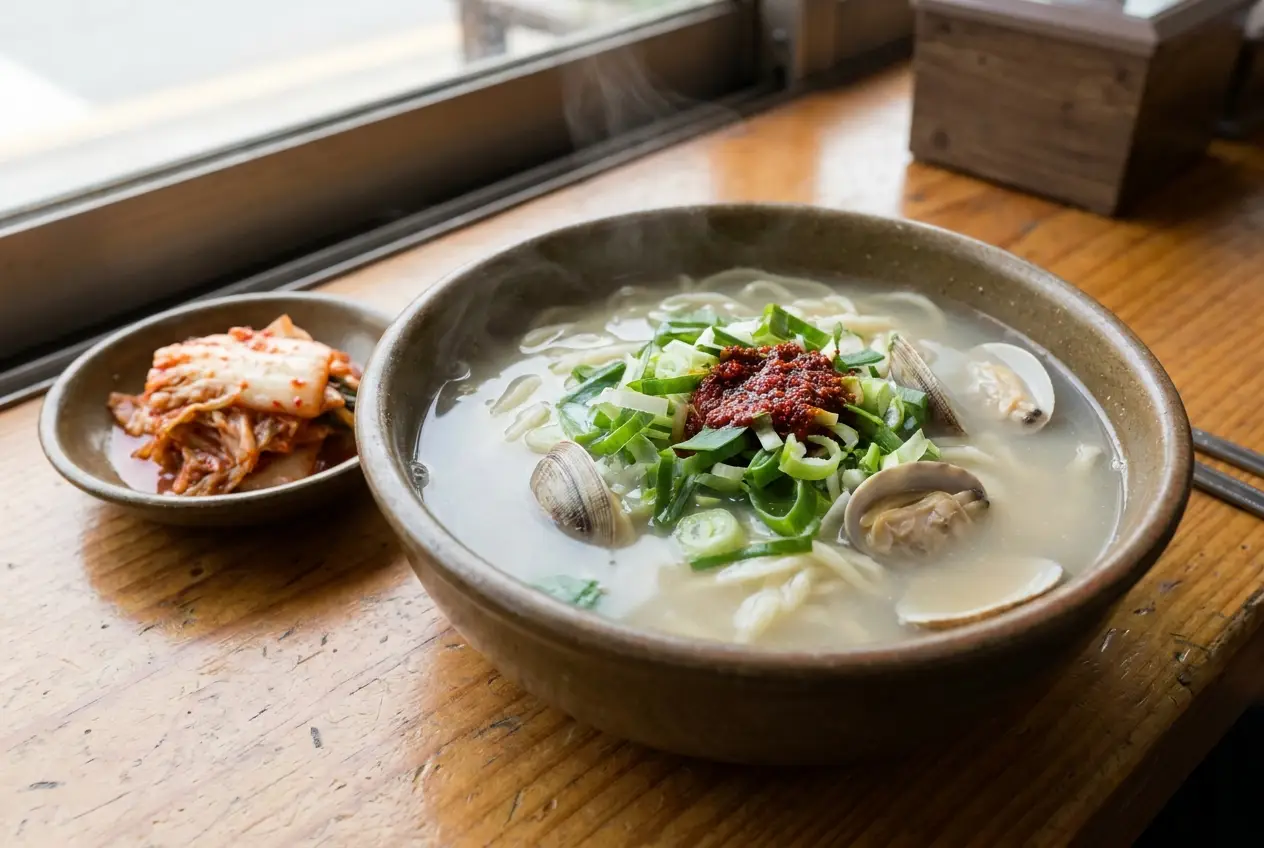
Fill bowls generously with noodles and broth, top with scallion, and lay a spoonful of the sauce on top. Serve with freshly dressed cabbage kimchi.
Candidates to investigate for this food. Maps use sourced location records; confirm the current menu, opening and booking directly. This list is not a tasting review or an award certification.
Myeong-dong, Jung-gu, Seoul
Exact current location is not verified here. Confirm the venue through its official information before planning a visit.
Dong-gu, Daejeon (near Daejeon Station)
Exact current location is not verified here. Confirm the venue through its official information before planning a visit.
Bukchon, Jongno-gu, Seoul
Exact current location is not verified here. Confirm the venue through its official information before planning a visit.
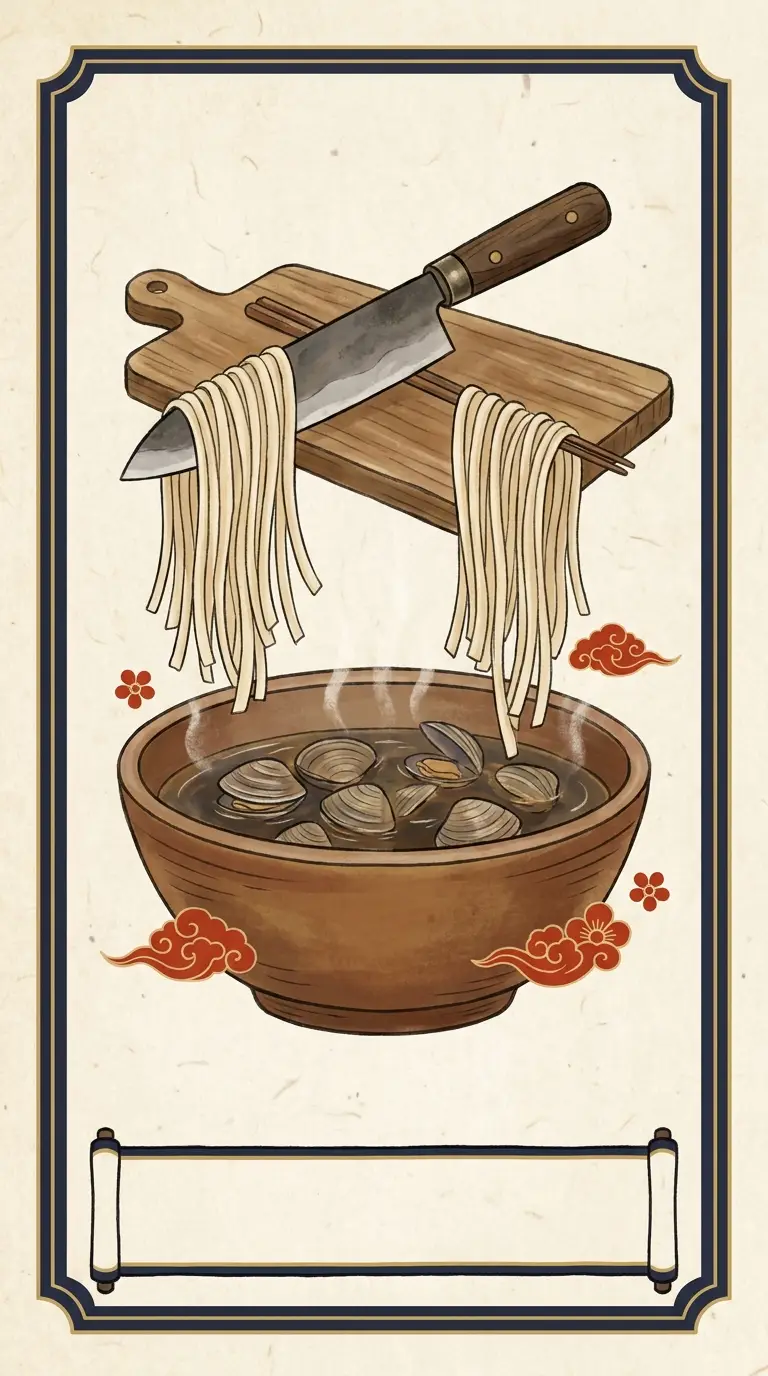
Metal element · an angular, solid face
A Metal-type principled soul, straight as a knife-cut edge with no ornament. Few words, but once your affection steeps it lasts like bone broth, and nothing satisfies you unless your own hands rolled and cut it: the face of honest handiwork.
Upright: A time when unadorned sincerity gets through. The steadiness of hands that rolled and cut day after day is being recognized as skill, so face them head-on, no fancy garnish needed.
Reversed: Straightness is hardening into stubbornness. A slightly crooked noodle still joins the same bowl once it hits the broth, so taste one chopstick-load of someone else's way before you judge.
Fictional food metaphors inspired by traditional face-reading, not measurements of your face or personality.
That philtrum groove runs straight as if pressed by a rolling pin. A clear philtrum means energy flows true and your word carries credit. Kalguksu noodles are exactly that: cut so even they look measured, so people slurp them down without a doubt. But child, straight alone is dull. Once in a while, toss the dough crooked like sujebi. It is allowed.
Look at that mouth pressed firm. A guarded Palace of Speech leaks neither secrets nor money. Kalguksu dough is your fate written out: it must rest alone under a damp cloth for half a day before it turns chewy. But keep the cloth on forever and who ever learns what you have become? If you are done resting, come to the table, child.
That chin is angled like the spine of an iron knife. A squared chin means grit, the kind that rarely lets go once it bites. So of course you are kalguksu: machine noodles would be easy, but nothing satisfies you short of rolling the pin and cutting by hand. Fine, but spare the arms of the people beside you. Learn to delegate half, at least.
I scolded your stubbornness, but that stubbornness is what made your dough chewy. One who has rolled and cut with their own hands all these years will send up steam on any table they are placed, so straighten those shoulders, child.
Grandma's blessing
The Fire energy of freshly dressed kimchi jolts your mild Metal broth wide awake, a born match. Mul-naengmyeon shares your noodle fate, and two noodle prides at one table only squabble over whose broth reigns, so meet separately.