Hapcheon Gukbapjip
235 Yongho-ro, Nam-gu, Busan
Exact current location is not verified here. Confirm the venue through its official information before planning a visit.
Soups & Stews · 10 of Ladles · Ten of Ladles
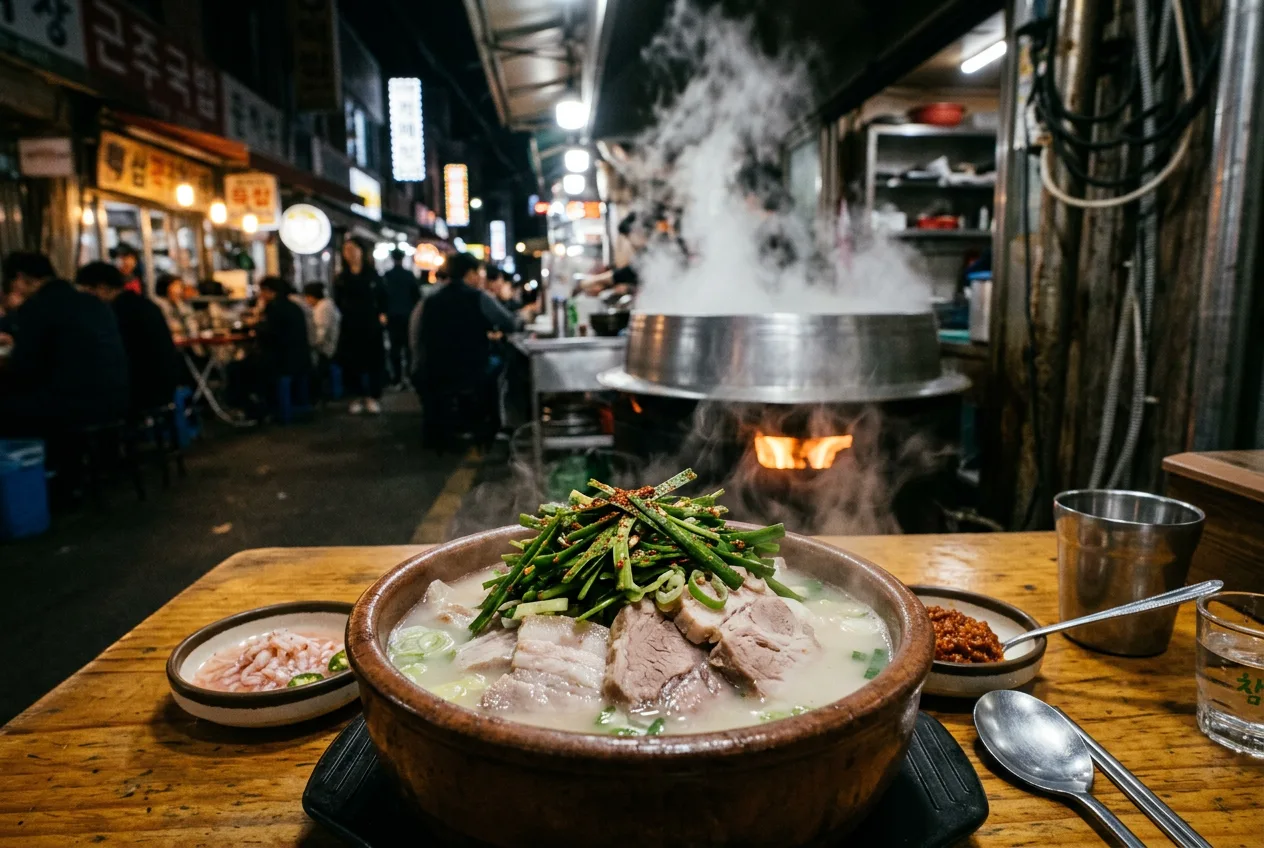
Dwaeji Gukbap (Busan Pork Soup with Rice) · 돼지국밥
Decision notes · editorial comparison of references and preparation plans
Look beyond the broth name to the contents. Seolleongtang provides a beef comparison, while pork gukbap itself may offer different combinations of meat, offal and sausage.
Check before ordering or preparing: Check the contents of meat-only and mixed options, separate rice, salted shrimp and chili seasoning.
KTO describes sliced pork and rice in pork broth. KTO · Pork and Rice Soup (돼지국밥 / Dwaejigukbap) · 2026-09-13
Dwaeji-gukbap combines pork broth, sliced pork and rice. This route uses fully cooked broth and meat, with chives, salted shrimp and chili paste offered for adjustment. It is not a bone-stock formula.
Check whether the bowl contains meat alone or offal and whether rice can be served separately. Taste the broth before adding chives and salted shrimp to preserve a useful comparison with other gukbap meals.
Images are AI-generated illustrations, not records of a kitchen test. Follow the written ingredients and steps. Ingredients and substitutions guide
Times and portions are planning values for serving a prepared product, not measured results. Adjust them using the product’s contents, portion size and storage directions.
| Ingredient | Amount | Substitute abroad |
|---|---|---|
| Fully cooked pork soup stock and sliced pork | 3 labeled servings | |
| Cooked rice | 3 bowls | |
| Washed garlic chives | 1 handful | |
| Salted shrimp and prepared chili paste (optional) | A little after tasting | |
| Somyeon (optional) | 1 package serving |
Choose fully cooked stock and pork. Do not add raw pork to this reheating procedure. Check whether the stock is concentrated and follow its liquid quantity for three servings.
Heat the stock and sliced pork thoroughly as labeled. This is not a bone-extraction recipe, so the former two-hour boiling instruction does not apply.
Wash and cut chives and serve separately. If choosing noodles, cook them in a separate pot according to the package and drain.
Pour hot broth over warm rice and pork. Taste before adding salted shrimp or chili paste a little at a time. Complete any necessary heating after adding chives.
Preparing the tool. If controls remain disabled, enable JavaScript or try another browser. The guidance below remains readable.
Ask for enough food for the number of people eating. Portion sizes and minimum orders vary by shop. This card does not send an order or payment.
Candidates to investigate for this food. Maps use sourced location records; confirm the current menu, opening and booking directly. This list is not a tasting review or an award certification.
235 Yongho-ro, Nam-gu, Busan
Exact current location is not verified here. Confirm the venue through its official information before planning a visit.
Yeongdo, Busan
Exact current location is not verified here. Confirm the venue through its official information before planning a visit.

Earth element · a round, full face
Blunt of speech, hot of broth. The harbor face that took the waves of refugee years and the decades of the docks, and never left its post.
Upright: However hard the day crashes, your broth is quietly turning milky underneath. Say 'ma, it is fine' like a Busan native and walk your road. Grit is today's answer.
Reversed: You are gripping the plain gukbap with no chive salad and no salted shrimp. Grit and stubbornness are different things; accept the seasoning someone hands you today.
Fictional food metaphors inspired by traditional face-reading, not measurements of your face or personality.
That forehead is broad as a dock yard: a large-vessel face. Dwaeji gukbap is that vessel, the great cauldron of Busan that fed refugees, dockworkers, and students alike. Your forehead is that yard. You have the embrace that receives everyone without sorting, though the ones who only ride along in that embrace deserve an occasional cull.
That chin is squared: a face of grit. Do you know why Busan's love for this soup runs so fierce? Because it is a flavor that never betrays, fancy or not. Your charm is that constancy. In a world that sloshes with every trend, you serve today the same broth you served yesterday. That is the only method that ever made a regular.
Those brows are dark: deep affection. The grandmothers of the gukbap houses speak short: 'eat up' carries all the love they have. Your bluntness is that Busan dialect, affection served at broth temperature instead of in words. The ones who know, know. But say it out loud sometimes too. People assume they are known, and then they ache.
A soup born of wartime refuge became the pride of Busan. The seasons you survived will become your identity the same way. Until the broth runs milky, ma, guard your fire.
Grandma's blessing
Sharp chive salad lays life on your broth, a match certified by Busan itself. Well-mannered yakgwa gets bewildered by your harbor dialect, so exchange only a nod at the dessert table.