Original Halmeoni Mukjip
Gujeuk, Yuseong, Daejeon
Exact current location is not verified here. Confirm the venue through its official information before planning a visit.
Regional & Country Table · 7 of Tables · Seven of Tables
Dotorimuk-bap (Acorn Jelly Rice Soup) · 도토리묵밥
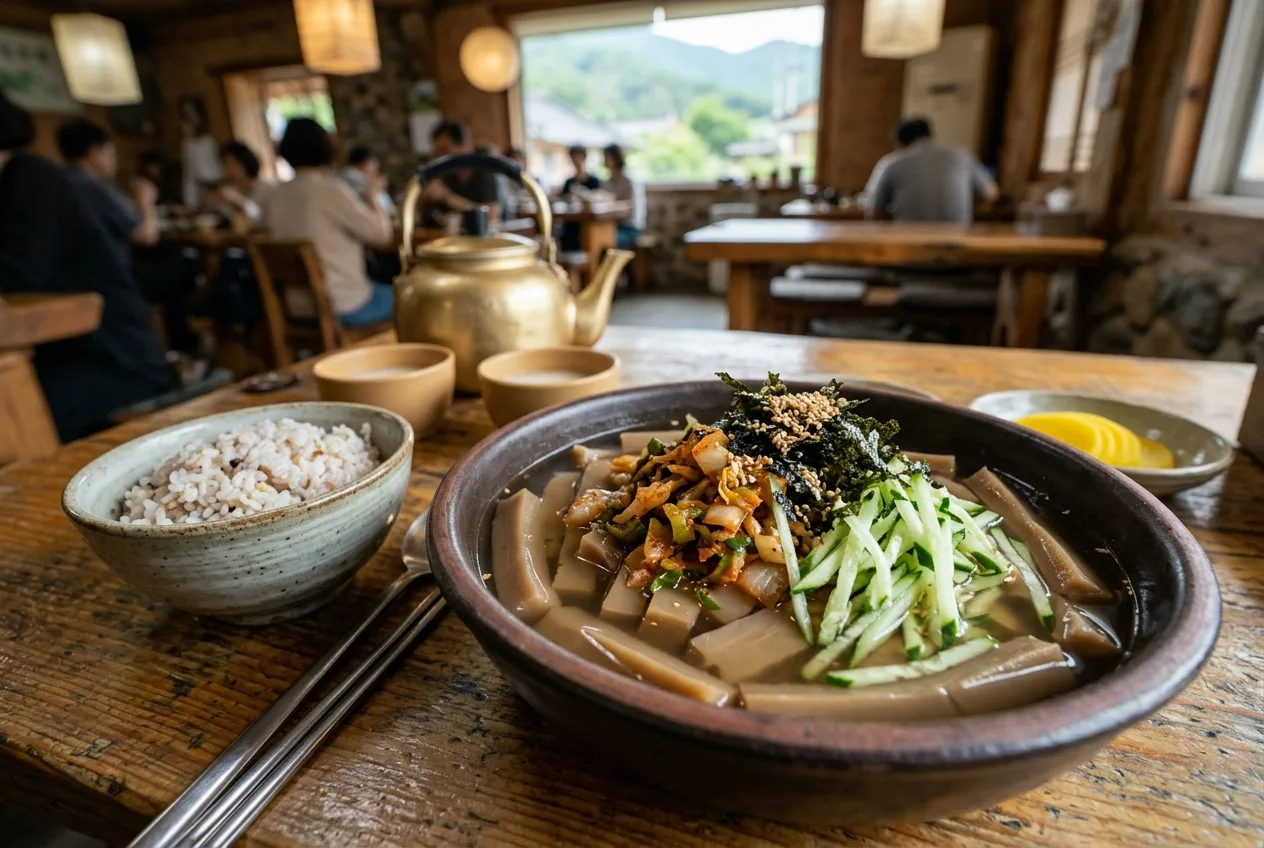
Acorn-jelly rice serves jelly, vegetables and kimchi in broth with rice. This recipe uses anchovy-kelp stock and distinguishes chilled service from a hot version.
Stir gently to preserve the jelly. If rice is separate, add it gradually to control the broth ratio. Compare the jelly in a clear stock with kongguksu’s noodles in ground-soybean liquid.
Images are AI-generated illustrations, not records of a kitchen test. Follow the written ingredients and steps. Ingredients and substitutions guide
Hot and cold versions have separate totals. Cool hot broth promptly and refrigerate it within 2 hours.
| Ingredient | Amount | Substitute abroad |
|---|---|---|
| Acorn jelly | 1 block | Set your own from acorn starch, or buckwheat jelly |
| Anchovy-kelp broth | 4 cups | Vegetable broth, packet stock |
| Well-fermented kimchi | 1 cup | White kimchi |
| Crushed roasted seaweed | Generous | Online Korean grocers |
| Julienned cucumber and carrot | A little | Can skip |
| Soup soy, sesame, sesame oil | A little | Online Korean grocers |
| Cooked rice | 2 bowls | Day-old rice is actually the classic |
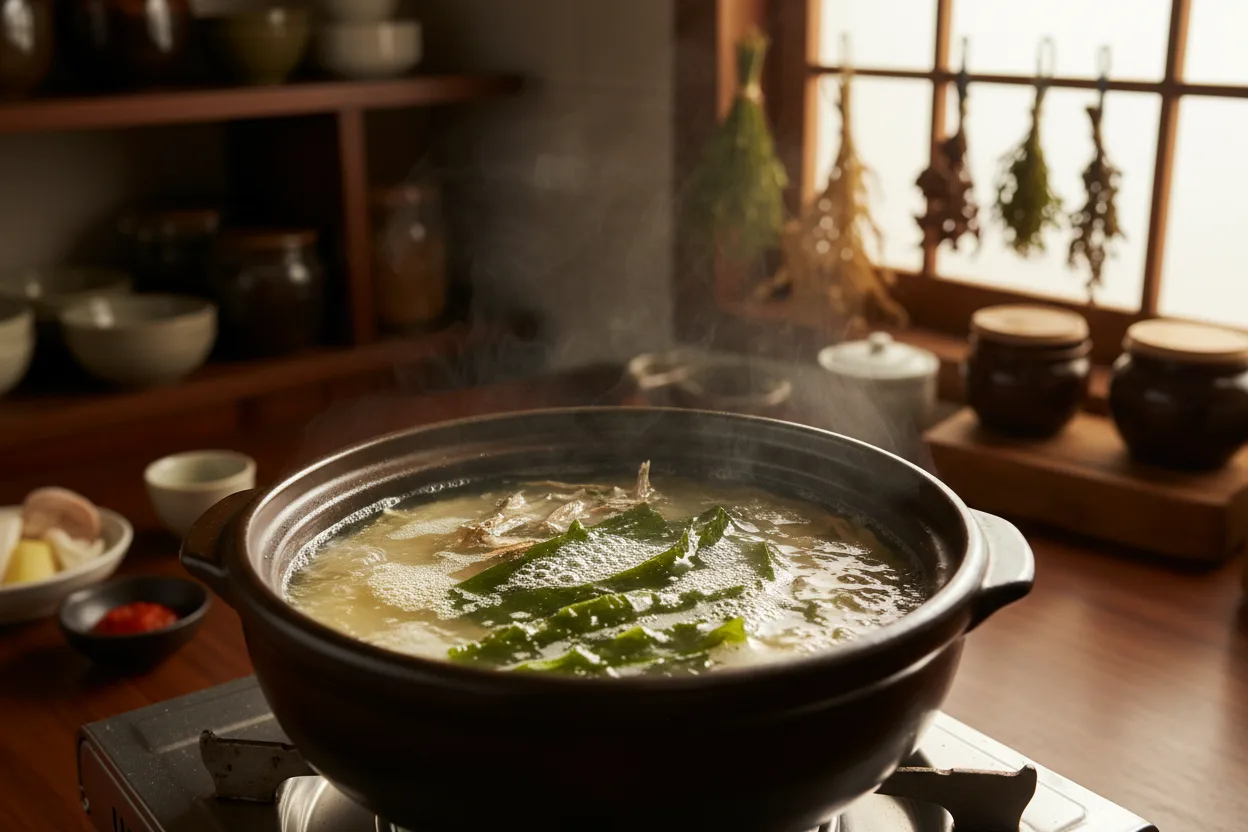
Simmer anchovies and kelp for 15 minutes and season lightly with soup soy. For summer, cool promptly, refrigerate within 2 hours, and chill for 1–2 hours; keep the winter version hot.
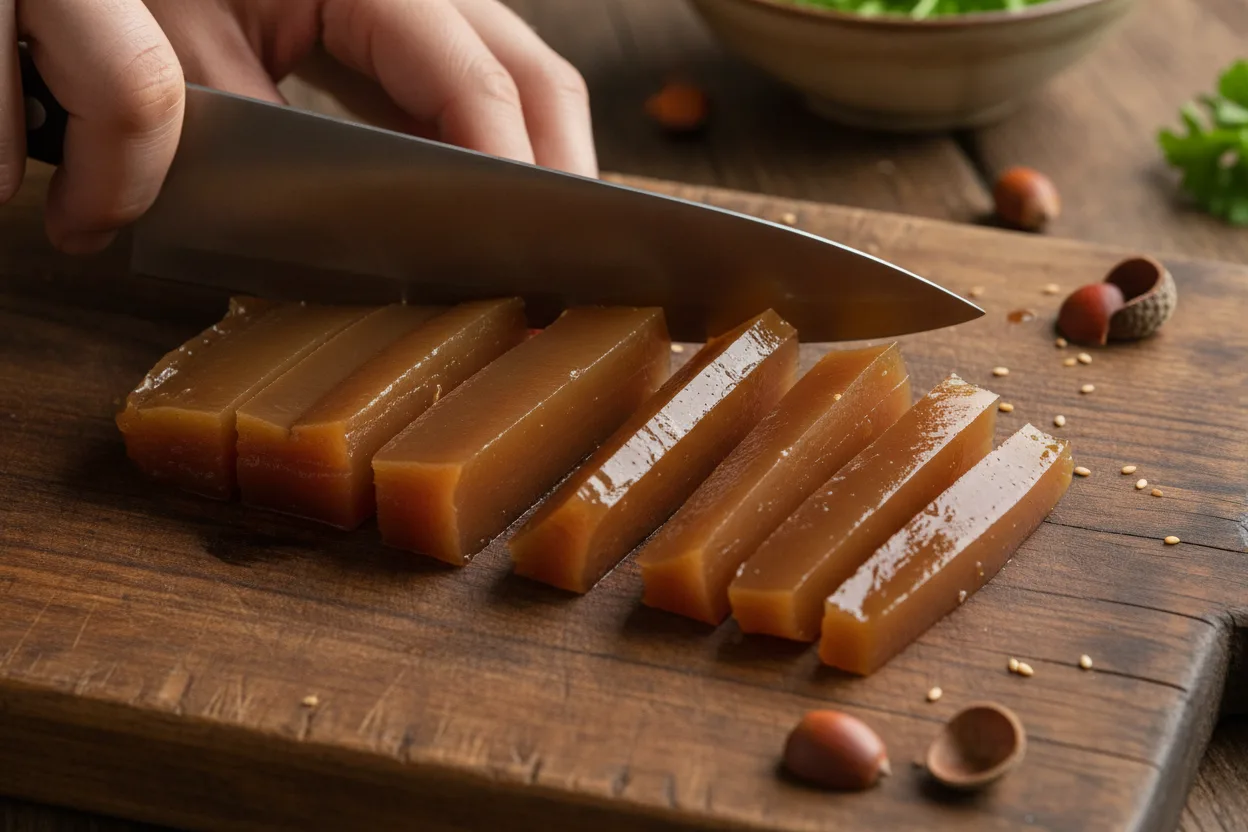
Slice the jelly into long, finger-thick strips.
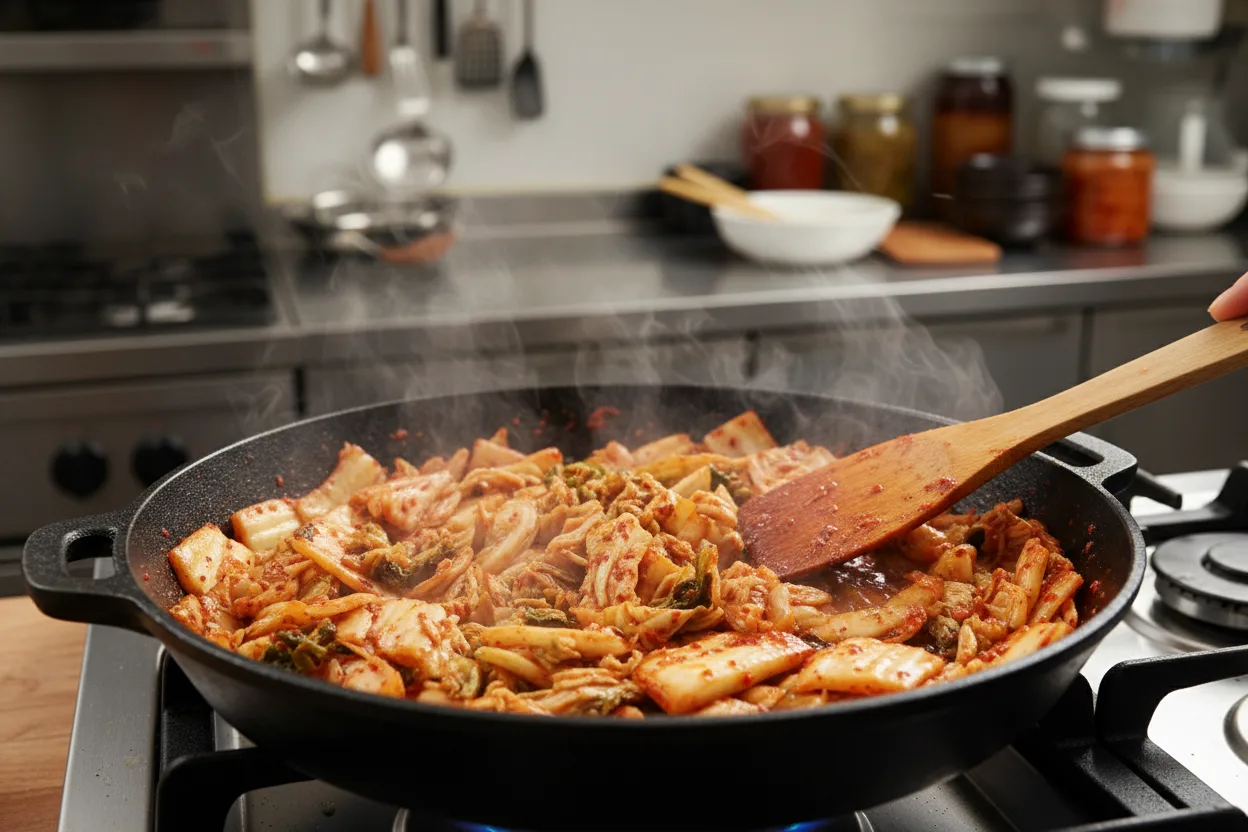
Chop sour kimchi fine and toss briefly in sesame oil.
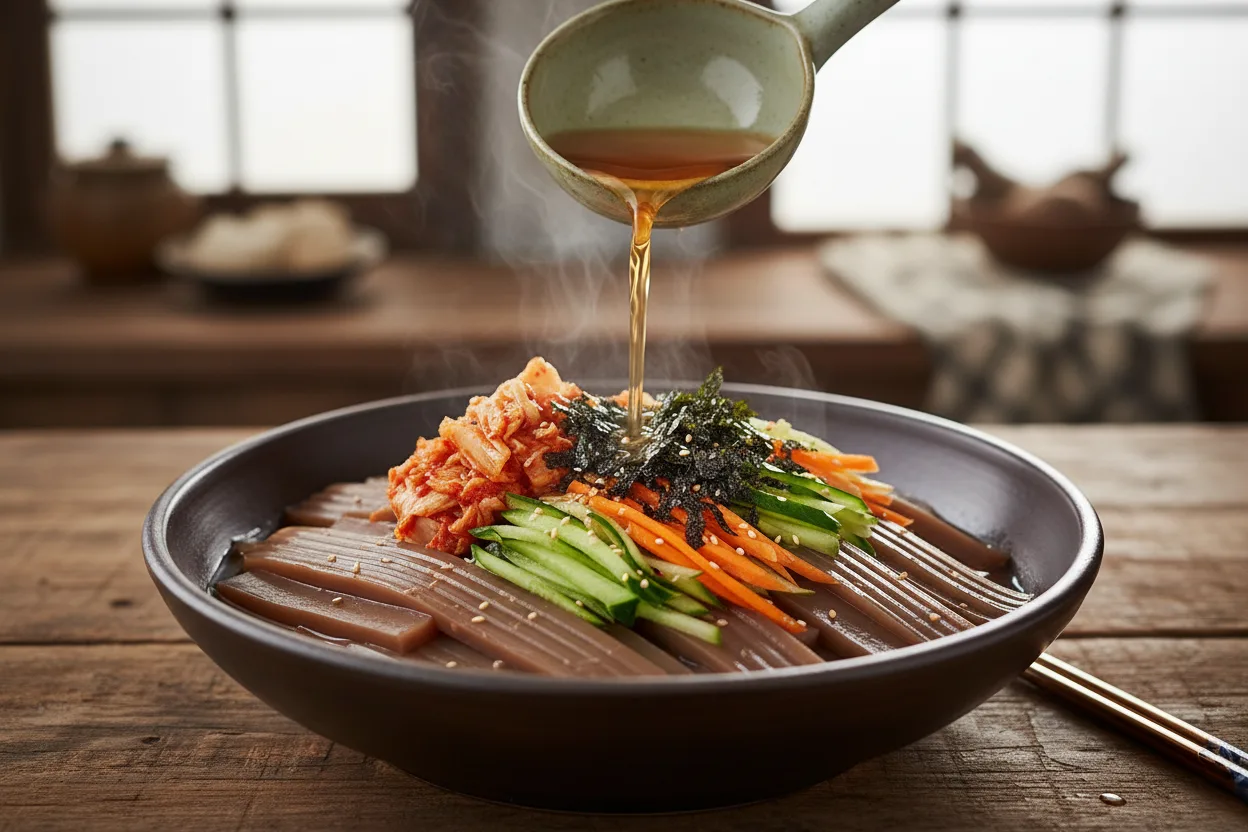
Lay jelly in a deep bowl, pour the broth, and top with kimchi, cucumber, carrot, seaweed, and sesame.
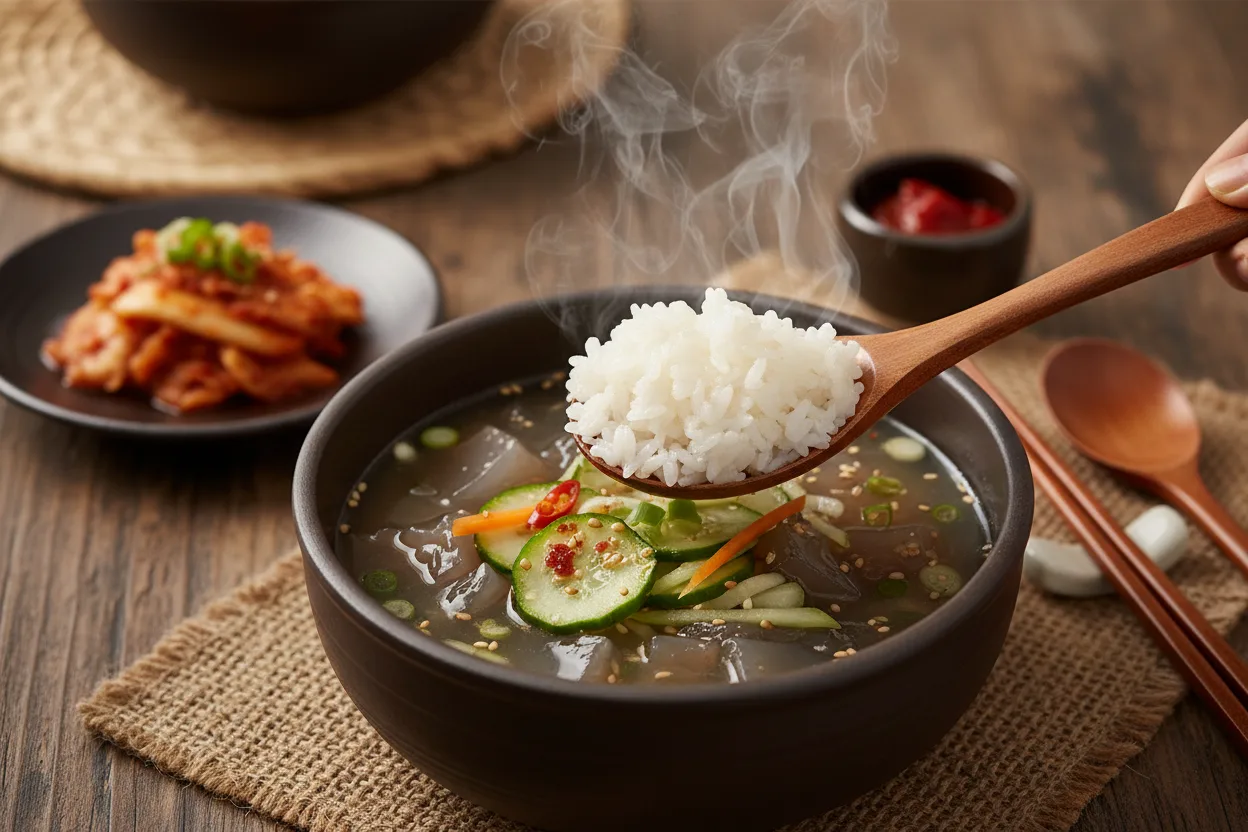
Serve rice alongside to stir in halfway, or mix it in from the start.
Candidates to investigate for this food. Maps use sourced location records; confirm the current menu, opening and booking directly. This list is not a tasting review or an award certification.
Gujeuk, Yuseong, Daejeon
Exact current location is not verified here. Confirm the venue through its official information before planning a visit.
Yuseong, Daejeon
Exact current location is not verified here. Confirm the venue through its official information before planning a visit.

Wood element · a slender, elongated face
Soft with no sharp corners, yet the core stays springy and alive. A face like acorn jelly: the grain shows only when the spoon goes in.
Upright: Even bitter acorns turn silken once leached and set. The astringent streak in you is not for throwing out but for steeping. Only what is given time stands up springy.
Reversed: Knocked into a muksabal, are you? Do not stay down. Jelly was born to break; it must crumble into broth to become muk-bap. Your shattered plan is simply due to meet its broth.
Fictional food metaphors inspired by traditional face-reading, not measurements of your face or personality.
That jawline curves round without an angle: a jaw that makes no enemies. Acorn jelly is the same, cut square yet cornerless in the mouth. But people confuse two things, child. Soft and spineless are not the same. The jelly is tender, yet clumsy chopsticks cannot lift it. You are that jelly. Gentle-looking, and still not just anyone can handle you.
Those warm, open eyes get told they could hold the neighborhood's savings pool. Let me tell you about Gujeuk Muk Village. Grandmother Kang Tae-bun gathered acorns on the hill behind her house, set them into jelly, and that pot fed a whole village into an alley of jelly houses. Turning bitter acorns into gentle food by hand: that is what your eyes do. Thorny problems pass through you and come out mild, which is why people keep carrying their tangles to your door.
Those brows lie calm and level: a face with no hurry in it. Watch jelly being made. Acorn starch stirred in cold water over low heat for a full hour; rush it and it scorches, slack off and it never sets. Your life is still being stirred, that is all, not yet poured into the mold. But let me ask one thing. Are you actually stirring? Calm and stopped are not the same.
The acorn is the nut even squirrels bury for winter. If you have a talent you tossed aside as too bitter, go pick it back up. Leach it, grind it, let it set, and it becomes the jelly that feeds your winter.
Grandma's blessing
Hillside jelly soup and makguksu are the plain-hearted trail-mouth duo, while beside dripping samgyeopsal the jelly's faint scent rides off on the smoke.