Bunso Sikdang
207 Tongyeonghaean-ro, Tongyeong-si, Gyeongsangnam-do
경상남도 통영시 통영해안로 207Checked 2026.08.11
Public-record location check, not a live opening-hours guarantee. Confirm with the restaurant before visiting.
Soups & Stews · Season 2 · Season of Spring II
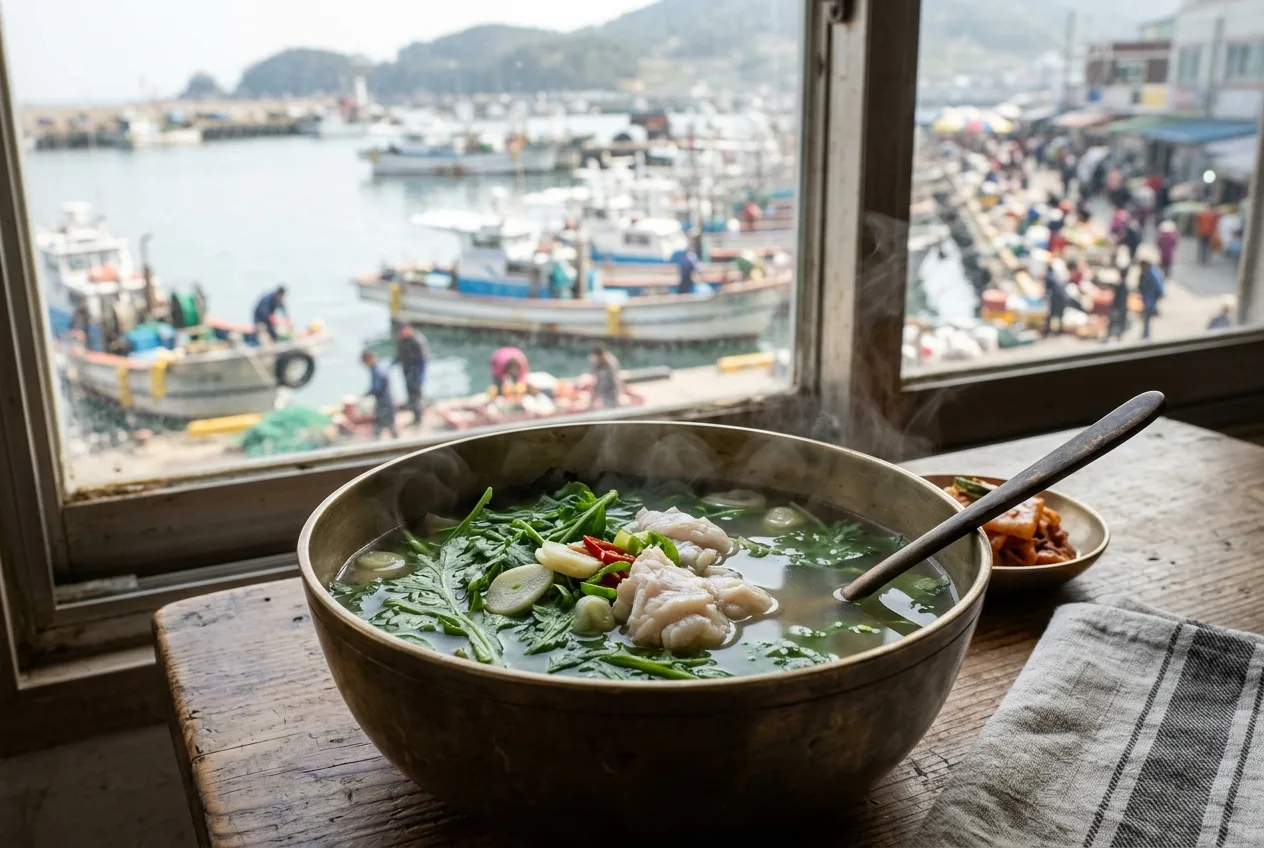
Dodari-ssukguk (Flounder and Mugwort Soup) · 도다리쑥국
This flounder-and-mugwort soup cooks prepared fish, young mugwort and radish in a clear broth. Unlike mugwort rice cakes, it carries the herb in a soup rather than a dough.
Check fish identification and cleaning status when buying, and ask whether the restaurant is serving the soup that day. Separate bones and compare its clear broth with heavily chili- or perilla-seasoned fish soups.
Images are AI-generated illustrations, not records of a kitchen test. Follow the written ingredients and steps. Ingredients and substitutions guide
| Ingredient | Amount | Substitute abroad |
|---|---|---|
| Flounder, cleaned | 2 fish | Plaice |
| Young mugwort | 2 handfuls | Frozen mugwort (fainter scent) |
| Korean radish | 1/4 | Daikon |
| Scallion and garlic | A little | Anywhere |
| Rice-rinsing water | 5 cups | Water with kelp |
| Soup soy and salt | To season | Anywhere |
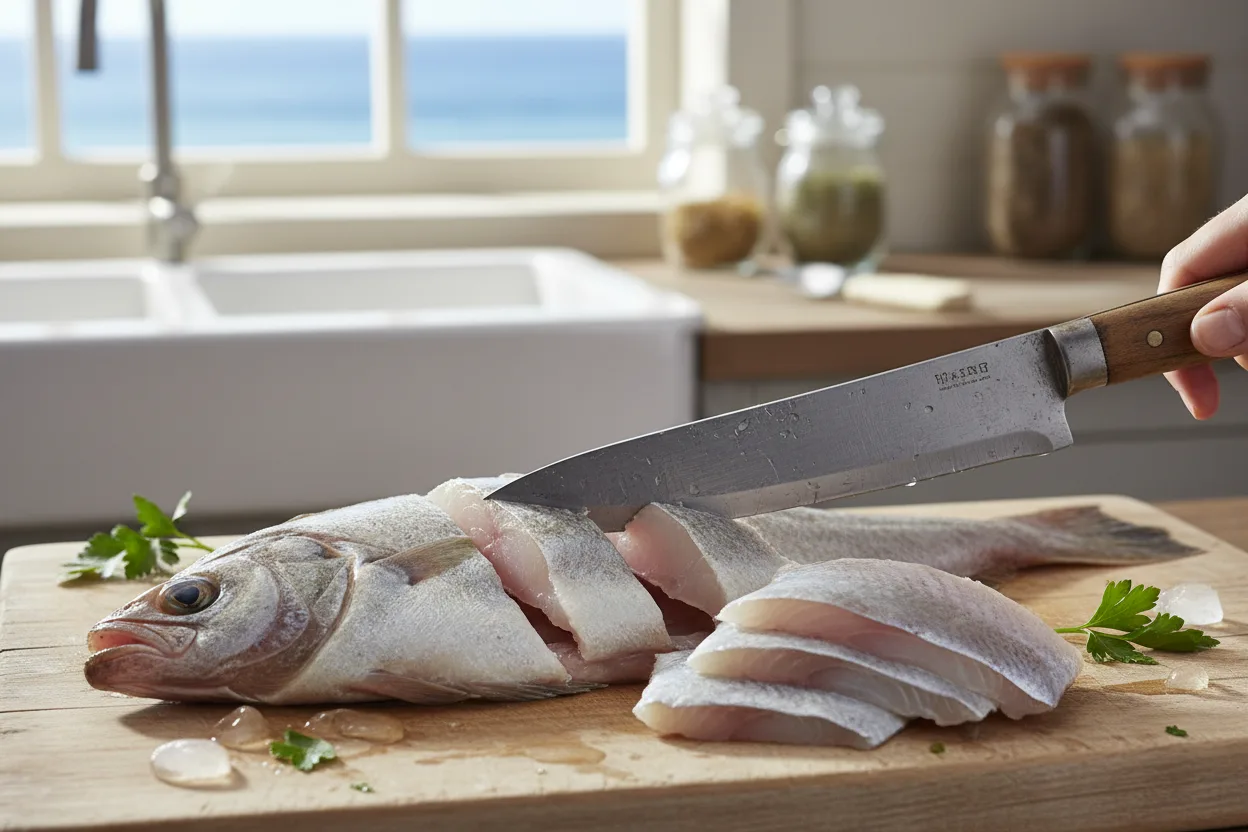
Scale, gut, cut into pieces, and rinse.
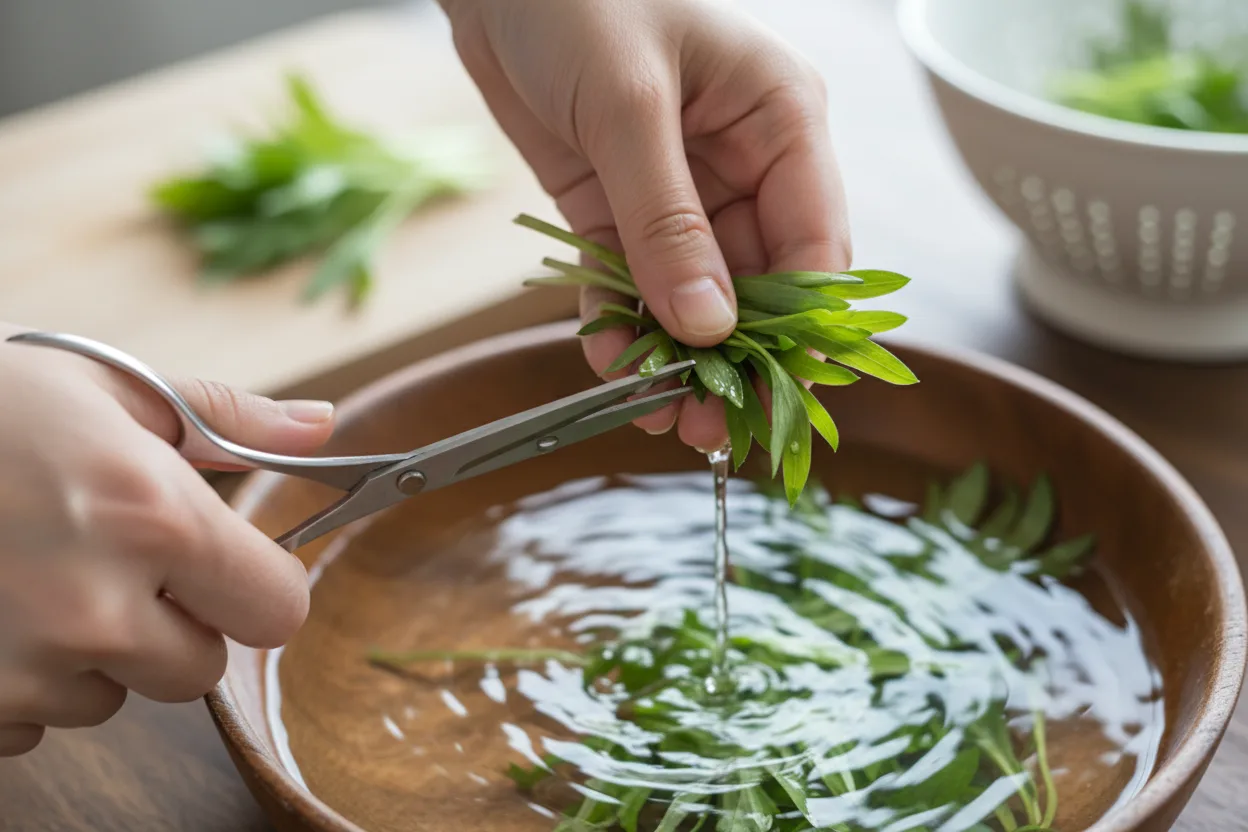
Pick off tough stems and rinse the young leaves gently.
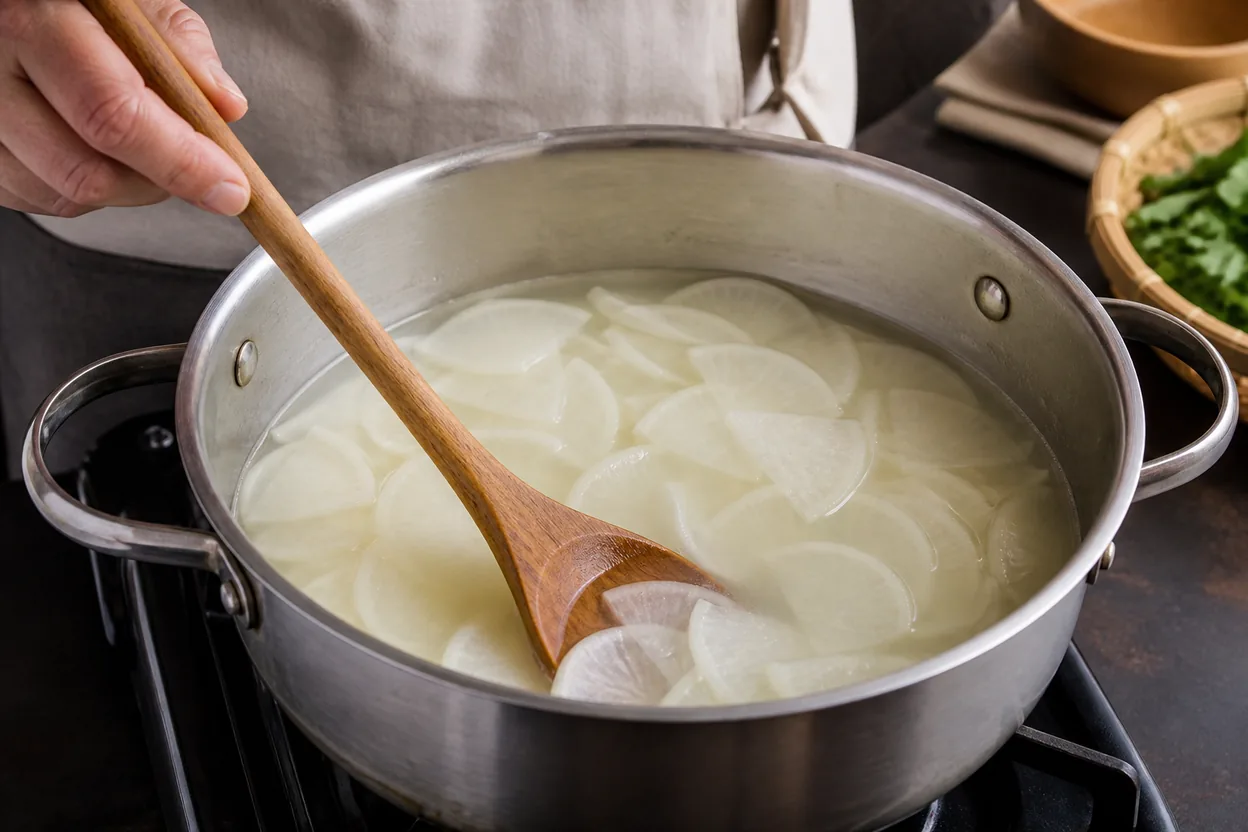
Simmer sliced radish in rice water until translucent.
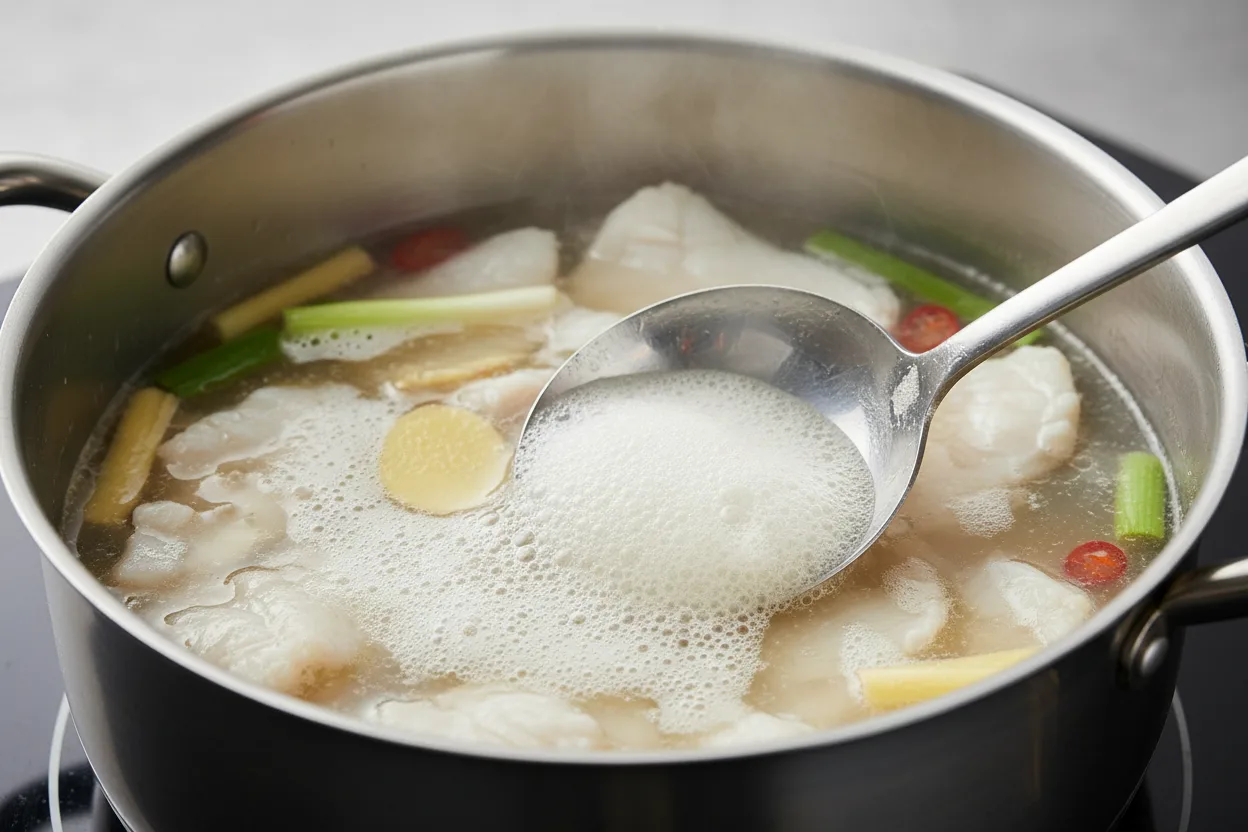
Add flounder and garlic, simmer 10 minutes, skim the foam, and season with soup soy and salt.
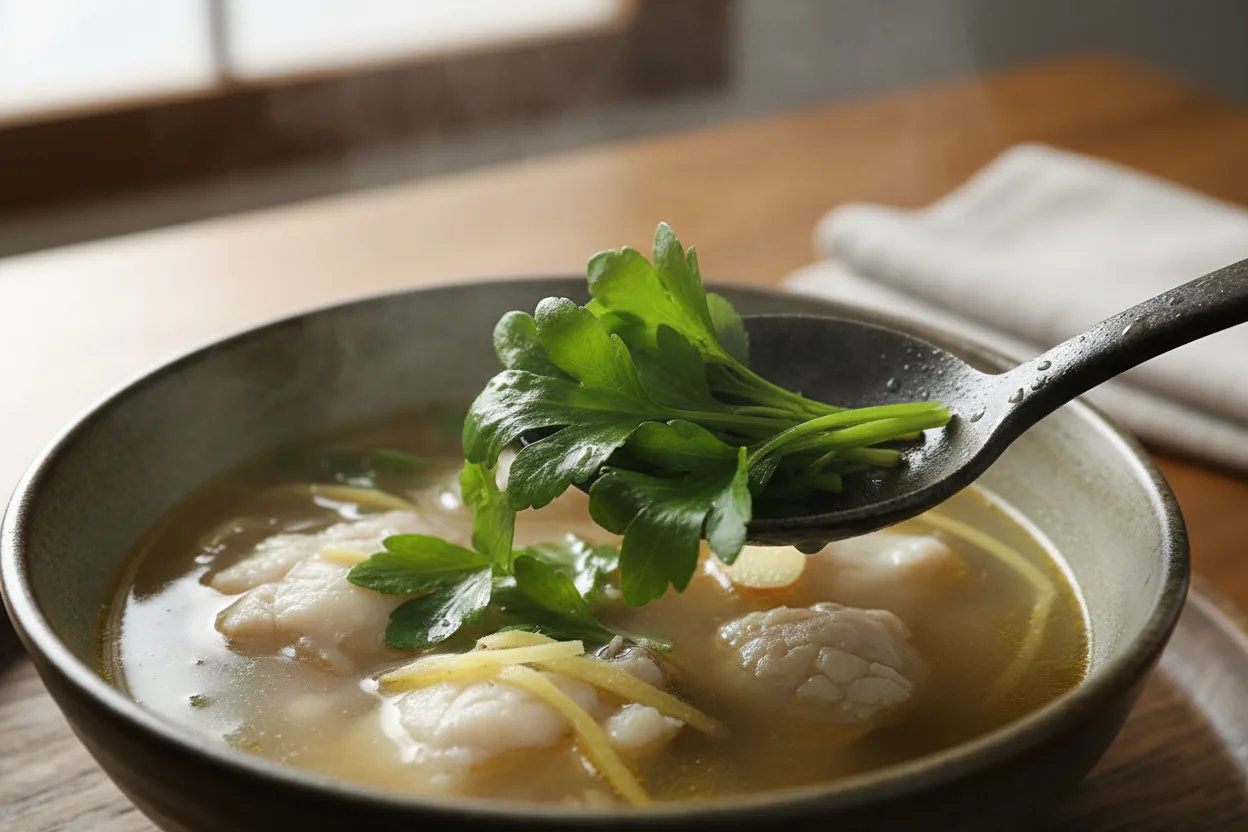
Right before killing the flame, add mugwort and scallion, turn once, and bowl immediately.
Candidates to investigate for this food. Maps use sourced location records; confirm the current menu, opening and booking directly. This list is not a tasting review or an award certification.
207 Tongyeonghaean-ro, Tongyeong-si, Gyeongsangnam-do
Public-record location check, not a live opening-hours guarantee. Confirm with the restaurant before visiting.
Tongyeong, South Gyeongsang
Exact current location is not verified here. Confirm the venue through its official information before planning a visit.

Wood element · a slender, elongated face
You carry winter's clean endurance and the scent of new spring at once. A face like Tongyeong's first bowl of the season.
Upright: A flounder that crossed winter and mugwort just sprouted meet in one pot: that is this soup. The season has come for the long-enduring you to meet something newly beginning. Do not dodge that meeting.
Reversed: When the mugwort toughens the soup turns bitter, and when the flounder fattens fully, this soup's season has passed. Look at the calendar, not your lingering. Is what you are holding spring, or what used to be spring?
Fictional food metaphors inspired by traditional face-reading, not measurements of your face or personality.
Those eyes have cleared like a sky after winter. Do you know why this soup is Tongyeong's rite of spring? They say spring has not arrived until this one bowl is emptied. Your eyes are that rite. When you brighten, the people around you know the season has turned. Your face, child, is working as the neighborhood's calendar.
That nose has thinned lean and fine: in face reading, a nose of judgment without excess. This is that kind of soup, clear broth staking everything on radish, flounder, and young mugwort, no doenjang, no chili. Three ingredients only, so if one is off, it shows at once. Your work is the same: no packaging, so the skill stands naked. Terrifying, yes, and also the root of your credit.
That palate of yours runs plain, a mouth that seasons lightly. But plain and bland are a paper's width apart. This soup's plainness works because winter flounder's richness and mugwort's fragrance hold it up from below. Your understated way of speaking is charming only while there is substance beneath. Plain without substance is just watery, child.
Dodari-ssukguk is precious because it exists only a few weeks a year. For you too there come a few tides a year when sea and land open together. Not missing that window is the wisdom Tongyeong people learn from this bowl.
Grandma's blessing
Sea squirt and flounder, both from Tongyeong's spring sea, lay spring on the table in double layers, while beside budae-jjigae, which tastes the same all year, this soup's few-week preciousness cannot even be explained.