Hankookjib
Wansan-gu, Jeonju (near the Hanok Village)
전북특별자치도 전주시 완산구 어진길 119Checked 2026.08.09
Public-record location check, not a live opening-hours guarantee. Confirm with the restaurant before visiting.
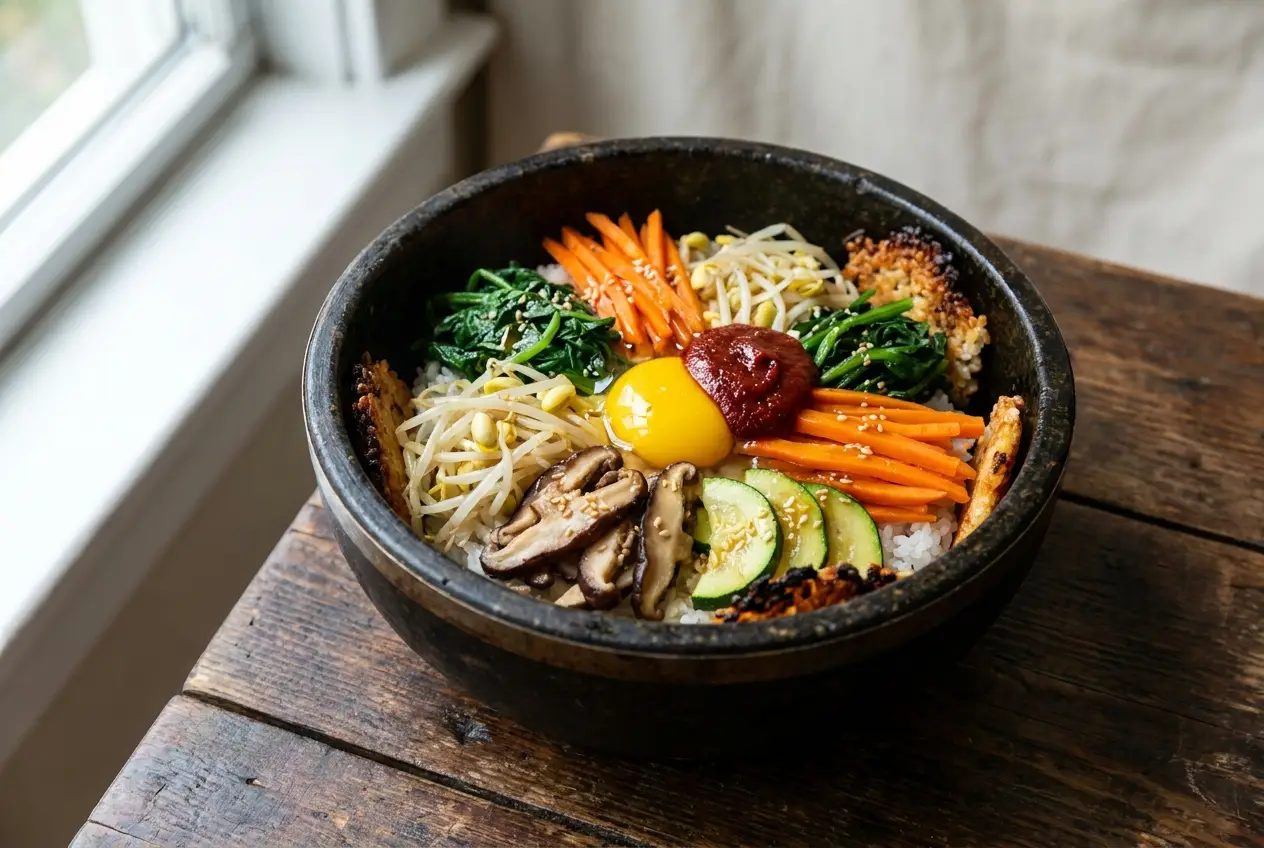
Rice & Full Table · XXI · The World in a Bowl
Bibimbap (Mixed Rice Bowl) · 비빔밥
Mixed rice bowl · toppings prepared before mixing · sauce may be adjustable · ordinary bowls and hot-stone versions differ.
Bibimbap combines rice with an assortment of prepared toppings. The final mixing is quick, but the preparation may involve several separate steps. Think of each topping as contributing its own texture and seasoning before everything meets in the bowl.
Rice carries the flavors of vegetables, sesame oil and whichever sauce the version uses. Meat and egg are possible toppings, not promises attached to every bowl. Start with a little sauce, mix, then decide whether to add more; once the whole bowl is heavily seasoned, it is harder to compare the ingredients.
If cooking, start the rice, prepare and season the toppings separately, then arrange the bowl just before serving. The mixing is the last step, not the whole preparation. At a restaurant, try a little sauce first and add it gradually. A dolsot bowl can form a crisp rice layer against the hot stone; leave that vessel on its trivet and use the spoon to work from the edges.
Jeonju bibimbap, wild-green versions and hot-stone bibimbap give different clues about place, ingredients or serving vessel. Check the actual toppings rather than expecting one fixed combination from a regional label. Our sanchae-bibimbap entry is a useful next comparison when greens interest you more than the bowl itself.
The Encyclopedia of Korean Culture documents bibimbap in Siuijeonseo and describes several accounts of how mixed rice developed. A written record establishes that a preparation was described, not that one person invented all bibimbap. Regional names and changing toppings are part of its history rather than deviations from a single original bowl.
Bringing separate toppings together makes bibimbap a useful image of combination. Our site sometimes turns that image into a fictional personality metaphor. The actual food is more concrete: a way of arranging and then mixing rice and prepared ingredients. People may connect it with a restaurant specialty, a household meal or their own preferred topping combination.
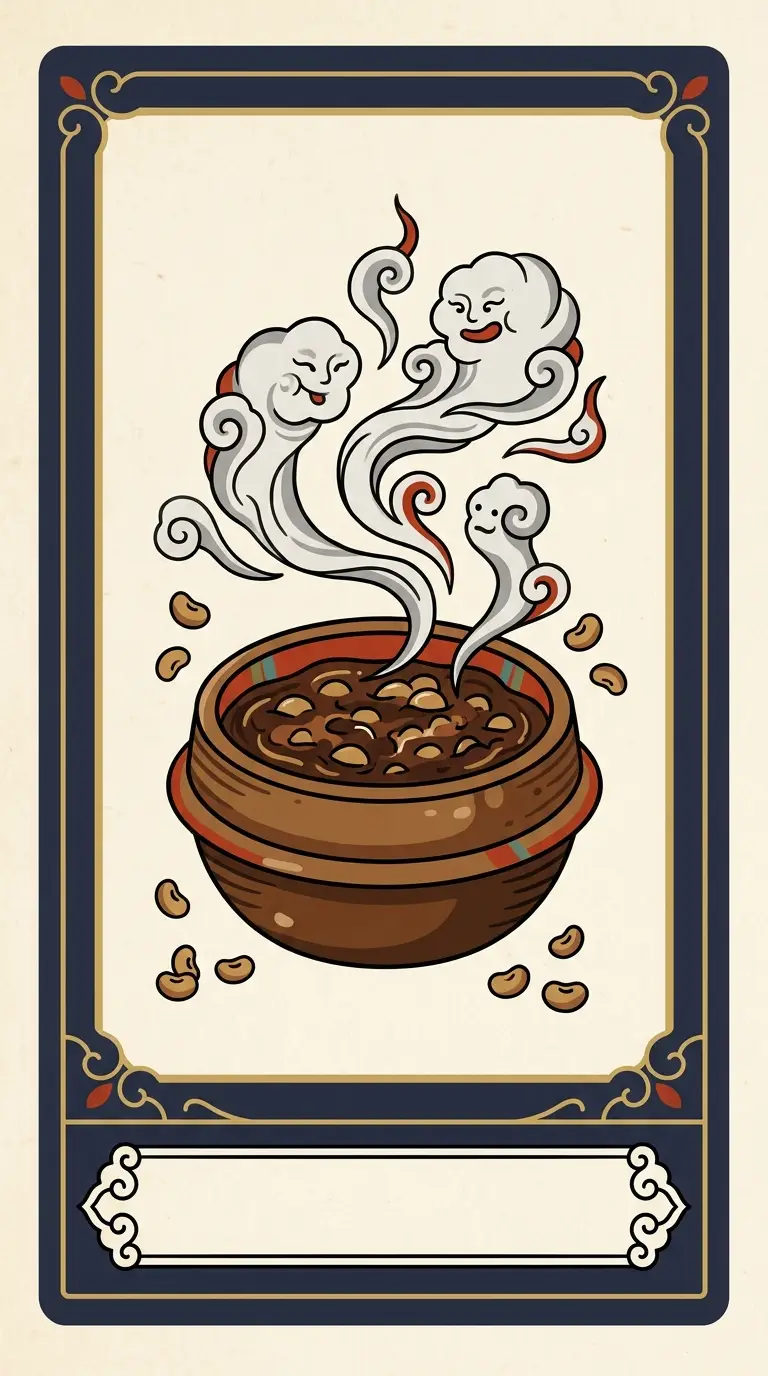
Images are AI-generated illustrations, not records of a kitchen test. Follow the written ingredients and steps. Ingredients and substitutions guide
Timing assumes the vegetables are cooked in parallel. Cook ground beef to 71.1°C/160°F; use only pasteurized eggs for a soft yolk.
| Ingredient | Amount | Substitute abroad |
|---|---|---|
| Cooked short-grain rice | 2 bowls (about 400 g) | Sushi rice works; long-grain jasmine is not recommended |
| Ground beef | 150 g | Ground chicken or crumbled tofu |
| Soybean sprouts | 100 g | Mung bean sprouts |
| Spinach | 100 g | Any market spinach |
| Soaked dried fernbrake (gosari) | 80 g | Korean grocers online; fine to omit |
| Korean zucchini | 1/2 | Zucchini |
| Carrot | 1/3 | Any carrot |
| Shiitake mushrooms | 3 | Cremini or button mushrooms |
| Eggs | 2 | Any eggs |
| Gochujang (Korean chili paste) | 3 tbsp | International aisle or Korean grocers online |
| Toasted sesame oil | 2 tbsp | Asian market toasted sesame oil |
| Minced garlic | 1 tbsp | Freshly minced |
| Soy sauce, sugar, sesame seeds, salt | A little of each | Any local brands |
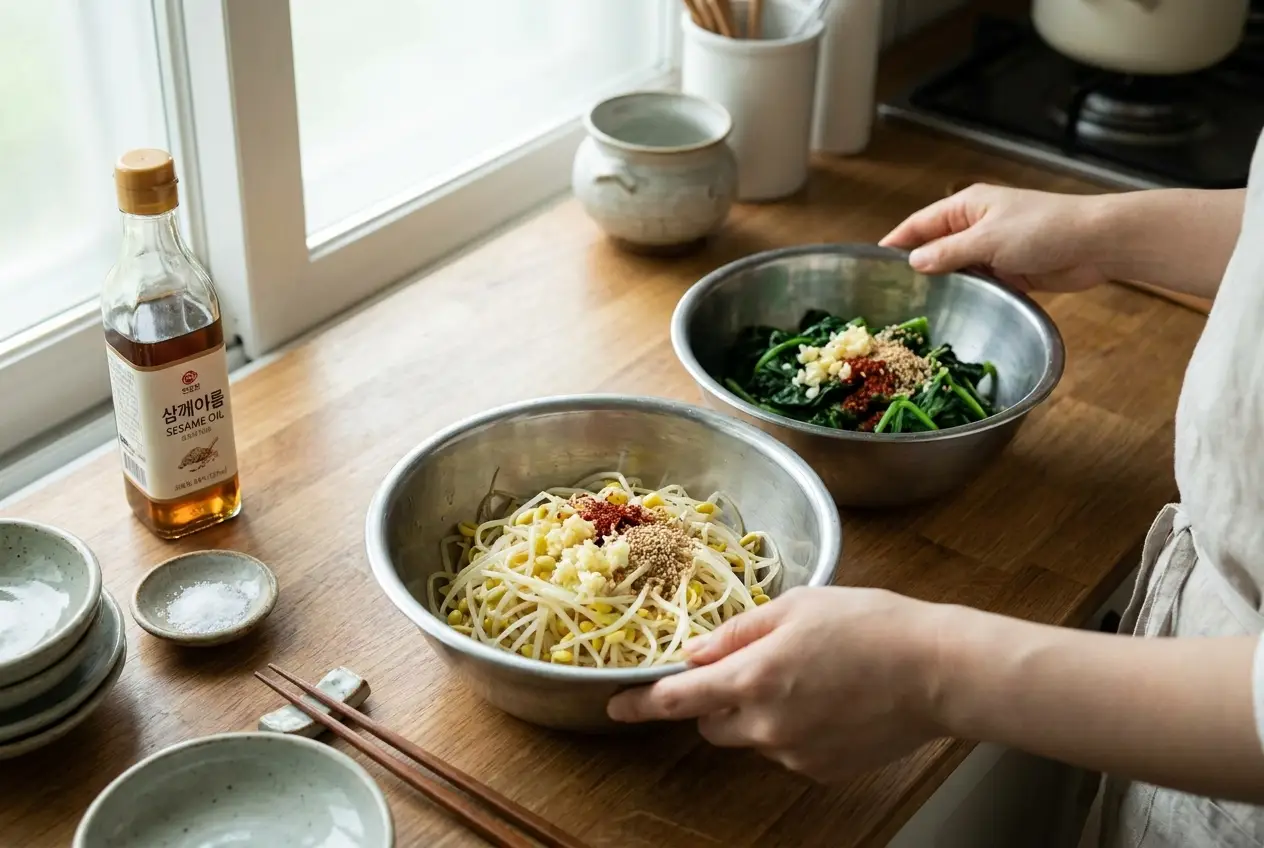
Cook the sprouts covered with half a cup of water for five minutes; blanch the spinach thirty seconds, rinse cold, and squeeze. Season each separately with salt, minced garlic, sesame oil, and sesame seeds.
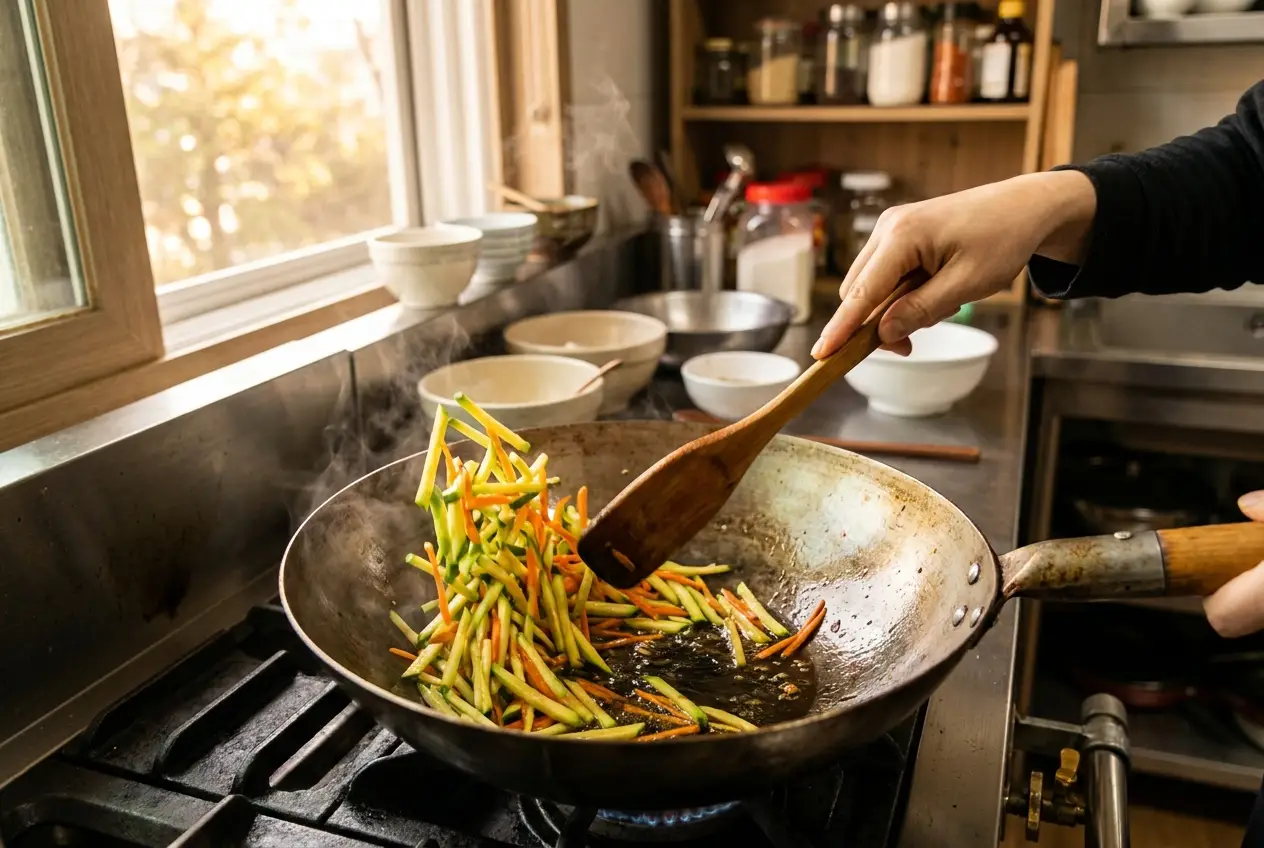
Julienne the zucchini and carrot, salt lightly, and fry each briefly. Fry the shiitake and fernbrake with a teaspoon of soy sauce and sesame oil until tender.
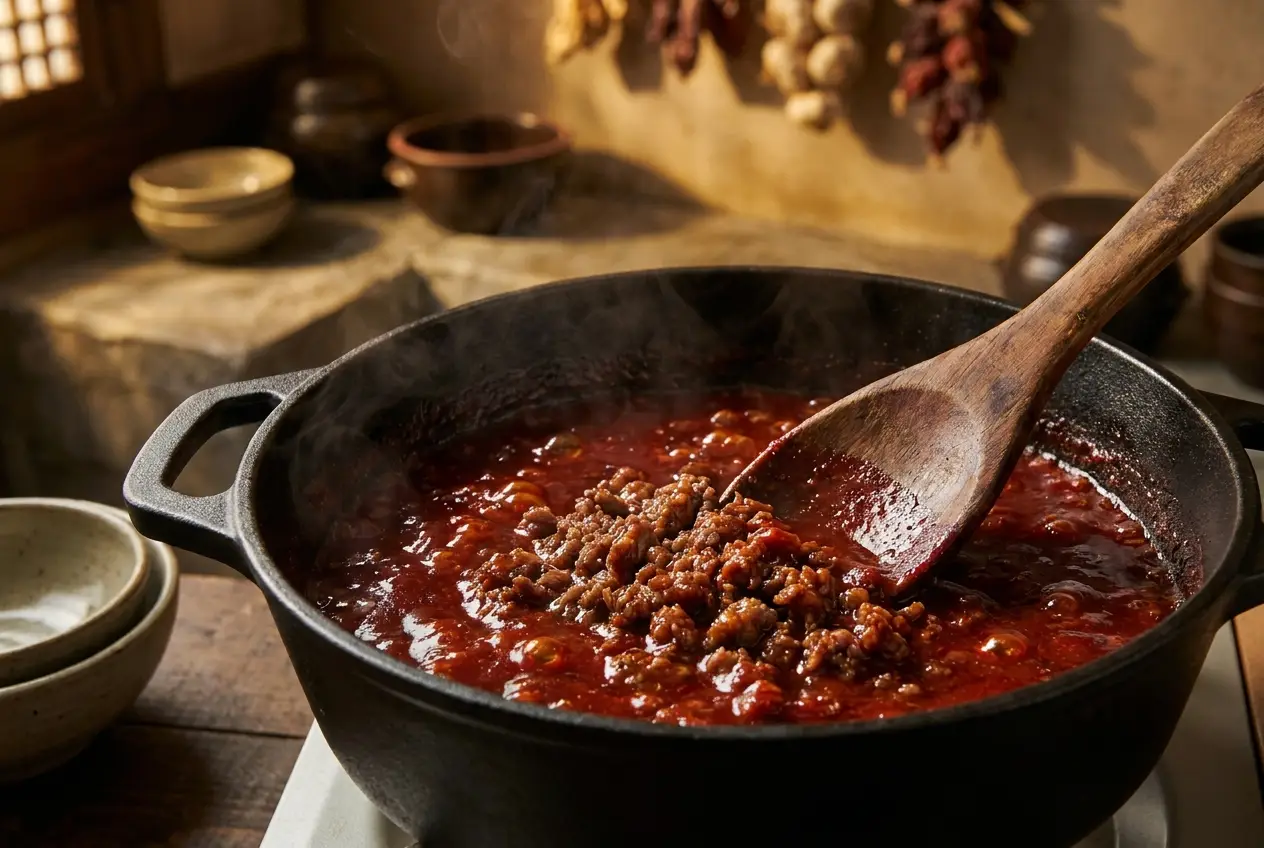
Season half the beef with soy sauce, sugar, and garlic and fry it crumbly until the center reaches 71.1°C/160°F. Simmer the other half with three tablespoons gochujang, one tablespoon sesame oil, and two of water over low heat for five minutes into a glossy yak-gochujang sauce. Check that the beef in the sauce also reaches at least 71.1°C/160°F; color or five minutes alone does not establish doneness.
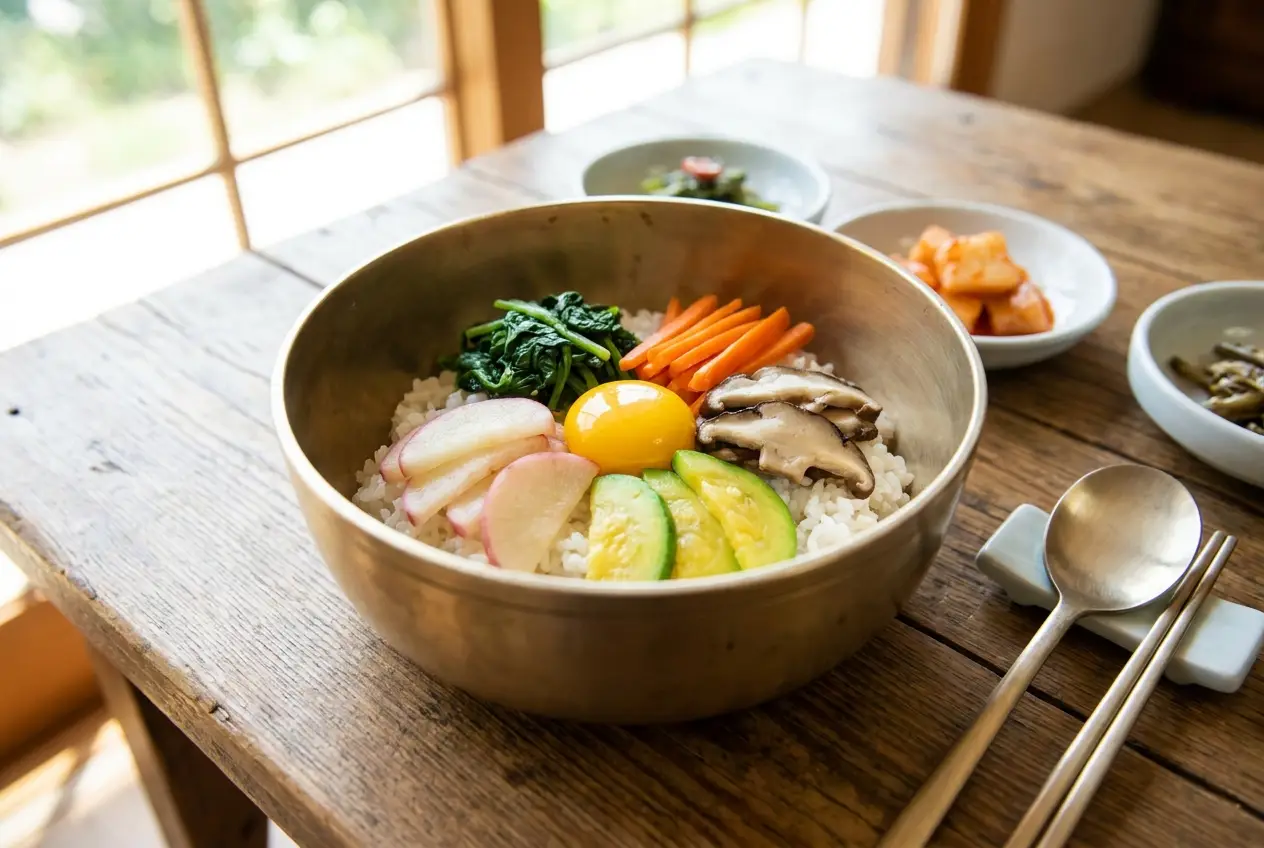
Fill bowls with warm rice and fan the vegetables around the top so no colors touch. Add the cooked beef. Use only a pasteurized egg for a soft yolk or soft fried egg; otherwise cook the yolk until firm.
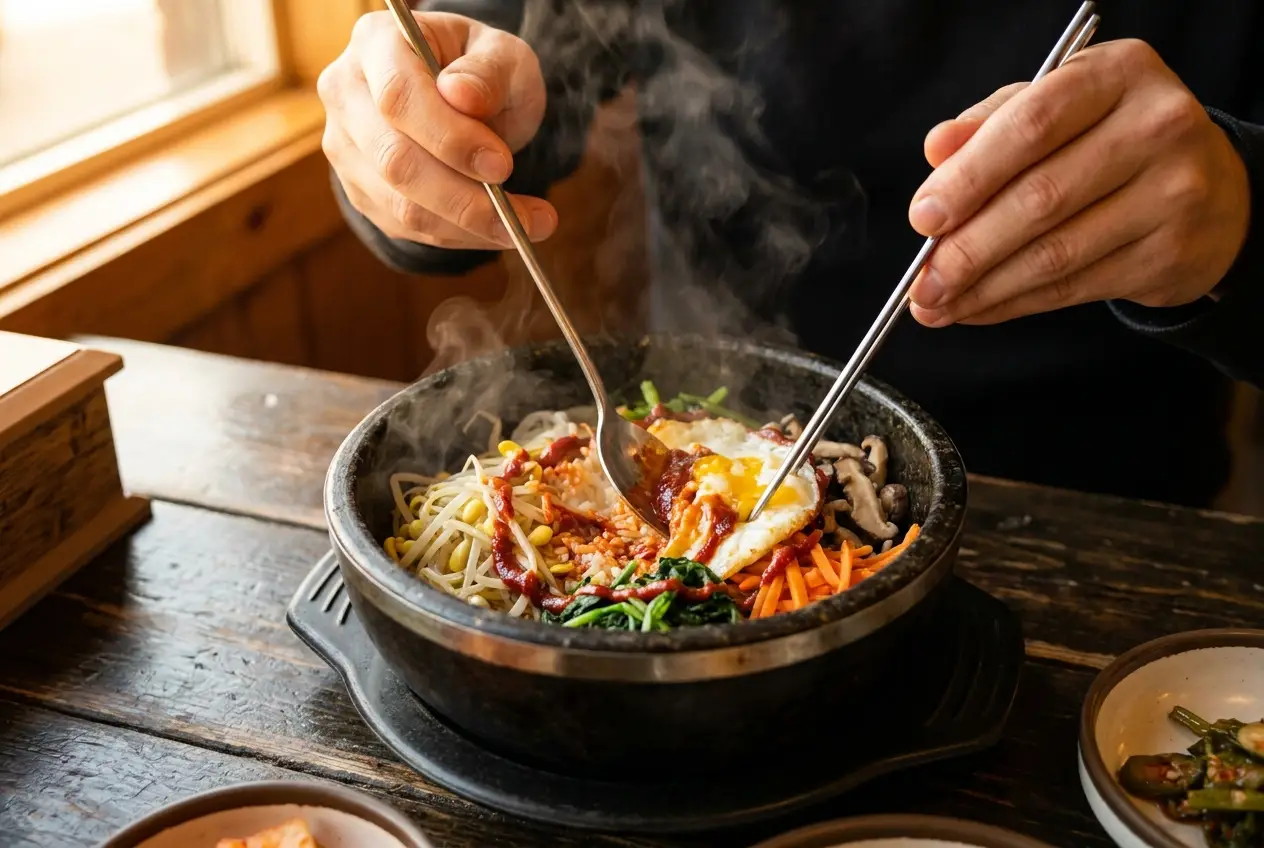
Top with the sauce and half a spoon of sesame oil, then mix with a spoon, turning from the bottom up. For a toasty crust, press it in a hot stone pot or iron pan first, then mix.
Candidates to investigate for this food. Maps use sourced location records; confirm the current menu, opening and booking directly. This list is not a tasting review or an award certification.
Wansan-gu, Jeonju (near the Hanok Village)
Public-record location check, not a live opening-hours guarantee. Confirm with the restaurant before visiting.
Jungang-dong, Wansan-gu, Jeonju
Public-record location check, not a live opening-hours guarantee. Confirm with the restaurant before visiting.
Jungang Market, Jinju
Public-record location check, not a live opening-hours guarantee. Confirm with the restaurant before visiting.
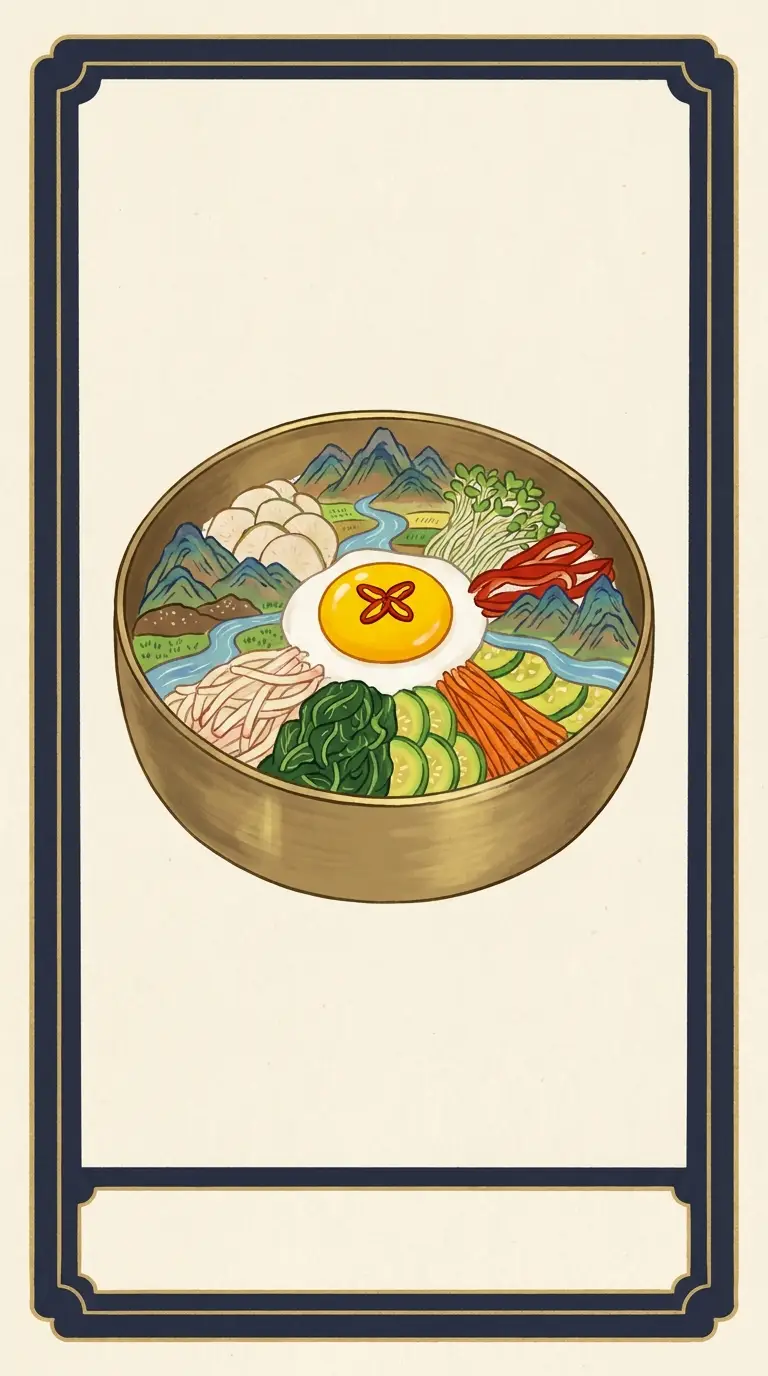
Earth element · a round, full face
You take every ingredient life hands you into one bowl and mix it into a single flavor. An embracing Earth type, slow to warm like an iron cauldron and just as slow to cool.
Upright: Scattered ingredients finally meet in one bowl. Mix and finish the things you have spread around, and the richest spoonful comes back as your share.
Reversed: Everything is prepped, yet you are not mixing. Nothing grand is missing, just a drop of sesame oil, one small finishing touch. Find that first today.
Fictional food metaphors inspired by traditional face-reading, not measurements of your face or personality.
Those eyes open big and round. Eyes that wide mean feeling runs rich and every mood shows plain on your face. You are a bowl of bibimbap, child: sprouts, fernbrake, even the egg yolk, everything laid out on top where the whole village can see exactly what you are made of. Your heart is displayed the same way, so give up on poker early.
The nose tip is round and the wings are generous: a fortune nose if I ever saw one. A Palace of Wealth seated like that gathers people and money to your door like a storehouse. That is bibimbap all over: every last vegetable in the fridge rolls into your bowl and somehow becomes a meal. Trouble is, you cannot keep the storehouse door shut and give away whatever gathers. At least charge for the sesame oil, child.
That mouth is wide and generous, a Palace of Speech thrown open. A big mouth means big appetite, big nerve, and words that gather people to the table. Your talk is the gochujang in the bowl: one spoonful binds nine scattered vegetables into one flavor, but three spoonfuls and nothing else can be tasted at all. You were born to mix a room together. Just watch the dosage, child.
You thought all that giving and mixing left you with no flavor of your own? Look again. Once it is all stirred, the harmony itself is your taste. Set you on any table and the center seat ends up yours.
Grandma's blessing
Mild Water-type soybean sprout soup sits quietly beside your gochujang-fired Earth bowl and balances the seasoning like a born table-mate. Tteokbokki, though, is another gochujang face, and two of those at one table shout over each other until the meal turns noisy.