Mungyeong Omija Festival
Mungyeong, North Gyeongsang
Exact current location is not verified here. Confirm the venue through its official information before planning a visit.
Sweets & Desserts · 7 of Crocks · Seven of Crocks
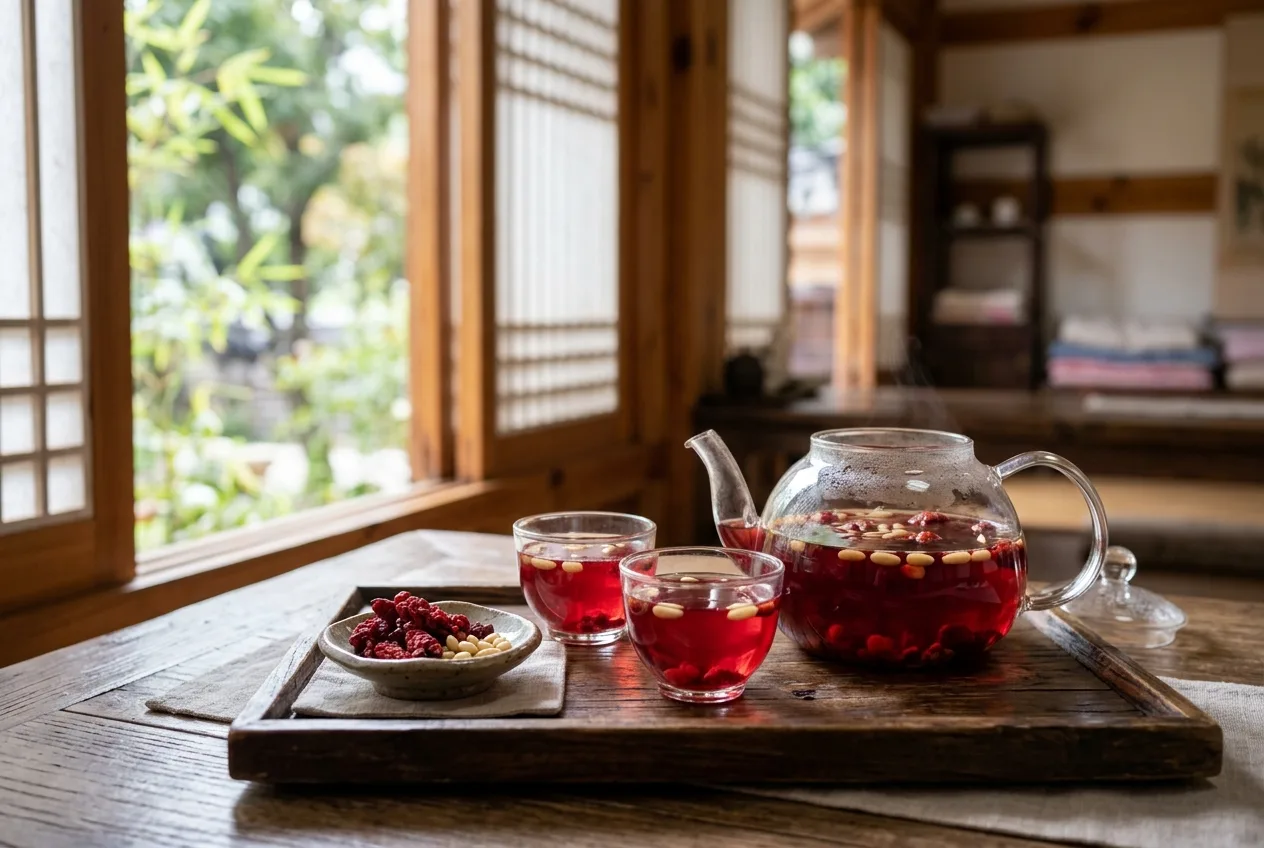
Omija-cha (Five-Flavor Berry Tea) · 오미자차
Decision notes · editorial comparison of references and preparation plans
Dried berries require an infusion plan; syrup requires a dilution and sweetness decision. Against sujeonggwa, compare berries with cinnamon and ginger rather than a general traditional-tea label.
Check before ordering or preparing: Check dried fruit, syrup or ready-made drink, added sugar and dilution directions.
KTO describes dried-berry drinks and syrup uses; medicinal claims are not used here. KTO · Omija Tea (오미자차 / Omijacha) · 2026-09-13
This omija drink infuses dried berries in cold water and adjusts sweetness afterward. It begins differently from a concentrate made with sugar and then diluted, so the strengths are not interchangeable.
Taste a little for acidity and bitterness instead of judging strength by color alone. Compare it with cinnamon-and-ginger sujeonggwa; recording infusion and dilution ratios is more useful than assigning a health effect to the drink.
Images are AI-generated illustrations, not records of a kitchen test. Follow the written ingredients and steps. Ingredients and substitutions guide
Times and yields are planning values for this editorial preparation, not measured kitchen results. Substitutions can change flavor, texture and cooking needs. Read product directions and our measurement and doneness guide together.
The previous 30-minute label omitted refrigerated steeping. This planning note reflects the written waiting step; it is not a newly measured kitchen-test duration.
| Ingredient | Amount | Substitute abroad |
|---|---|---|
| Dried omija berries | 1 cup | Online Korean grocers, bottled omija syrup |
| Sugar (optional sweetener) | To taste, added gradually | Honey (different character) |
| Cold water | 4 cups | Anywhere |
| Pine nuts | A few | Can skip |
| Korean pear (for punch) | Half | Apple |
| Honey | To taste | Sugar water |
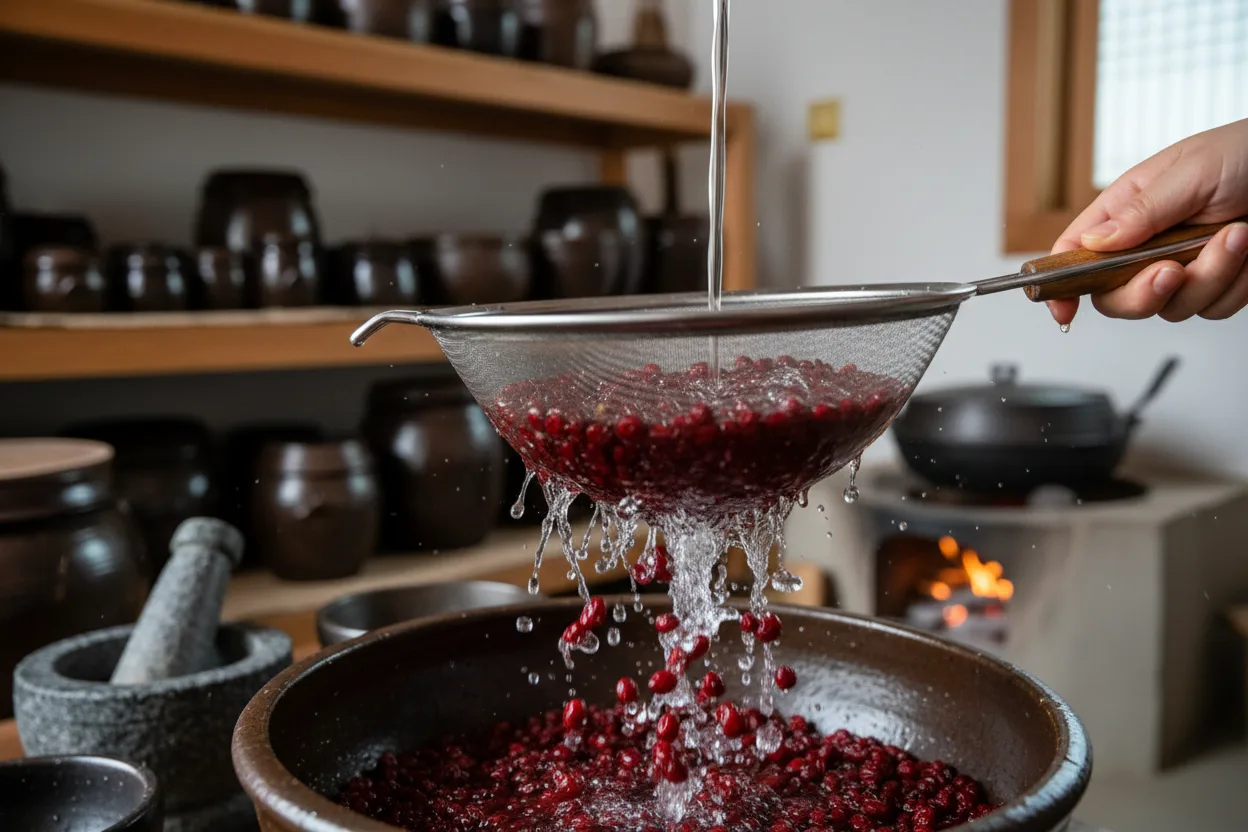
Rinse dried omija quickly to wash off dust.
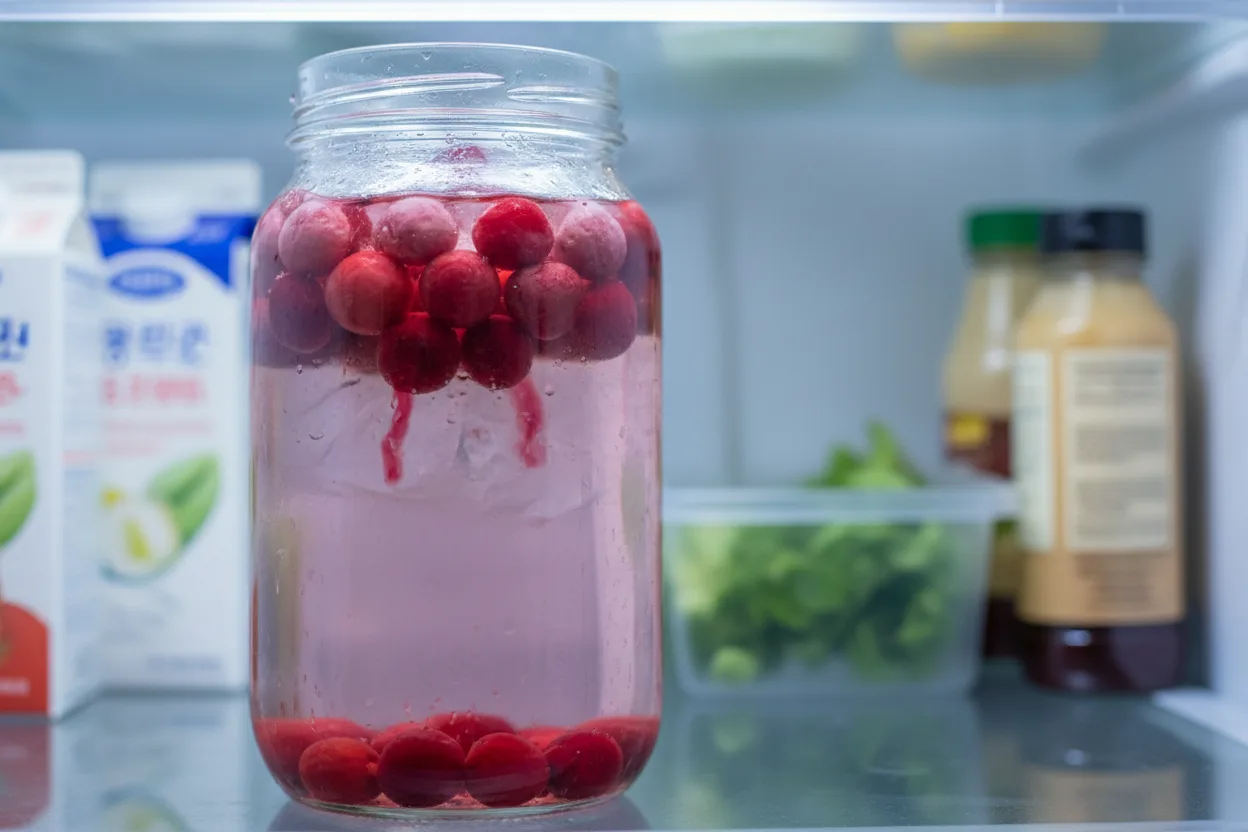
Add berries to cold water and steep in the fridge at least 8 hours.
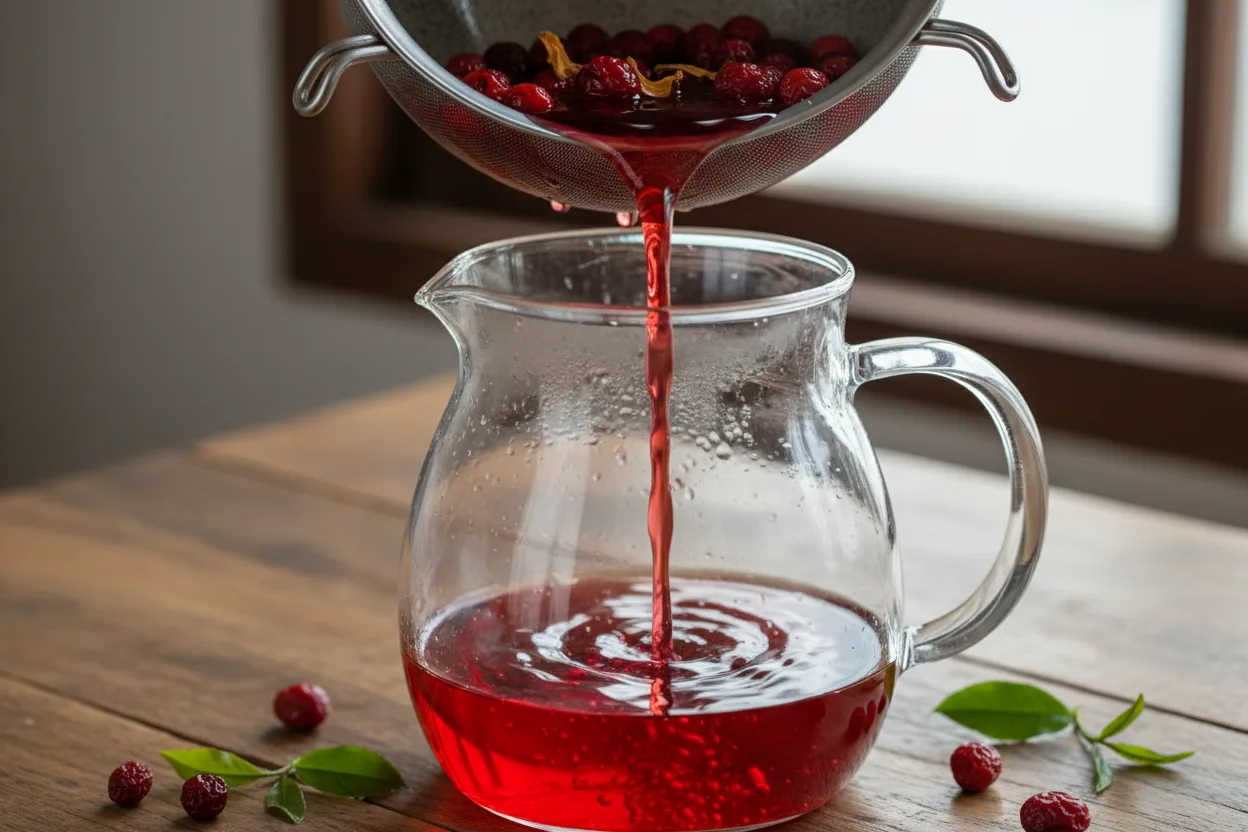
Strain through a fine sieve or cloth, keeping only the clear red liquor.
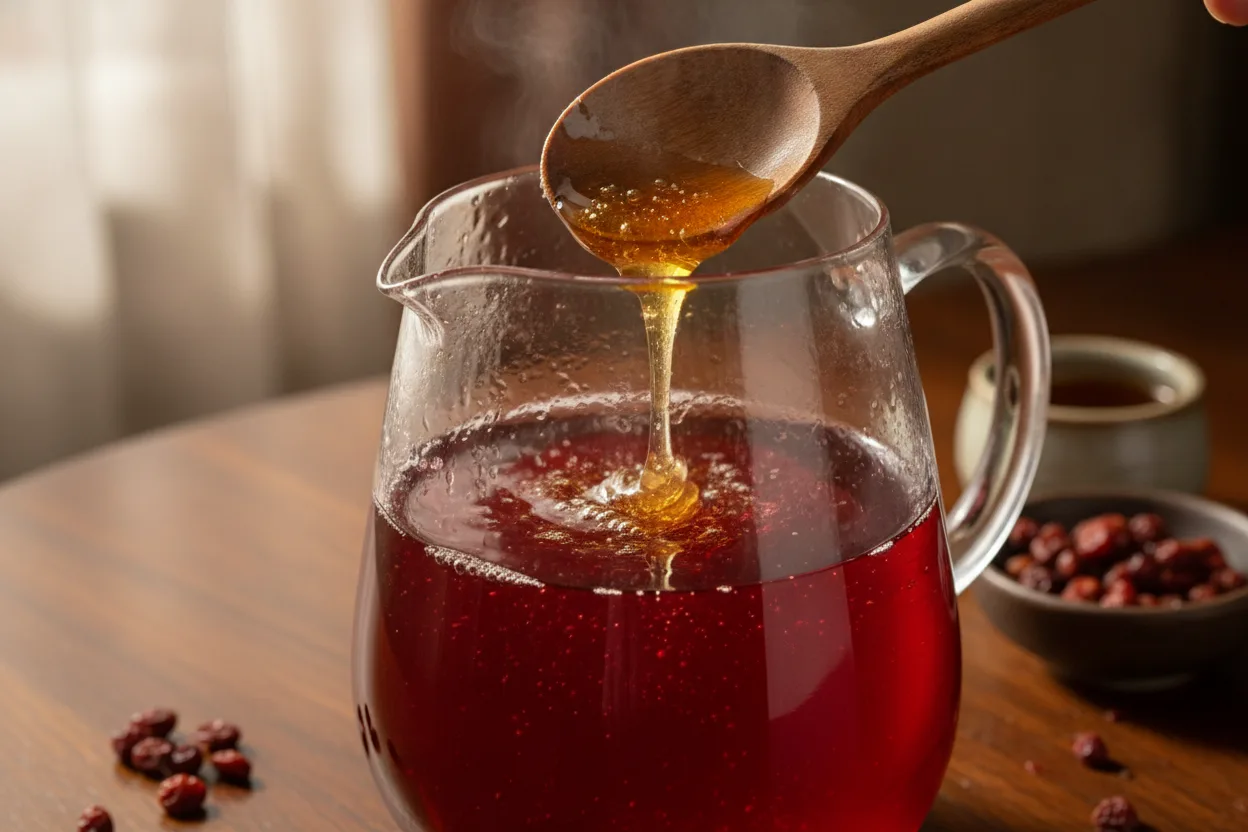
Sweeten the strained infusion gradually with honey or sugar. This guide is for steeping dried berries, not fermenting or preserving fresh-berry syrup. For purchased omija syrup, follow the product’s dilution and storage instructions.
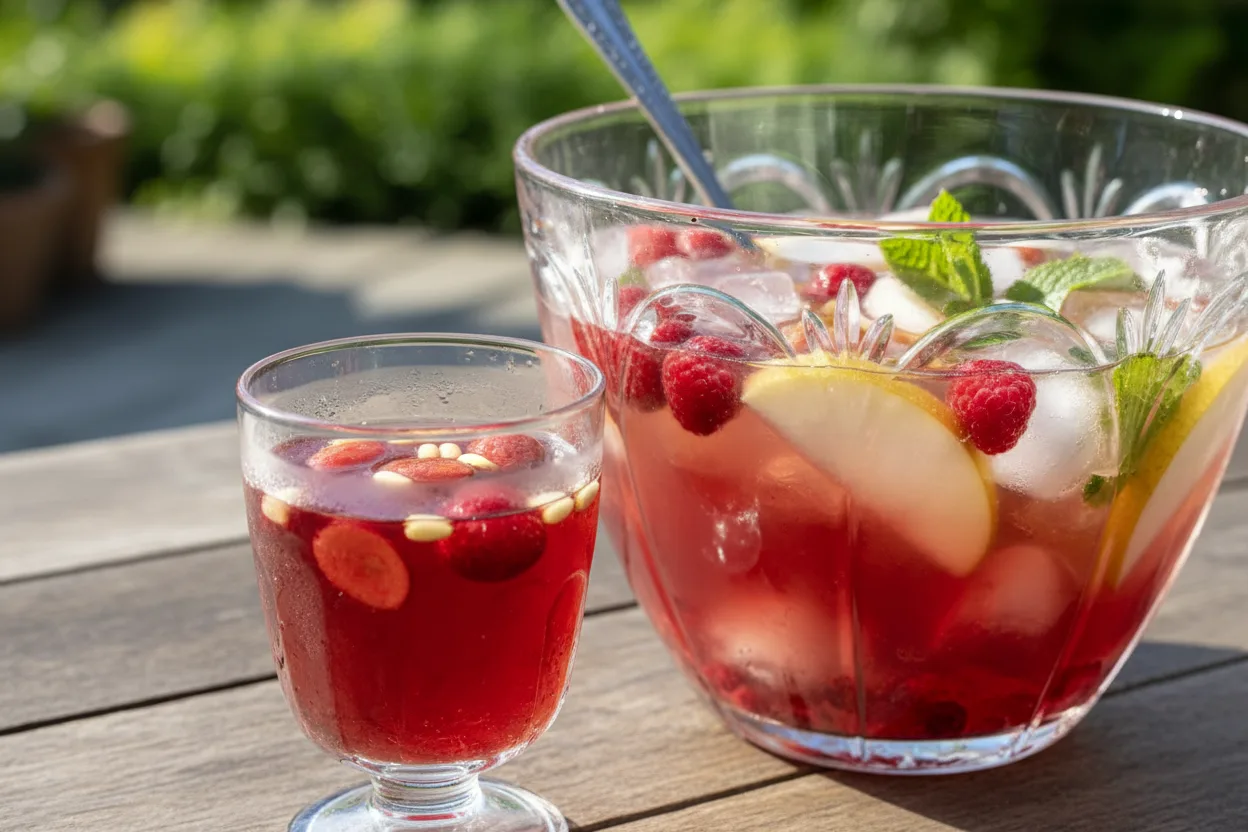
In summer, over ice with pear as punch; in winter, warmed gently with pine nuts afloat.
Preparing the tool. If controls remain disabled, enable JavaScript or try another browser. The guidance below remains readable.
Enter the cups or bottles shown below. Confirm the actual selling unit, volume and price with the shop. This card does not send an order or payment.
Candidates to investigate for this food. Maps use sourced location records; confirm the current menu, opening and booking directly. This list is not a tasting review or an award certification.
Mungyeong, North Gyeongsang
Exact current location is not verified here. Confirm the venue through its official information before planning a visit.
Insa-dong, Seoul
Exact current location is not verified here. Confirm the venue through its official information before planning a visit.
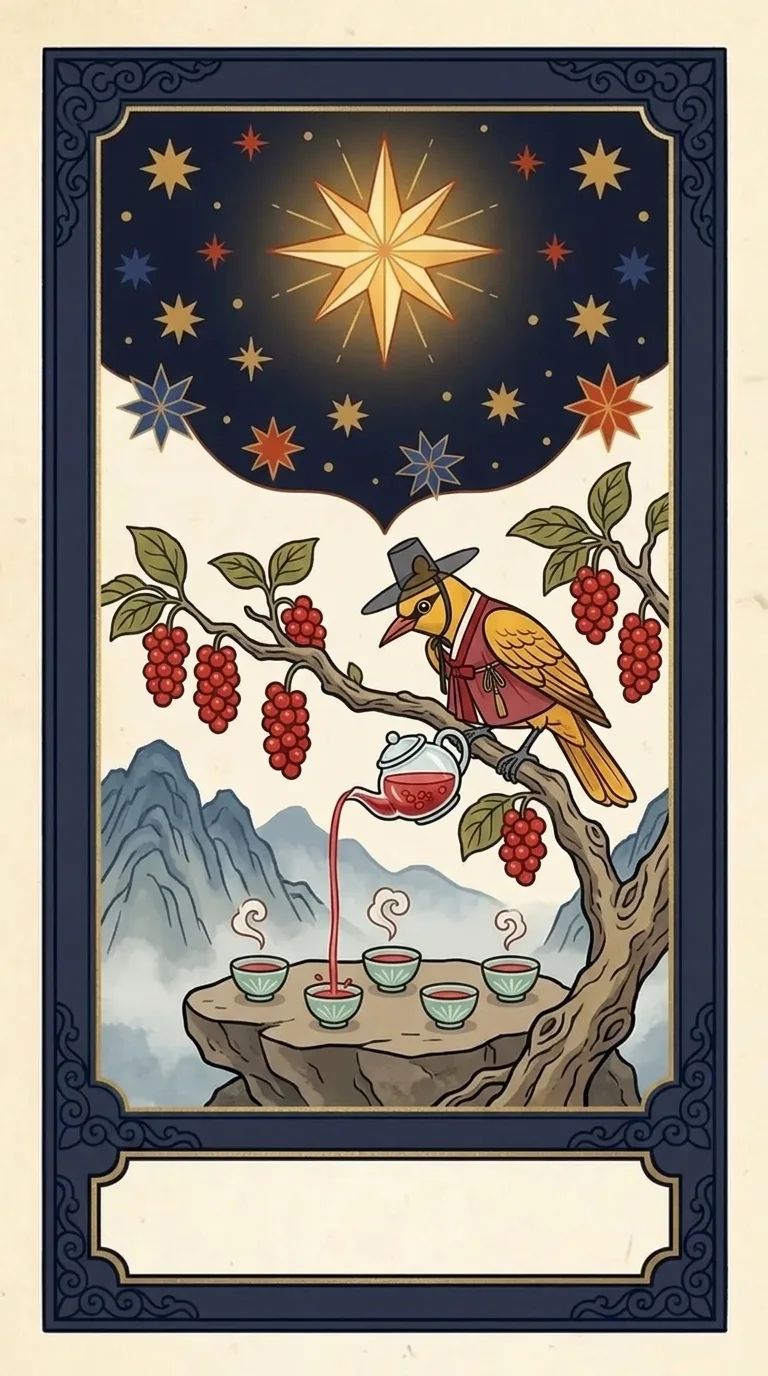
Wood element · a slender, elongated face
No single face explains you. Like the omija berry, everyone who meets you remembers a different flavor.
Upright: Sweet, sour, bitter, pungent, salty: five flavors live in one berry. The five flavors of your life are not for sorting but for steeping. Do not tip over the cup because today tasted bitter.
Reversed: Rushed in hot water, omija surrenders only its astringency. So will the matter you are hurrying. Cold water, one overnight: that patience is what draws the fine crimson.
Fictional food metaphors inspired by traditional face-reading, not measurements of your face or personality.
Those eyes sparkle with life, but the light changes from morning to evening. That is omija itself: sweet, sour, bitter, pungent, and salty all in one berry, so every drinker remembers a different taste. That is why opinions about you split, child. It is not fickleness; it is facets. When a five-flavored person lives among one-flavor people, misunderstanding is simply the tax. Do not feel wronged.
That proud nose knows its own fragrance. Picture a cup of Mungyeong omija tea, color and aroma finding room together. Your own scent need not be the same everywhere. If a place flattens you, look for a setting where you can open up.
That expressive mouth speaks in several flavors: sweet when consoling, sour when correcting, pungent when joking. That tongue is your talent, but learn the law of omija tea. The five flavors are not dumped out at once; they are steeped into one cup of clear crimson. Steep your words the same way, and five flavors become depth instead of noise.
Omija became a treasured berry by keeping all five flavors and discarding none. So it is with the several faces inside you: stop trying to edit them into one. Well steeped, you run deeper than a hundred single-flavor people.
Grandma's blessing
Tart omija tea and honey-soaked yakgwa are the old couple of the traditional tea table, while beside the sputtering oil of a gopchang grill, not one of this tea's five flavors can be heard.