Suhyang Hoesikdang
3 Jukdosijang 14-gil, Buk-gu, Pohang, North Gyeongsang
Exact current location is not verified here. Confirm the venue through its official information before planning a visit.
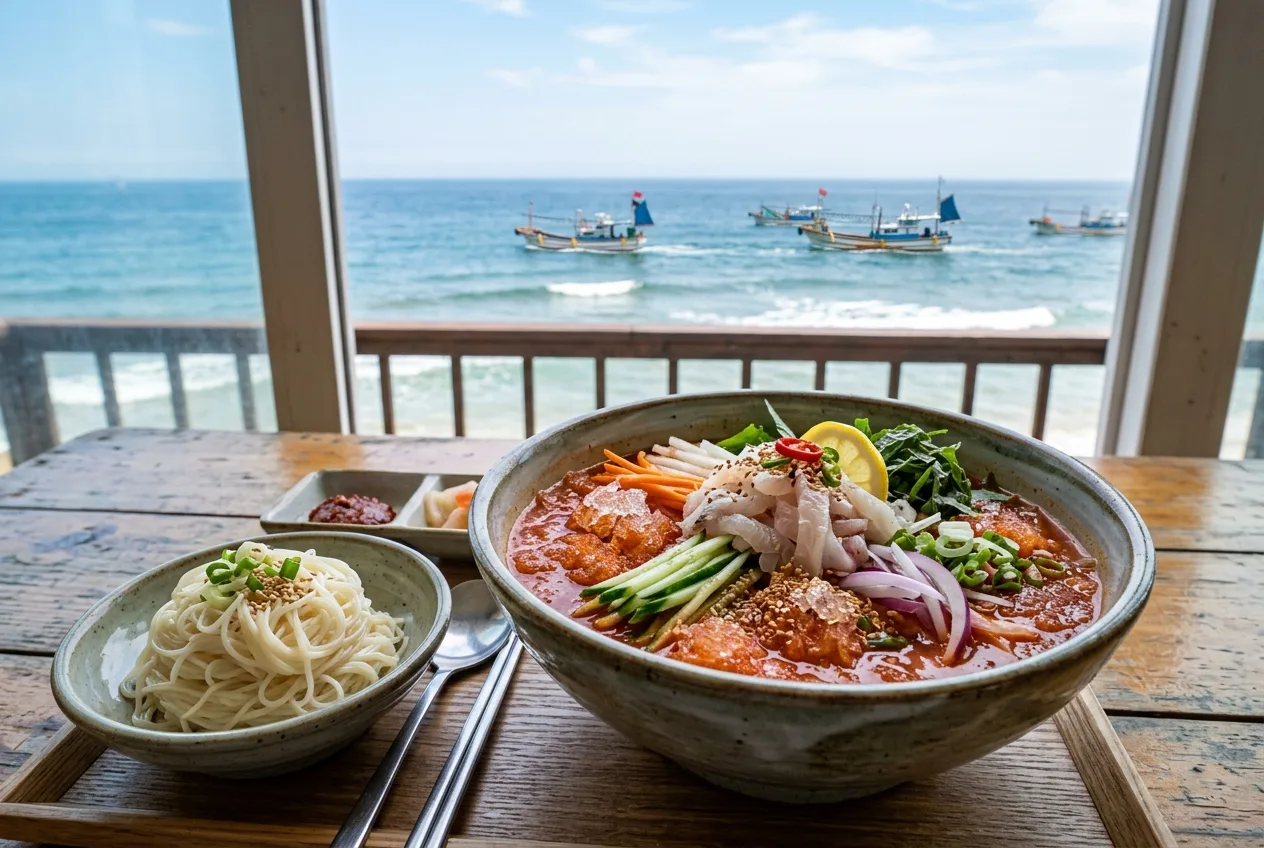
Specialty Dishes · Season 14 · Season of Summer VII
Mulhoe (Cold Raw Fish Soup) · 물회
Decision notes · editorial comparison of references and preparation plans
Consider mulhoe for seafood in tangy cold liquid. Against a sashimi plate, broth, vegetables and added noodles or rice change the whole meal.
Check before ordering or preparing: Check fish, shellfish or sea cucumber, cooking state, noodles or rice, and broth service.
KTO describes sliced fish or shellfish in seasoned cold broth. KTO · Cold Raw Fish Soup (물회 / Mulhoe) · 2026-09-13
This mulhoe combines uncooked fish, vegetables and a chilled tangy liquid. Unlike cooked fish stew, the addition of vinegar is not a heating step.
Ask which seafood and whether noodles or rice are included. If avoiding raw fish, choose a cooked fish dish instead of assuming extra noodles or rice change the raw preparation.
Images are AI-generated illustrations, not records of a kitchen test. Follow the written ingredients and steps. Ingredients and substitutions guide
Times and yields are planning values for this editorial preparation, not measured kitchen results. Substitutions can change flavor, texture and cooking needs. Read product directions and our measurement and doneness guide together.
The fish is raw. Keep fish prepared for raw consumption at 4°C/40°F or below, use potable water and ice, and serve immediately.
| Ingredient | Amount | Substitute abroad |
|---|---|---|
| Sashimi-grade fish (flounder, rockfish, squid) | 300g | Salmon (a different grain of flavor) |
| Cucumber, cabbage, pear | A little each | Lettuce, perilla leaves |
| Gochujang | 3 tbsp | Online Korean grocers |
| Vinegar, sugar, plum syrup | 1-2 tbsp each | Lemon juice |
| Garlic and sesame | A little | Anywhere |
| Cold water or iced broth | 2 cups | Naengmyeon broth |
| Separately cooked and cooled noodles or cooked rice | As desired | Can skip |
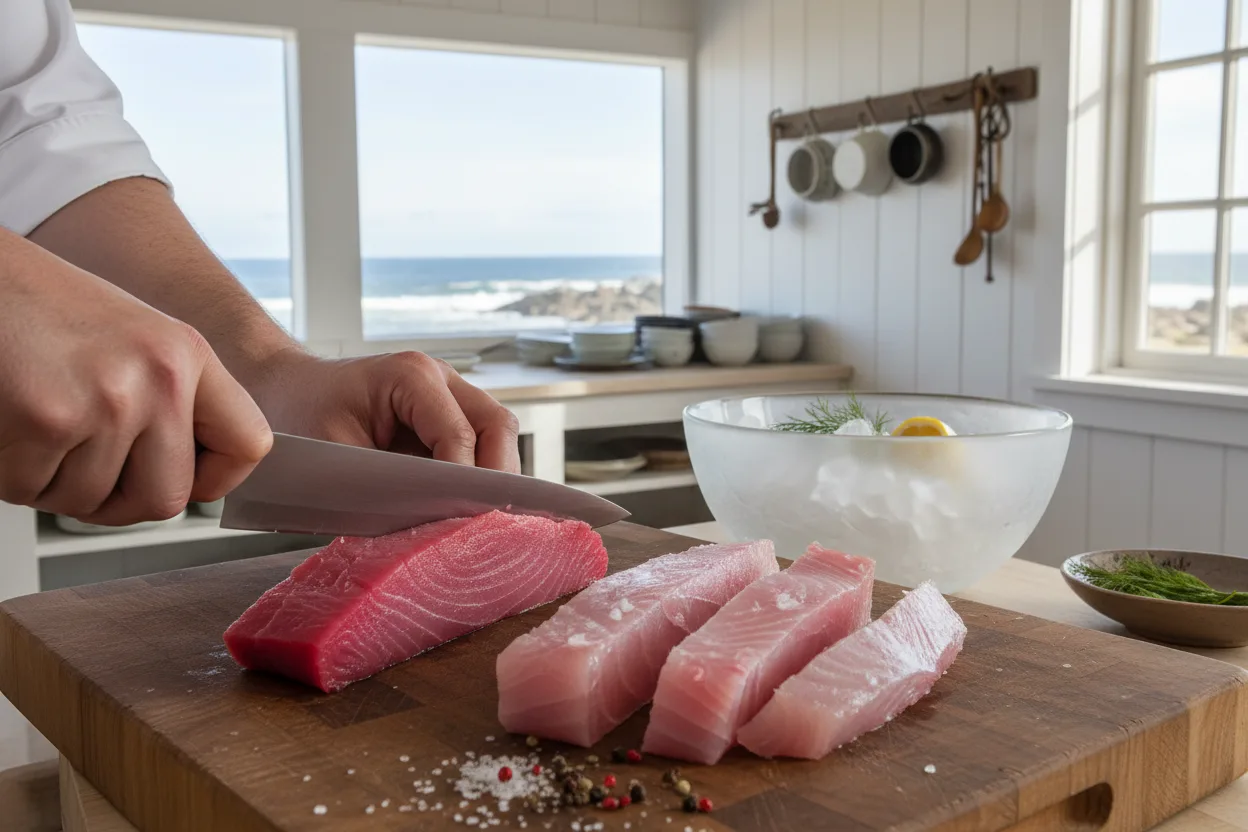
Keep fish handled for raw consumption at or below 4°C/40°F and cut it into thick strips on a board kept separate from the vegetables.
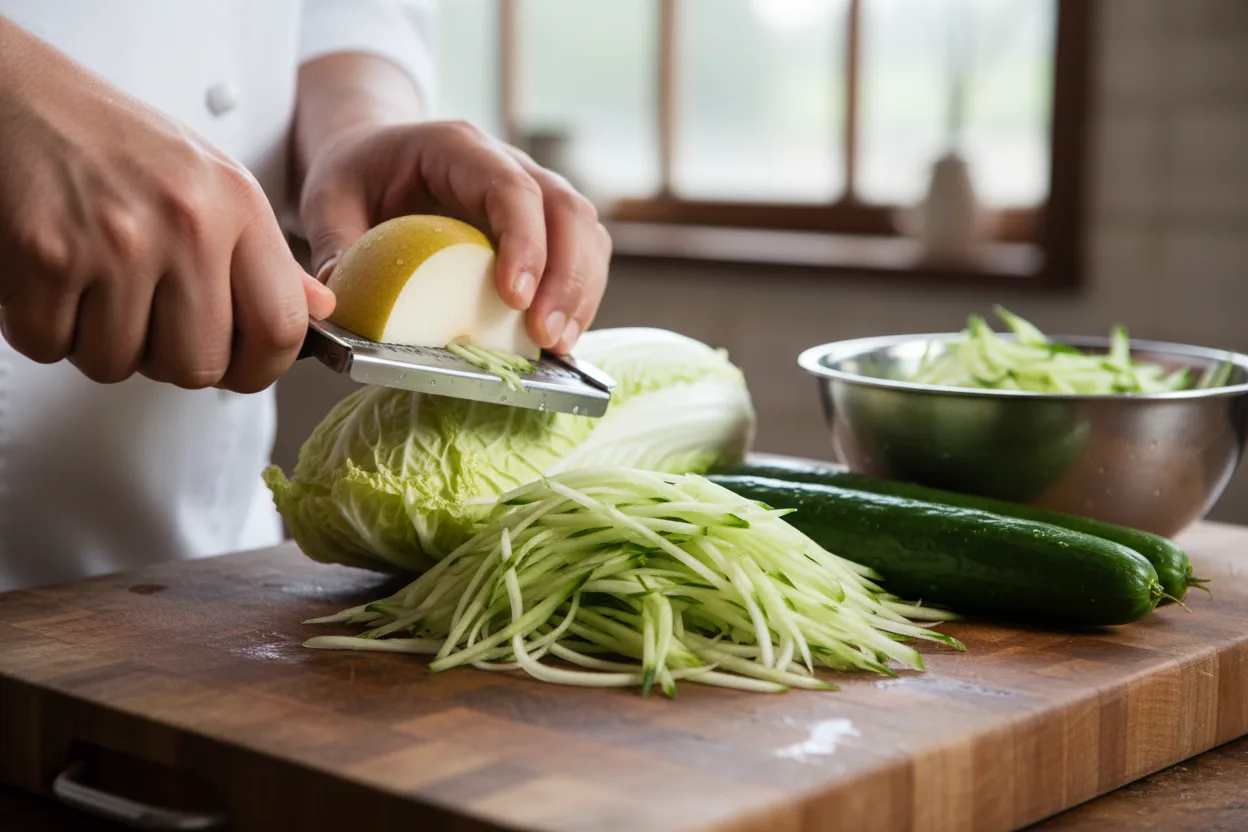
Cut cucumber, cabbage, and pear into fine strips.
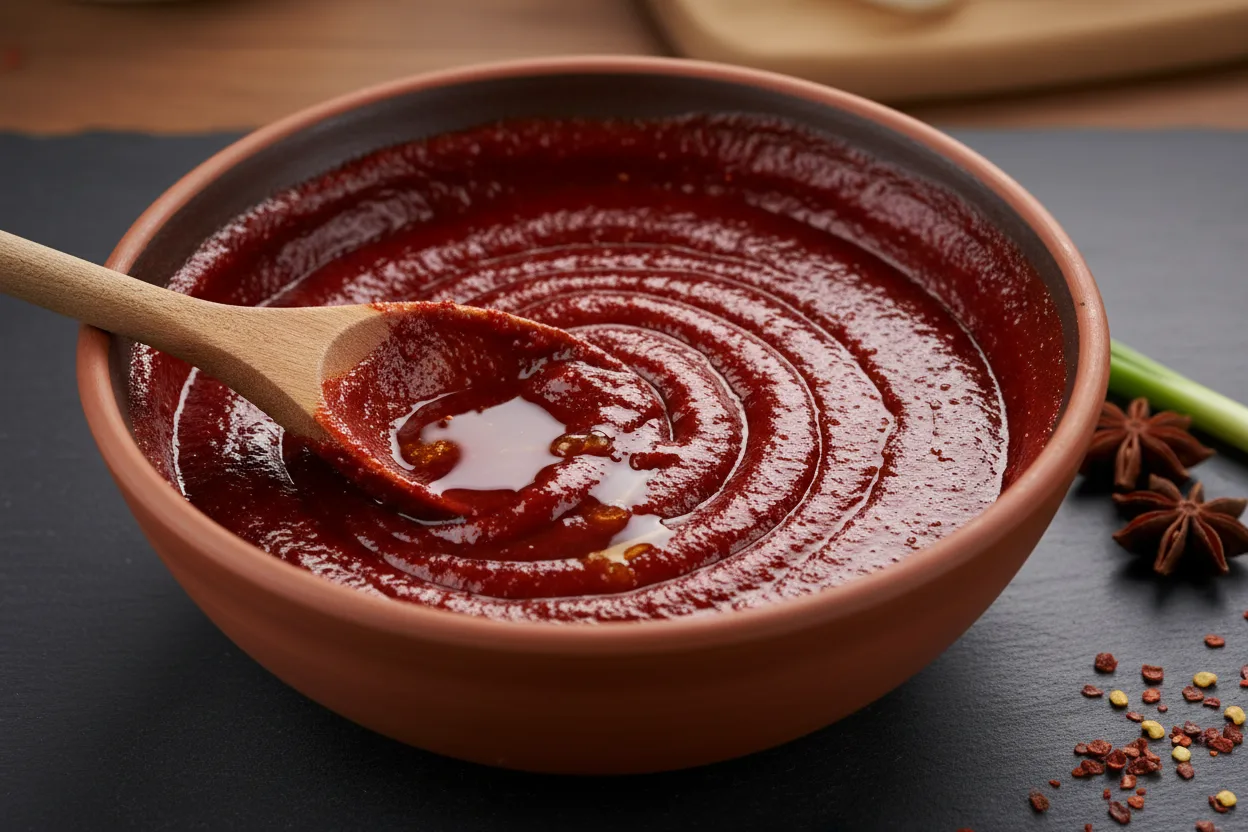
Blend gochujang with vinegar, sugar, plum syrup, and garlic into a thick paste.
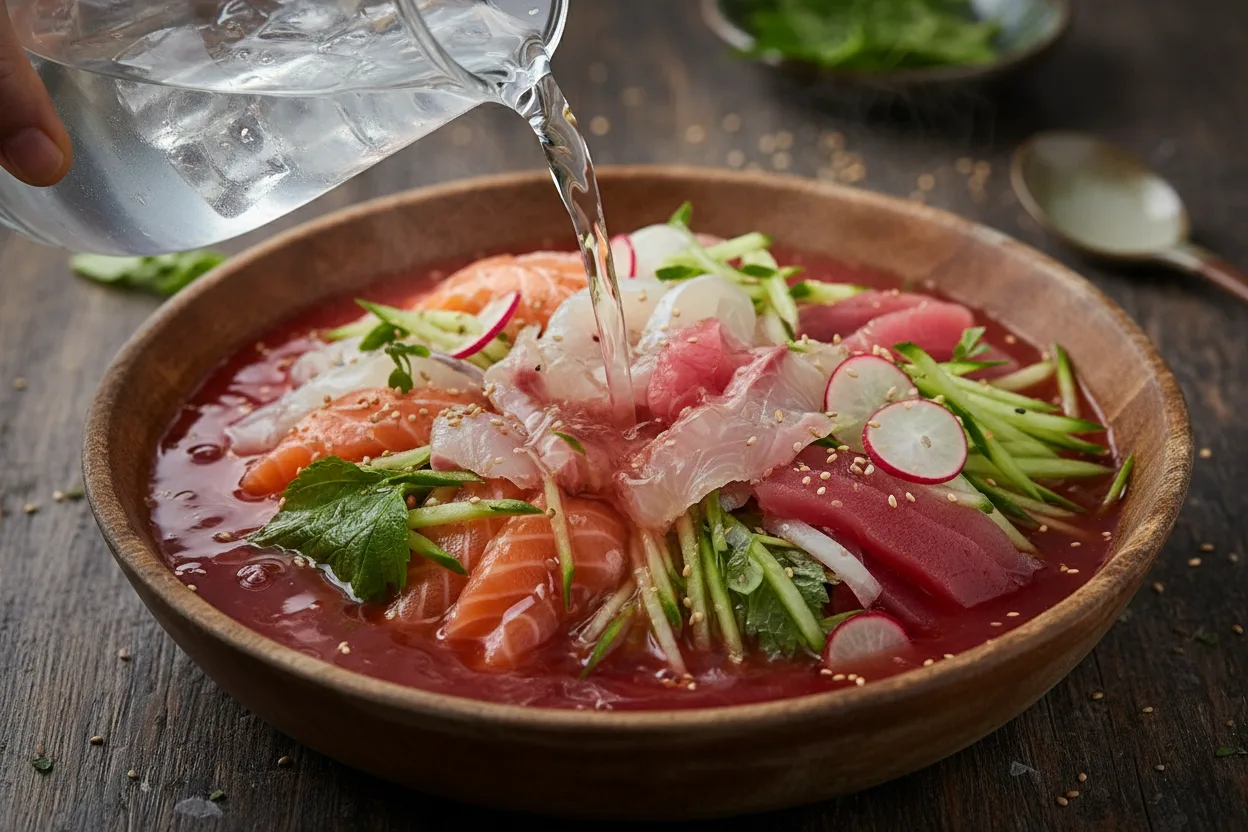
Toss fish and vegetables in the sauce, then pour in potable cold water or iced broth made from it. Serve immediately.
For noodles, cook separately as the package directs, rinse cold and drain. Rice must already be cooked. Serve with the prepared seafood and chilled broth; never put uncooked noodles straight into the cold bowl.
Preparing the tool. If controls remain disabled, enable JavaScript or try another browser. The guidance below remains readable.
Ask for enough food for the number of people eating. Portion sizes and minimum orders vary by shop. This card does not send an order or payment.
Candidates to investigate for this food. Maps use sourced location records; confirm the current menu, opening and booking directly. This list is not a tasting review or an award certification.
3 Jukdosijang 14-gil, Buk-gu, Pohang, North Gyeongsang
Exact current location is not verified here. Confirm the venue through its official information before planning a visit.
Pohang, North Gyeongsang
Exact current location is not verified here. Confirm the venue through its official information before planning a visit.

Metal element · an angular, solid face
You skip the long table setting and drink the sea from one bowl. A face like mulhoe, born on a boat deck.
Upright: Mulhoe was the meal fishermen drank standing at the gunwale. Spend time on formality and the next wave arrives. Do today's work deck-style: completion before polish.
Reversed: Drinking it down fast and gulping it carelessly are different things. Mulhoe flows only because the fish is fresh; eating something spoiled quickly is just an accident. Check the ingredients before you accelerate.
Fictional food metaphors inspired by traditional face-reading, not measurements of your face or personality.
Those quick eyes read the current like a fisherman's. Do you know how mulhoe was born? Mid-haul, with no time to set a meal, fishermen sliced the fresh catch, stirred it into gochujang and water, and drank it down. It became a legend by discarding formality. Your quickness is the same: while others set the table, you have already eaten and cast the net again. That speed is your livelihood, child.
That sleek jawline carries nothing extra. Look into a mulhoe bowl: fish, vegetables, sauce, water. Complete with only what is on the boat. Finishing with what you have instead of hunting for what you lack: that is a seaman's housekeeping and your work style. While others recite their list of missing supplies, you have already lifted the spoon.
That mouth drinks deep and clean: a broth-to-the-bottom mouth. Do you know how mulhoe ends? Rice or thin noodles stirred into the last of the broth until the bowl is empty. Sashimi to start, rice to finish: two meals drawn from one bowl. You too drink your projects down to the last broth, which is why nothing you handle leaves dregs.
Mulhoe is the story of a hungry fisherman's shortcut becoming the delicacy tourists queue for. The makeshifts your lean times invented will one day be your specialties too. Never be ashamed of deck wisdom.
Grandma's blessing
Mulhoe and meongge, raw siblings of the sea, recognize each other on the summer harbor table, while boiling samgyetang preaches the exact opposite doctrine of surviving summer, and sharing a table turns into mutual missionary work.